Перейти к содержанию







Ваши сделки затягиваются. Покупатели исчезают после обнаружения. Скидки разлетаются каждый четвертый квартал. Вы можете определить «консультативные продажи» во сне, но это не помогает.
Навыки продаж – это наблюдаемое поведение, которое побуждает покупателей перейти от «возможно» к уверенному решению. Они делятся на мягкие навыки (умение слушать, коммуникабельность, эмпатия, умение вести переговоры) и жесткие навыки (управление CRM, финансовая грамотность, аналитика, владение инструментами). Оба вида навыков можно тренировать, если определить «хороший» как нечто видимое на записанном звонке, а не как черту личности.
Разница между самооценкой и реальностью огромна. Опрос Salesloft 2025 показал, что 73% продавцов считают себя сильными в обнаружении рисков, однако только 44% менеджеров согласны с этим (Salesloft, 2025). Между тем 61% покупателей B2B предпочитают обходиться без услуг торговых представителей, а 73% избегают нерелевантных контактов (Gartner, 2025). Вам не нужны дополнительные определения. Вам нужен цикл практических действий и метод оценки.
Это руководство представляет собой систему обучения, а не глоссарий:
- A самооценка (версия для представителя и менеджера) для выявления пробелов
- Библиотека библиотека упражнений с 10-минутными упражнениями для каждого навыка
- Оценочные листы определение наблюдаемого «хорошего»
- 30-дневный 30-дневный план тренировок (15 минут в день)
- Шаблоны резюме перевод навыков в доказательства
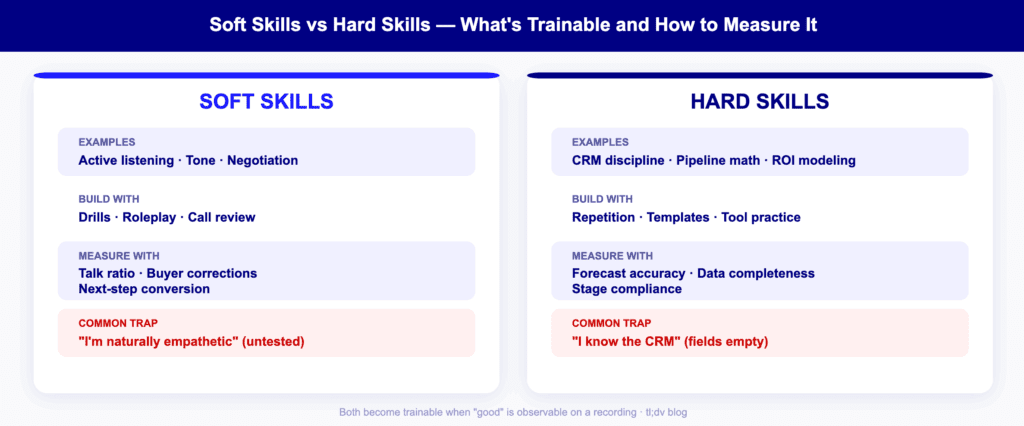
Мягкие навыки против твердых навыков: что можно тренировать и как это измерить
| Мягкие навыки | Твердые навыки | |
|---|---|---|
|
Примеры |
Активное слушание, тон, ведение переговоров, рассказывание историй |
Дисциплина CRM, математика трубопровода, моделирование ROI, оперативная инженерия
|
|
Строить с |
Упражнения, ролевые игры, анализ звонков |
Повторение, шаблоны, практика использования инструментов |
|
Измерять с помощью |
Коэффициент разговоров, корректировки покупателей, конверсия следующего шага |
Точность прогнозов, полнота данных, соответствие этапам |
|
Распространенная ловушка |
«Я по натуре эмпатичный» (непроверенно) |
«Я знаю CRM» (поля пусты) |
Обе категории становятся обучаемыми, когда «хорошее» поведение можно наблюдать на записи.
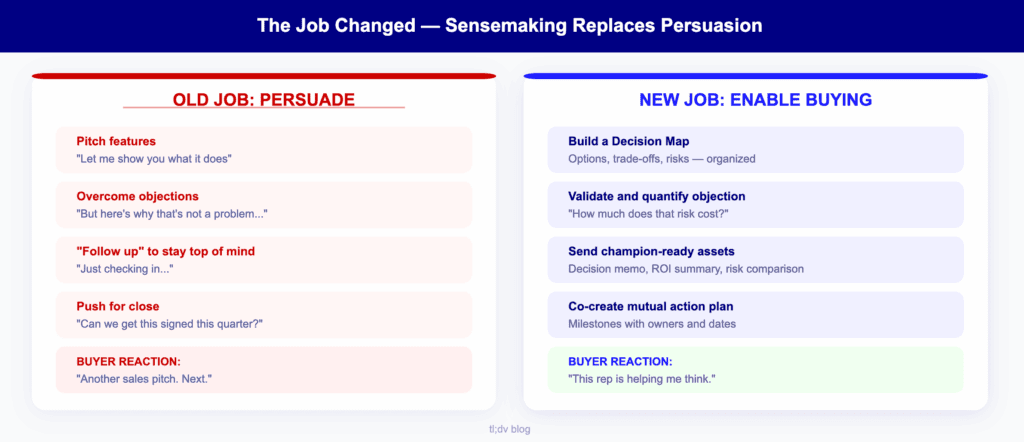
Реальность покупателя 2026 года: смыслообразование заменяет убеждение
Покупатели не хотят, чтобы их убеждали. Они хотят, чтобы им помогли принять решение, которое они смогут отстоять внутри компании. Создание смысла — систематизация противоречивой информации, составление схемы компромиссных решений, согласование интересов заинтересованных сторон — теперь является основной задачей представителя.
| Убеждать (стар.) | Включить покупку (новое) |
|---|---|
|
Особенности поля |
Составьте карту решений (варианты, компромиссы, риски) |
|
Преодолеть возражения |
Проверить и количественно оценить возражение |
|
«Продолжение» для того, чтобы оставаться на виду |
Отправить меморандум о решении, который чемпион пересылает |
|
Нажать для закрытия |
Совместно разработать план действий с владельцами |
Открытие превращается в проверку гипотезы. Последующие действия приносят готовые к использованию ресурсы (меморандум о принятии решения, сводка по ROI, сравнение рисков), а не просто «проверку».
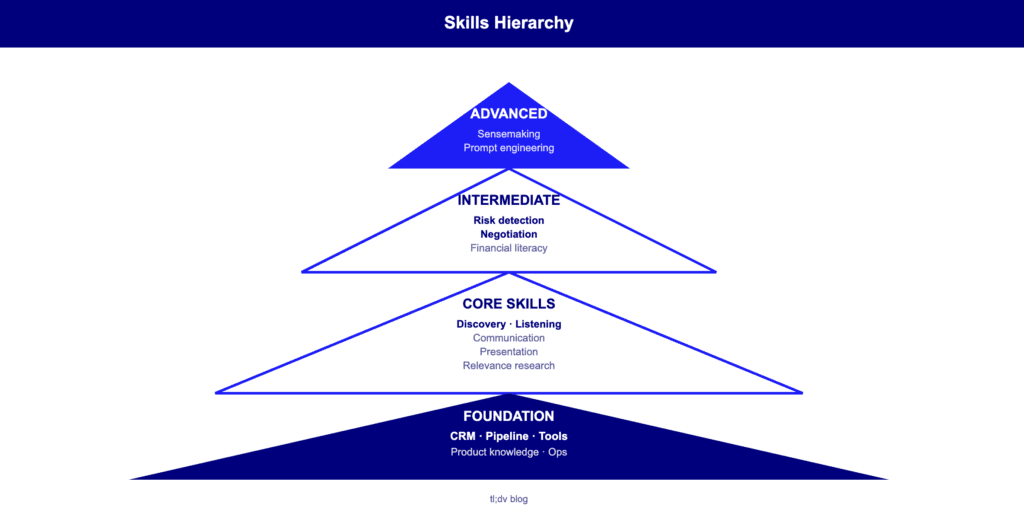
12 лучших навыков продаж, ранжированных по влиянию на сделку
Эти 12 важных навыков продаж упорядочены по степени влияния на результаты сделок. Каждый из них включает в себя 10-минутное упражнение и показатель оценки.
| Навык | Почему сейчас? | 10-минутное упражнение | Таблица результатов |
|---|---|---|---|
|
1. Понимание смысла + поддержка покупателей |
61% предпочитают отсутствие представителей; уменьшите путаницу, не навязывайте |
Одностраничная карта решений для следующей сделки
|
Покупатель уходит с меньшим выбором, а не с большим количеством информации |
|
2. Исследование релевантности |
73% избегают нерелевантных контактов |
3 аспекта: бизнес-модель, KPI, триггерное событие |
Аутрич называет реальную давление бизнеса |
|
3. Открытие (проверка гипотезы)
|
Заранее подготовленные вопросы = допрос
|
3 гипотезы + 5 опровергающих вопросов
|
Корректировки покупателя + количественно выраженные последствия
|
|
4. Активное слушание |
Лучшие представители слушают ~57% (Gong) |
Зеркало последнего слова + 3-секундная пауза |
Talk ratio <45%, clarifying Qs asked |
|
5. Коммуникация + контроль следующих шагов |
Неясные последующие действия убивают сделки |
10-секундное резюме: проблема, последствия, следующий шаг, ответственное лицо |
Каждый звонок заканчивается датой + результатом + ответственным лицом. |
|
6. Обнаружение риска + дисквалификация |
Наибольший разрыв в самооценке (Salesloft) |
Предварительный анализ сделки: 5 причин задержки, по 1 вопросу на каждую |
Карта заинтересованных сторон актуальна, план совместных действий подтвержден |
|
7. Навыки ведения переговоров о продаже |
Односторонние скидки разрушают маржу |
Лестница «дай-получи»: 5 для обмена, 5 для возврата |
Никаких уступок без получения ценности |
|
8. Финансовая грамотность |
Финансовые директора контролируют сделки B2B |
ROI за 7 минут: стоимость проблемы × продолжительность vs решение |
ROI на языке покупателя, подтвержденные предположения |
|
9. Презентация (в режиме реального времени + асинхронная) |
Асинхронное видео заменяет встречи |
60-секундное видео: кто, проблема, доказательство, призыв к действию |
Четкая дуга, один CTA, без сброса функций |
|
10. Многоканальный поиск потенциальных клиентов |
VM удваивает количество ответов на электронные письма (Gong); верхний квартиль 13,3% против 5,4% в среднем |
20-секундное голосовое сообщение, привлекающее внимание по электронной почте |
Максимум 2 виртуальные машины на последовательность |
|
11. Навыки работы в сфере продаж |
Плохие данные = плохие прогнозы |
CRM-спринт: определение следующих шагов, причин закрытия, этапов |
Точность прогноза, полнота данных |
|
12. Быстрая разработка |
ИИ для исследований/ролевых игр; люди для последнего этапа |
Ролевая игра с ИИ, перепишите своим голосом |
Выходные данные, пригодные для использования без звучания, сгенерированные искусственным интеллектом |
Начните с этого: Обнаружение рисков + контроль следующих шагов — наибольший разрыв между восприятием и реальностью, немедленное улучшение прогнозов.
Тренажерный зал навыков продаж: как реально улучшить навыки продаж
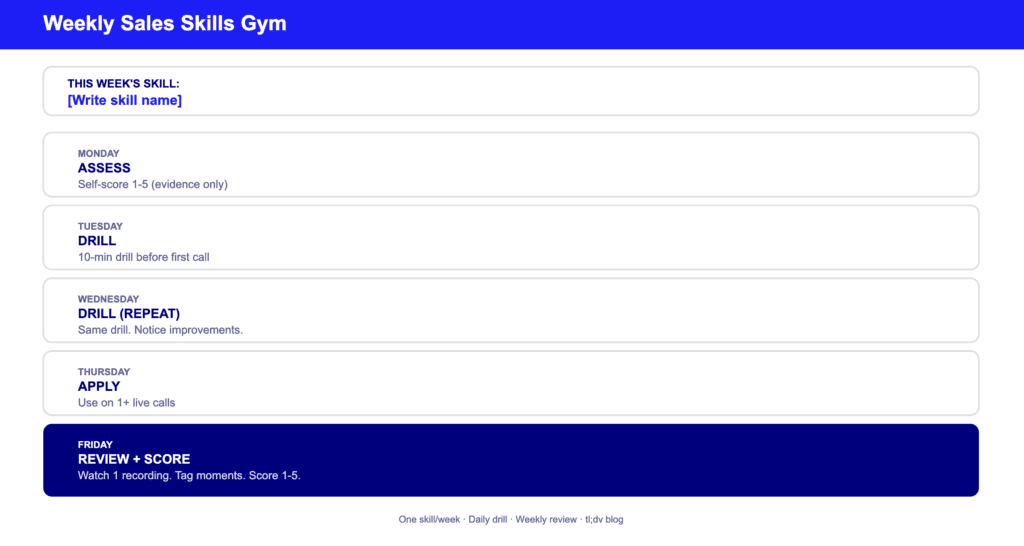
Обучение навыкам продаж не дает результатов, если оно ограничивается предоставлением определений без практических занятий. Симптомы: затянувшиеся сделки без дальнейших шагов, потери из-за «отсутствия решения» превосходят по количеству потери из-за конкуренции, исчезновение после обнаружения, рефлекторное предоставление скидок.
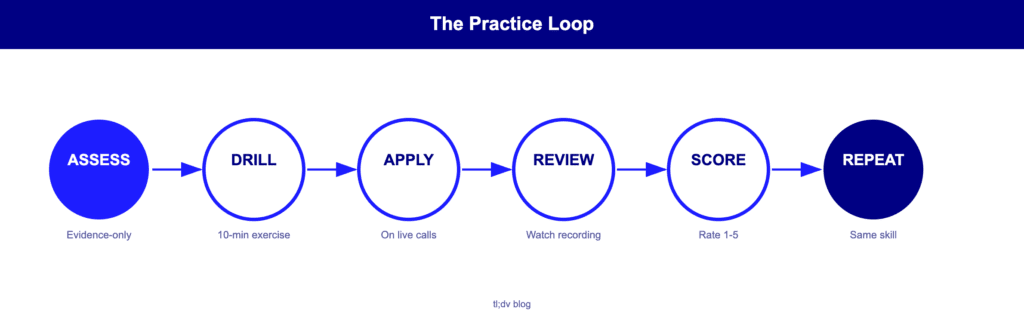
Практический цикл
- Оценить — Оценка только на основе доказательств (4–5 требует временной метки, электронного письма или примечания по сделке)
- Тренировка — 10–15 минут упражнений перед первым звонком
- Применить — Используйте навык во время одного живого звонка
- Обзор — Отмечайте важные моменты в записи. Записи встречtl;dv делают это автоматически: запись, транскрипция, поиск
- Оценка — Оцените с помощью оценочной шкалы навыка (1–5)
- Повторить — Один и тот же навык в течение полной недели перед переключением
Минимальная частота: одно 10-минутное упражнение в день + один разговорный тест в неделю.
Для менеджеров: функции тренерской поддержкиtl;dv позволяют отмечать важные моменты во время звонков, оценивать шаблоны и назначать упражнения, не посещая каждое собрание. Интеграция с CRM автоматически отправляют поля. Соответствие GDPR и SOC2.
Тест по оценке навыков продаж (версия для себя + для менеджера)
Оцените по двум колонкам. Дельта показывает, где происходит рост.
Правило проверки: 4–5 только с доказательствами (время звонка, электронное письмо, записка о сделке). Без доказательств = ограничение до 3.
| Навык | Я (1–5) | Менеджер (1–5) | Доказательства |
|---|---|---|---|
|
Исследование релевантности |
|
|
|
|
Открытие (проверенные гипотезы) |
|
|
|
|
Active listening (talk ratio <45%) |
|
|
|
|
Коммуникация (конкретные следующие шаги) |
|
|
|
|
Выявление рисков (предварительный анализ) |
|
|
|
|
Переговоры (документированные уступки и выгоды) |
|
|
|
|
Финансовая грамотность (ROI на языке покупателя) |
|
|
|
|
Презентация (описание, однократное призыв к действию) |
|
|
|
|
Многоканальное исполнение |
|
|
|
|
CRM-гигиена |
|
|
|
|
Смыслообразование (решение принято) |
|
|
|
|
Быстрая дисциплина (применение человеческого голоса) |
|
|
|
Выберите 2 самых низких результата (используйте оценки менеджера — они более точные). Выполняйте упражнение ежедневно в течение недели, затем повторно оцените свои результаты.
30-дневный план обучения навыкам продаж
Один навык в неделю. Одно упражнение в день. Один обзор звонков в неделю.
Неделя 1: Исследование релевантности + открытие
День | Упражнение (10 мин) |
Пн | 3 угла релевантности для главного целевого аккаунта |
Вт | 3 гипотезы о главной проблеме потенциального клиента |
Ср | 5 вопросов, опровергающих эти гипотезы |
Чт | Открытие на основе гипотезы во время живого звонка |
Пт | Просмотр записи: исправления покупателя, количественные показатели воздействия, следующие шаги |
Цель | 2+ корректировки покупателя + 1 количественное влияние на каждый звонок по поводу открытия |
Неделя 2: Аудирование + коммуникация
День | Упражнение (10 мин) |
Пн | Зеркало последнего слова + 3-секундная пауза |
Вт | 10-секундное упражнение на повторение |
Ср | Проверка вызова — подсчет преждевременных подач |
Чт | Живой звонок: соотношение прослушиваний + заблокированный следующий шаг |
Пт | Соотношение результатов и разговоров, уточняющие вопросы, конкретность следующих шагов |
Цель | Talk ratio <45%. Every call ends with date + deliverable + owner |
Неделя 3: Выявление рисков + переговоры
День | Упражнение (10 мин) |
Пн | Предварительный анализ 3 лучших сделок |
Вт | Один диагностический вопрос на каждую причину задержки |
Ср | Лестница «дай-получи»: 5 предложений, 5 требований |
Чт | 2+ вопроса о рисках во время живого звонка |
Пт | Обзор: риски выявлены? Карта заинтересованных сторон обновлена? |
Цель | Карты заинтересованных сторон, актуальные для 5 крупнейших сделок. Взаимные планы действий для 2+ |
Неделя 4: Презентация + многоканальность + операции
День | Упражнение (10 мин) |
Пн | Запись 60-секундного видео с асинхронным значением |
Вт | Написать + записать 20-секундное голосовое сообщение |
Ср | Спринт по гигиене CRM |
Чт | Отправить видео; оставить голосовое сообщение перед отправкой электронного письма с напоминанием |
Пт | Оценка видео, голосовой почты, точности CRM |
Цель | 1 отправленное видео, 1 протестированное голосовое сообщение, ноль просроченных дат следующих шагов |
Не хватает времени? Всего за две недели вы исправите большинство ошибок на уровне звонков.
Библиотека упражнений: навыки и техники продаж в деталях
Каждый из приведенных ниже модулей дополняет основную таблицу подробными инструкциями, оценочными листами и готовыми пунктами для резюме.
Создание смысла + поддержка покупателей
Упражнение — Карта решений за 10 минут: Выберите активную сделку. Перечислите варианты покупателя (включая «не предпринимать никаких действий»). Для каждого варианта: один компромисс, один риск, один следующий шаг, один владелец. Оформите в виде одностраничного документа, который можно отправить.
Оценка: Карта существует и актуальна · Покупатель ссылается на ваши материалы внутри компании · Чемпион без посторонней помощи четко формулирует вашу ценность
Резюме: «Создал структуру принятия решений для 6–10 комитетов заинтересованных сторон, сократив цикл принятия решений на [X] дней».
Исследование релевантности
Дрель — 3 угла релевантности: Для одного аккаунта найдите: давление на бизнес-модель, KPI под давлением, недавнее триггерное событие (последние 90 дней). Напишите по одному предложению для каждого угла.
Подсказки ИИ: «Обобщите последний отчет о прибылях и убытках [компании] — на какие проблемы указал генеральный директор?» · «Перечислите 3 KPI, по которым оценивается [должность] в [тип компании] в этом квартале».
Резюме: «Достиг [X]% коэффициента ответов благодаря исследованию триггерных событий по более чем 200 учетным записям».
Открытие (сначала гипотеза)
Упражнение: Напишите 3 гипотезы о проблемах потенциального клиента. Для каждой из них составьте опровергающий вопрос: «Компании, подобные вашей, обычно сталкиваются с [X]. Вы тоже так считаете, или настоящая проблема заключается в чем-то другом?»
Оценка: Зафиксированные исправления покупателя (чем больше, тем лучше) · Полученное количественное влияние · Следующий шаг с датой и ответственным лицом
Резюме: «Руководил гипотетическими исследованиями по более чем 150 возможностям, достигнув [X]% конверсии этапа 1 в этап 2».
Активное слушание
АнализGongболее 326 000 B2B-звонков: оптимальное соотношение составляет 43:57 (разговор:прослушивание). В среднем представители говорят 60–65 %.
Упражнение: Подождите 3 секунды после того, как покупатель закончит говорить. Повторите последние 2–3 слова в виде вопроса («…испытываете трудности с адаптацией?»), а затем подождите.
| Любопытный (4–5) | Оборонительный (1–2) |
|---|---|
|
«Что означает «медленный» в вашем контексте?» |
«После настройки он работает быстро». |
|
«Кто еще пострадал?» |
«Позвольте показать вам панель управления». |
Resume: “Maintained <40% talk ratio across 200+ discovery calls, contributing to [X]% higher Stage 2 conversion.”
Навыки коммуникации в сфере продаж
Упражнение — 10-секундное резюме: Состояние: «Проблема заключается в [X]. Стоимость [Y]. Далее: [кто] делает [что] к [когда]». Сравните с тем, что вы действительно сказали. Протоколы встреч по ИИ отtl;dv Автоматически генерируйте резюме для сравнения — разница показывает, где коммуникация становится нечеткой.
Резюме: «Внедрил структурированные сводки, достигнув [X]% выполнения следующих шагов по более чем 300 возможностям».
Обнаружение риска + дисквалификация
Самый большой пробел в самооценке в сфере продаж (Salesloft). Решением является доказательство, а не уверенность.
Упражнение — Предварительный анализ сделки: 5 конкретных причин задержки вашей главной сделки. Один вопрос на каждый риск.
| Риск | Вопрос |
|---|---|
|
Сила чемпиона |
«Как вы представите это [лицу, принимающему решение]?» |
|
Временная шкала |
«Что произойдет, если не будет одобрено до [дата]?» |
|
Бюджет |
«Выделенный бюджет или новая статья расходов?» |
|
Закупки |
«Как выглядит ваш процесс закупок?» |
Резюме: «Снижение инфляции трубопровода на [X]% за счет предварительного анализа сделок и дисквалификации на основе фактических данных».
Навыки ведения переговоров о продаже
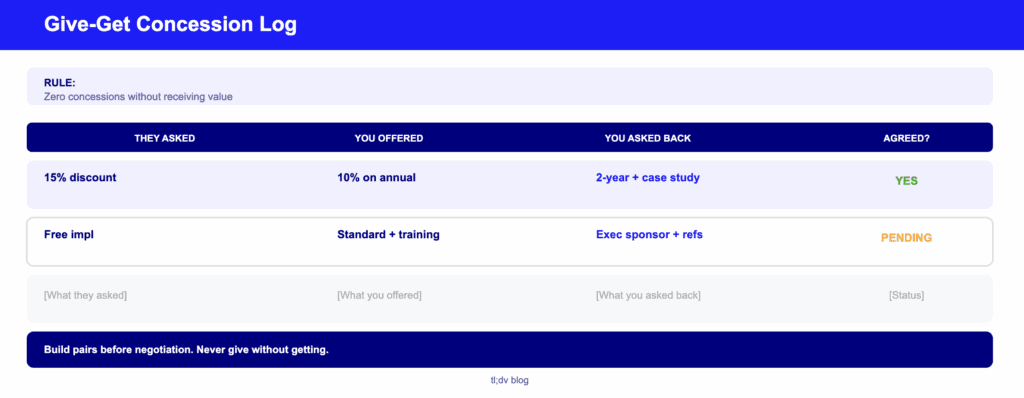
Упражнение — Лестница «дай-получи»: 5 уступок, которые вы можете предложить (продленные сроки, адаптация, ранний доступ). 5 вещей, которые вам нужны (многолетний контракт, спонсорство руководства, кейс-стади, более быстрые сроки). Сформируйте пары. Потренируйтесь вслух.
| Они спросили | Вы предложили | Вы спросили в ответ | Согласны? |
|---|---|---|---|
|
скидка 15% |
10% в год |
2-летнее + практическое исследование |
Да |
|
Бесплатная реализация |
Стандартный + обучение |
Исполнительный спонсор на старте |
В ожидании |
Резюме: «Сохранил [X]% от цены по прейскуранту в ходе более 40 переговоров с предприятиями посредством уступки в торговле».
Финансовая грамотность (деловая хватка в сфере B2B)
Расчет — окупаемость инвестиций за 7 минут: Стоимость проблемы в месяц × 12 = годовая стоимость бездействия. Решение + внедрение = общая стоимость. ROI = (экономия − стоимость) ÷ стоимость. Окупаемость = стоимость ÷ ежемесячная экономия.
| Ввод | Значение |
|---|---|
|
Ежемесячная стоимость проблемы |
$ |
|
Ежегодные затраты бездействия (×12) |
$ |
|
Общая стоимость решения |
$ |
|
Простой ROI |
(Экономия − затраты) ÷ затраты |
|
Окупаемость |
Стоимость ÷ ежемесячная экономия |
HBS и Уорвикская школа бизнеса подчеркивают финансовую смекалку как основной коммерческий навык.
Резюме: «Создал модели ROI для более чем 25 корпоративных сделок, сократив возражения финансового директора на [X]%».
Навыки проведения презентаций продаж (в режиме реального времени + асинхронно)
91% компаний используют видео в качестве маркетингового инструмента (Wyzowl, 2026), причем растет их использование в продажах в формате 1:1.
Дрилл — 60-секундное видео: «Привет, [имя], я создал это из-за [проблема]. Вот что сделала [компания]: [15-секундное доказательство]. Если уместно, [CTA]». Обрежьте все, что превышает 60 секунд.
Дрилл — Демонстрация, ориентированная на проблему: 3 ключевых момента: проблема, «ага»-момент продукта, результат. Демонстрируйте только эти моменты; все остальное — вопросы и ответы. Превратите лучшие демонстрации в клипы, которыми можно поделиться, с помощью tl;dv .
Резюме: «Разработал демонстрационную платформу, ориентированную на решение проблем, что позволило повысить коэффициент преобразования демонстраций в предложения на [X]%».
Многоканальный поиск потенциальных клиентов
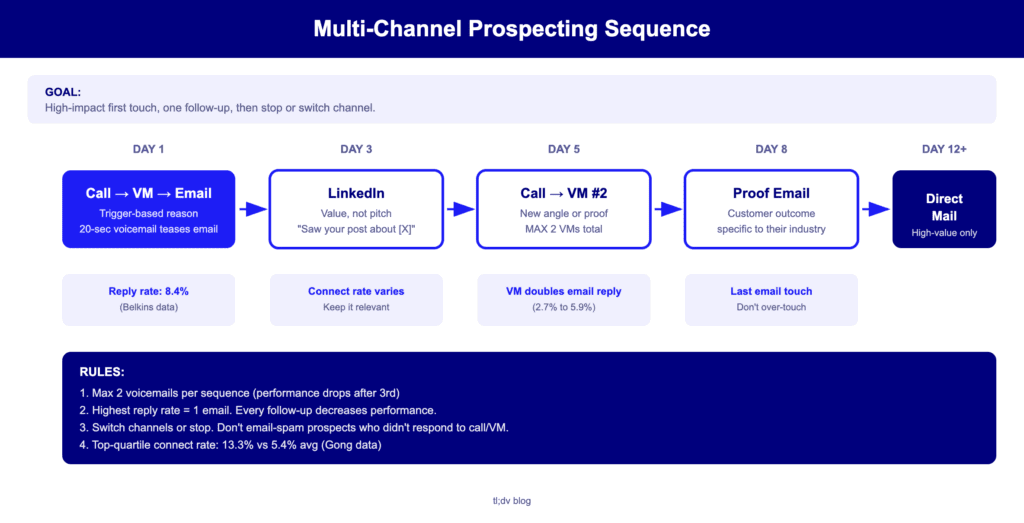
Gong: голосовая почта удваивает количество ответов по электронной почте (2,73% → 5,87%), но 3+ голосовых сообщений снижается до 2,2% — ниже базового уровня. Коэффициент подключения в верхнем квартиле: 13,3% против 5,4% в среднем. Прямая почтовая рассылка по спискам адресов: 161% ROI (ANA); списки потенциальных клиентов: 34%.
Упражнение: Напишите 20-секундное голосовое сообщение: имя, одна актуальная причина, интригующее содержание электронного письма. Запишите 3 дубля.
Последовательность: День 1: Звонок → Голосовое сообщение → Электронное письмо | День 3: LinkedIn (ценность, а не реклама) | День 5: Звонок → Голосовое сообщение № 2 (максимум) → Новый подход | День 8: Подтверждающее электронное письмо | День 12+: Прямая почтовая рассылка (только высокоценная)
Резюме: «Создал многоканальную последовательность, достигшую [X]% коэффициента подключения среди более чем 500 потенциальных клиентов в квартал».
Навыки работы в сфере продаж
Упражнение — CRM-спринт (15 минут): Исправьте устаревшие даты следующих шагов. Проверьте последние 5 причин закрытия. Подтвердите критерии этапа для 5 лучших сделок. tl;dv Автоматическое заполнение полей данными из звонков.
Этап | Критерии выхода |
Квалифицированный | ICP подтверждено, проблема признана, следующее совещание назначено |
Открытие сделано | Проблема количественно оценена, заинтересованные стороны определены, сроки обсуждены. |
Оценка | Идентификация чемпиона, запланированная техническая проверка, подтвержденный бюджет |
Предложение | Выполнено, взаимный план действий, закупки спланированы |
Переговоры | Условия пересмотрены, юридические вопросы урегулированы, дата закрытия подтверждена |
Резюме: «Поддерживал точность CRM на уровне [X]%, точность прогнозов в пределах [X]%».
Быстрое проектирование для продаж
Упражнение — Ролевая игра «Возражение»: «Вы — скептически настроенный вице-президент по операциям в компании-производителе с оборотом 200 млн долларов. Высказывайте возражения по поводу рентабельности инвестиций, сроков и ресурсов. Оценивайте каждый ответ по шкале от 1 до 5 по конкретности, эмпатии и контролю следующих шагов».
Вариант использования | Подсказка | Проверить |
Исследование | «Подведите итоги доходов [компании]. Перечислите 3 фактора давления». | Источник связан, текущий |
Ролевая игра | «Действуйте как скептик [персона]. Оцените мои ответы». | Завершено 3+ раунда |
Электронная почта | «Электронное письмо из 3 предложений [персоне] о [триггере]». | Переписано вашим голосом |
Последний шаг: Прочитайте черновики, созданные ИИ, вслух. Если они звучат как пост лидера мнений в LinkedIn, то вам нужно больше в них вложить себя. Негативная реакция покупателей на обращение, сгенерированное ИИ растет.
Резюме: «Разработал рабочие процессы для исследований в области искусственного интеллекта, сократив время подготовки к звонкам на [X]%».
Приоритеты навыков в зависимости от роли
Навыки представителя по развитию продаж / SDR
Приоритет | Ключевой показатель | Еженедельные учения |
Исследование релевантности | Коэффициент ответов | 3 угла на цель |
Многоканальный поиск потенциальных клиентов | Скорость соединения | Голосовая почта в качестве рекламного инструмента |
Передача обнаружения | Преобразование этапа 1→2 | Вопросы, основанные на гипотезе |
Активное слушание | Коэффициент разговора | Зеркало последнего слова |
CRM-гигиена | Полнота данных | 15-минутный пятничный спринт |
Навыки торгового представителя (AE / торговый представитель)
Приоритет | Ключевой показатель | Еженедельные учения |
Создание смысла | Процент побед, продолжительность цикла | Карта решений по сделке |
Открытие | Преобразование этапа | 3 гипотезы + опровергающие вопросы |
Обнаружение рисков | Точность прогноза | 5 лучших сделок до смерти |
Переговоры | Ставка дисконтирования | Лестница «дай-получи» |
Финансовая грамотность | Вовлечение финансового директора | ROI за 7 минут на каждое предложение |
Навыки менеджера по продажам (лидерство + коучинг)
Приоритет | Ключевой показатель | Еженедельные учения |
Осуществление коучинга | Улучшение репутации 30/60/90 | 2 вызова → метка → оценка → назначение упражнения |
Дисциплина оценки | Коэффициент закрытия разрыва | Ежемесячные оценки, самостоятельные и со стороны руководителя |
Проверка рисков трубопровода | Точность прогноза | 10 лучших сделок с контрольным списком рисков |
Анализ командных моделей | Тенденции слабости команды | Разговорный интеллект перекрестный анализ звонков |
tl;dv позволяет делать это в большом масштабе: модели с несколькими встречами, playbook , оценка эффективности с помощью ИИ.
Навыки работы в сфере продаж (операционная роль)
Приоритет | Ключевой показатель | Еженедельные учения |
Качество данных | Полнота полей | Еженедельный аудит основной сферы деятельности |
Проектирование процессов | Согласованность преобразования этапов | Составить карту одного процесса/квартала |
Администратор инструментов | Точность интеграции | Ежемесячно интеграция аудит |
Отчётность | Точность приборной панели | Перестраивать один отчет в месяц |
Навыки инженера по продажам
Приоритет | Ключевой показатель | Еженедельные учения |
Техническое открытие | Коэффициент успешности POC | 3 ограничения Qs перед демонстрацией |
Демонстрационная архитектура | Коэффициент «демо-предложение» | Проблема в первую очередь (3 пункта) |
Рассмотрение технических возражений | Частота разрешения | Ролевая игра: 5 основных возражений |
Подготовка к обеспечению безопасности/закупкам | Скорость цикла обзора | 10 лучших ответов по безопасности до сборки |
Навыки продавца-консультанта
Приоритет | Ключевой показатель | Еженедельные учения |
Беглость в использовании продукта | Коэффициент допродаж | Ежедневный тест по 5 продуктам |
Необходимость обнаружения | Удовлетворенность, коэффициент возврата | 3 вопроса перед тем, как дать рекомендацию |
Проверка возражений | Коэффициент конверсии | Перед ответом подтвердите получение сообщения |
Ясность следующего шага | Коэффициент последующих действий | «Исходя из того, что вы мне рассказали, вот моя рекомендация и ее обоснование» |
Навыки продавца-консультанта напрямую переносятся на любую другую должность в сфере продаж — выявление потребностей, работа с возражениями и контроль следующих шагов являются универсальными.
Навыки продаж для резюме и CV
Указание «переговоры» ничего не значит. Доказательство того, что вы сохранили 94% от цены по списку в 40 сделках, значит все.
Формула доказательства
Навык → Доказательство → Показатель → Инструмент → Результат
«Реализовал гипотетическое открытие (навык) в более чем 150 корпоративных возможностях (доказательство), достигнув 62% конверсии этапа 1 в этап 2 (показатель) с помощью Salesforce Gong инструмент), что привело к получению 2,1 млн долларов США (результат)».
Пунктирный список по должностям
SDR: «Проведено [X] квалифицированных встреч в месяц с помощью многоканального взаимодействия (телефон, электронная почта, LinkedIn, голосовая почта), достигнут показатель ответов [X]% по сравнению со средним показателем команды [Y]%».
AE: «Управлял потоком заказов на сумму [X] млн долларов по [X] корпоративным счетам, поддерживая точность прогнозов на уровне [X]% благодаря еженедельным предварительным анализам и управлению этапами на основе фактических данных».
Менеджер по продажам: «Обучил [X] менеджеров по продажам с помощью анализа звонков и оценочных листов поведения, что позволило повысить коэффициент успешности с [X]% до [X]% за [период времени]».
Продажи: «Разработка стандартов качества CRM, обеспечивающих [X]% полноту полей, что позволяет делать прогнозы с точностью до [X]% от фактической выручки».
Инженер по продажам: «Руководил техническими исследованиями для [X]+ корпоративных возможностей, достигнув [X]% коэффициента POC-to-close с помощью методологии «проблема прежде всего».
Продавец: «Достиг [X]% превышения целевого показателя конверсии благодаря структурированной системе выявления потребностей и рекомендаций».
Передаваемые навыки продаж
- Коммуникация → управление заинтересованными сторонами, отчетность для руководства
- Переговоры → управление поставщиками, проверка контрактов
- Обнаружение → сбор требований, исследование пользователей
- Дисциплина трубопровода → управление проектами, прогнозирование
- Финансовая грамотность → бизнес-анализ, управление бюджетом
Контрольный список ATS
- Сделать: Конкретные цифры, названия инструментов (Salesforce, HubSpot, Gong, tl;dv, Outreach)
- Не делайте: Неясные прилагательные без результатов («отличный коммуникатор» → «структурированные отчеты с достижением [X]% выполнения»).
Как выбрать обучение навыкам продаж
Что работает: практические занятия с обратной связью (ролевые игры, анализ телефонных разговоров). Наглядные оценочные таблицы. Реальные записи для коучинга. Обучение, адаптированное к вашей модели продаж — для обучения навыкам продаж корпоративного программного обеспечения требуется иная учебная программа, чем для розничных продаж или внутренних продаж. Если смотреть в будущее, эффективные стратегии продаж на 2026 год должны будут включать передовые технологии и аналитику данных, чтобы лучше понимать поведение клиентов. Команды также должны уделять приоритетное внимание построению подлинных отношений, поскольку персонализированное общение станет ключом к выделению на фоне все более конкурентного рынка. Кроме того, адаптация программ обучения к текущим тенденциям обеспечит оснащение специалистов по продажам новейшими навыками, необходимыми для достижения успеха.
Красные флажки: Поклонение сценариям (фреймворки превосходят сценарии). Теория без практических упражнений. Тактика «Всегда заключай сделку». Универсальные программы.
Подход с максимальной рентабельностью инвестиций: Создайте внутреннюю библиотеку лучших звонков из записей вашей команды. Отмечайте моменты проявления навыков. Обучайте на реальных примерах. Оценивайте с помощью оценочных листов поведения. Отслеживайте улучшение через 30/60/90 дней. Тренинг по развитию навыков продаж работает лучше всего на постоянной основе, а не ежеквартально.
Такие инструменты, как tl;dv этот процесс автоматическим: записывают, транскрибируют и индексируют каждый звонок для коучинга.
Выберите один навык. Выполните одно упражнение. Сегодня.
- Оценить (10 мин)
- Выберите свой самый слабый навык
- Запустите дрель (10 мин)
- Просмотр одного clip звонка (10 мин)
- Повторная оценка через 7 дней
Самая сложная часть — это шаг 4: получение видеозаписи. Большинство представителей пропускают просмотр, потому что поиск нужного момента в 45-минутной записи кажется тяжелой работой.
Попробуйте tl;dv для автоматической записи и транскрибирования звонков, получения сводок с помощью ИИ и создания библиотеки записей с возможностью поиска. Используйте рабочие процессы для тренеров для оценки звонков, отслеживания улучшений и обмена лучшими моментами. Ваши звонки уже происходят — начните учиться на них.