Zum Inhalt





Zusammenfassung zu „ Fathom “ MCP-Server
- Superhuman hat im September 2026 Fathom übernommen. Der MCP-Server unter Fathomfunktioniert weiterhin wie bisher, und ich werde ihn erneut testen, falls sich die Tools ändern, sobald Fathom in die Superhuman-Suite integriert wird.
- FathomDer MCP-Server verfügt über neun Tools, die im August 2026 anhand des Live-Servers getestet und überprüft wurden.
- Alle neun Tools sind schreibgeschützt, und die MCP-Serverfunktionen stehen auf allen Ebenen zur Verfügung, einschließlich der kostenlosen.
- Die Suche berücksichtigt Sitzungstitel und Zusammenfassungen, keine Protokolle. Claude konnte keine Inhalte finden, die in meinen Protokollen standen, fand aber das, was es in die Zusammenfassungen geschafft hatte. Vollständige Protokolle lassen sich abrufen, sobald man die ID hat. Es gibt keine Indizierung dafür.
- Noch zwei Dinge: Bei Suchanfragen, die aus mehreren Wörtern bestehen, müssen alle Wörter im Titel oder in der Zusammenfassung vorkommen. Die Anmeldung ist kostenlos, aber im kostenlosen Tarif sind nach fünf Abfragen pro Monat nur noch einfache Zusammenfassungen verfügbar, was die einzige Ebene einschränkt, die die Suche erreichen kann.
FathomDer MCP-Server von Fathomverfügt insgesamt über neun Tools, was im Widerspruch zu den eigenen Hilfeseiten steht, auf denen von sieben Tools die Rede ist. Alle neun Tools sind schreibgeschützt, was ich festgestellt habe, nachdem ich mich über mit dem MCP meines eigenen „Claude“ verbunden hatte.
Sie verbinden den MCP-Server aus Ihrem „ Fathom “-Konto mit dem KI-Assistenten Ihrer Wahl, und Ihre Bibliothek mit Anrufen und Transkripten wird zu einer Live-Wissensdatenbank, die Sie über ein Chat-Fenster abfragen können.
Ich habe Fathom in den letzten Jahrenausgiebig getestet, sowohl als allgemeines Aufzeichnungstool für Besprechungen als auch hinsichtlich der Transkription in anderen Sprachen, wie beispielsweise Schwedisch. Es ist ein solides Tool, auch wenn ich festgestellt habe, dass die Ergebnisse stellenweise etwas lückenhaft sein können.
Welcher „ Fathom “-MCP-Endpunkt ist der offizielle?
Bevor ich darauf eingehe, wie das „ Fathom “ MCP funktioniert, möchte ich kurz darauf hinweisen, dass es noch ein anderes Unternehmen namens „ Fathom Analytics“ gibt. Das ist kein Problem, wenn Sie direkt über die Verzeichnisse von Claude oder ChatGPT eine Verbindung herstellen; es bedeutet jedoch, dass es zu Namenskonflikten kommen kann, wenn Sie im Internet oder sogar in Ihrem eigenen LLM nach Informationen suchen.
Der offizielle MCP-Server von „ Fathom “ ist unter api.fathom.ai/mcp erreichbar. Es handelt sich um einen First-Party-Server, bei dem die Authentifizierung über Ihr bestehendes Fathom -Konto erfolgt. Stand: August 2026. Außerdem gibt es von der Community erstellte Server, die die öffentliche API von Fathomnutzen. Diese werden nicht von Fathom gepflegt, erfordern die Eingabe eines API-Schlüssels, den Sie selbst einfügen, und mindestens einer davon bietet ein Tool zur Erstellung von Webhooks an. Der Begriff „Read-only“ bezieht sich auf den eigenen Server von Fathom, nicht auf alle Server, die diesen Namen tragen.
Die neun Tools, über die der MCP-Server von Fathomverfügt
FathomDer MCP-Server von Fathomverfügt insgesamt über neun Tools. Dabei handelt es sich um zwei Suchfunktionen, drei zum Abrufen von Inhalten, zwei zum Auflösen von IDs und zwei, die lediglich Metadaten zu Konten bereitstellen. Alle diese Tools konnte ich im August 2026 live aus dem verbundenen MCP abrufen. In der Dokumentation auf der eigenen Website von werden einige davon nicht erwähnt. Die wahrscheinlichste Erklärung dafür ist, dass sie erst nach der Erstellung der Hilfeseite hinzugefügt wurden, und nicht, dass sie absichtlich verborgen wurden.
| Tool | Was es tut | Parameter | Grenzen |
|---|---|---|---|
| search_meetings | Durchsucht Titel und Zusammenfassungen von Sitzungen nach Stichwörtern. Der Text der Sitzungsprotokolle wird nicht berücksichtigt. | query, recorded_by (beide erforderlich), created_after, max_pages | Alle Begriffe müssen im Titel oder in der Zusammenfassung vorkommen. Etwa 25 Ergebnisse pro Seite, standardmäßig 10 Seiten, maximal 20 Seiten |
| find_person | Sucht unter den Referenten von Veranstaltungen nach einer Person anhand ihres Namens und gibt anschließend deren Veranstaltungen mit kurzen Zusammenfassungen zurück. | name, recorded_by (beide erforderlich), created_after | Durchsucht das Rednerverzeichnis, nicht den Inhalt des Transkripts |
| list_meetings | Listet Besprechungen anhand von Filtern auf. Gibt die Aufzeichnungs-ID, den Titel, die URL, den Aufzeichner und die Teilnehmer zurück. | created_after, created_before, cursor, recorded_by, teams, include_summary, include_action_items, max_pages | Etwa 10 Ergebnisse pro Seite, standardmäßig eine Seite, maximal 20 |
| get_meeting_transcript | Gibt das vollständige Protokoll einer Sitzung mit Angabe der Redner zurück. | recording_id (erforderlich), url | Selbstbeschränkung auf drei Transkripte pro Abfrage |
| get_meeting_summary | Gibt die KI-Zusammenfassung für eine Besprechung zurück. | recording_id (erforderlich) | Ein Termin pro Anruf |
| get_recording_by_url | Wandelt die URL einer „ Fathom “-Besprechung oder einen Freigabelink in eine Aufzeichnungs-ID um. | URL (erforderlich) | Akzeptiert vollständige URLs und reine Pfade |
| Aufzeichnung nach Anruf-ID abrufen | Wandelt eine numerische Anruf-ID in eine Aufzeichnungs-ID um. | call_id (erforderlich) | Anruf-IDs und Aufzeichnungs-IDs sind unterschiedliche Nummern |
| list_teams | Gibt die Teams aus „ Fathom “ zurück, denen Sie angehören, zur Verwendung als Filter. | Keine | Nur Namen |
| get_identity | Gibt den Namen und die E-Mail-Adresse des verbundenen Kontos zurück. | Keine | Keine |
Was die Suche auf Fathomeigentlich umfasst
Die MCP-Suche von „ Fathom “ liest Sitzungstitel und Zusammenfassungen aus. Derzeit greift sie noch nicht auf das Transkript zu. Das ist in mancher Hinsicht schneller, aber bei meinen Tests sind mir einige Probleme mit den Zusammenfassungen aufgefallen. Am deutlichsten zeigte sich dies bei meinen Tests mit Schwedisch: Obwohl das Gespräch auf Schwedisch transkribiert wurde, konnte keine schwedische Zusammenfassung geliefert werden. Fathom transkribiert in weitaus mehr Sprachen, als es zusammenfasst. Wenn Sie also in einer der Sprachen arbeiten, die nicht zusammengefasst werden, ist die durchsuchbare Ebene bereits von vornherein in der falschen Sprache. Das ist kein großes Problem, und insgesamt sind die Zusammenfassungen von Fathomrecht gut, aber wenn du nach etwas sehr Detailliertem suchst, findet diese Suche es möglicherweise nicht.
Also habe ich vier Abfragen in meiner eigenen Bibliothek durchgeführt. Da sie recht klein ist, konnte ich die Paginierungsgrenzen nicht einem Stresstest unterziehen, aber die „Canaries“ haben einige interessante Ergebnisse zutage gefördert.
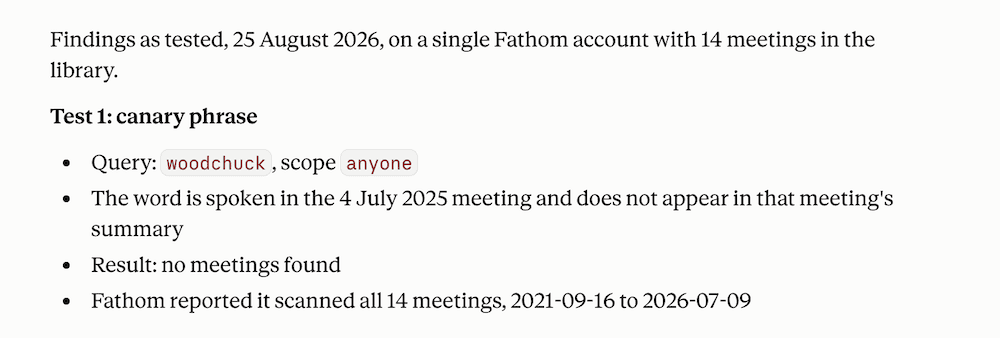
Test 1: Der Kanarienvogel
Zunächst fand ich ein Wort, von dem ich wusste, dass es in einem der Protokolle vorkam – „woodchuck“ –, das aber nicht in die Zusammenfassung übernommen worden war. Die Logik dahinter ist, dass das Tool in der Lage sein sollte, genau dieses Wort bei der Suche zu finden. „ Fathom “ hat alle Sitzungen durchsucht, konnte das Wort jedoch nicht finden.
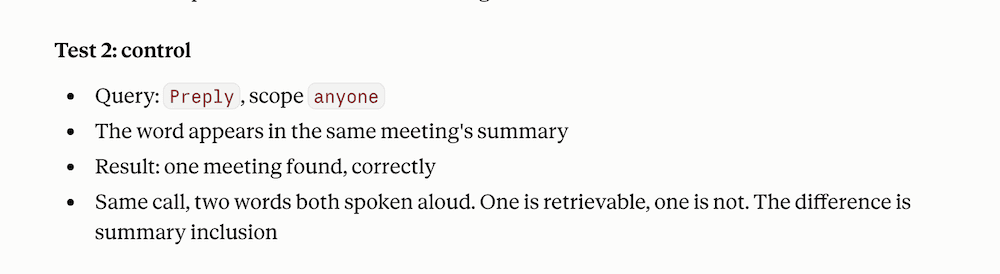
Test 2: Kontrolle
Als Nächstes suchte ich nach einem Begriff aus demselben Anruf, der es tatsächlich in die Zusammenfassung geschafft hatte. Es war der Markenname „Preply“ von meinem Online-Französischunterricht. Dieser wurde sofort angezeigt.
Derselbe Anruf, beide Wörter wurden laut ausgesprochen. Das eine lässt sich finden, das andere nicht. Der einzige Unterschied besteht darin, ob es in die Zusammenfassung aufgenommen wurde.
Test 3: UND-Logik
Der dritte Test suchte nach dem Ausdruck „Review Incentive Program“. Dieser wurde nicht gefunden, da Fathom ihn in einzelne Schlüsselwörter aufgeteilt hatte. Einige der Schlüsselwörter tauchten in der Zusammenfassung auf, aber nicht alle, sodass keine Ergebnisse angezeigt wurden.
Die Fehlermeldung selbst zeigt, was passiert ist. Sie listet die drei Wörter einzeln auf und besagt, dass kein Termin allen drei Begriffen entsprach.

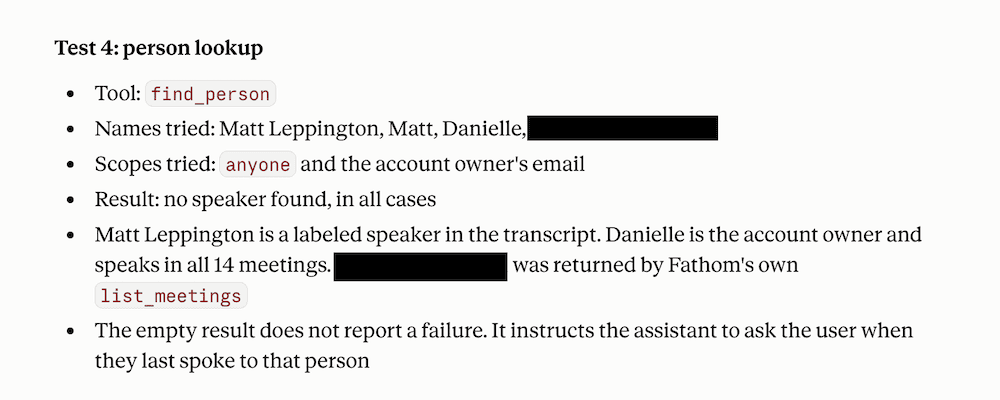
Test 4: Personensuche
Schließlich bin ich gelaufen find_person zu Matt, der in einem meiner Transkripte als Sprecher gekennzeichnet ist, zu einem Namen aus der Fathom, die mir gerade auf der Sitzungsliste ausgehändigt worden war, und zu meinem eigenen Namen als Kontoinhaber. Teilnamen, vollständige Namen, beide Berechtigungsbereiche. In keinem Fall wurde etwas gefunden. Das leere Ergebnis meldet auch keinen Fehler. Es weist den Assistenten an, zu fragen, wann ich zuletzt mit dieser Person gesprochen habe, sodass eine Suche, die nichts ergeben hat, als hilfreiche Folgefrage erscheint.
Wer kann was sehen: Ihre Besprechungen, die Ihres Teams und Administratorzugriff
Der Connector kann nur das sehen, was Sie in Ihrem eigenen „ Fathom “-Konto sehen können, und sonst nichts. Auf Fathom wird dies sehr deutlich gemacht: Dort heißt es, dass die Verbindung keine neuen Datenkategorien eröffnet und nur auf Aufzeichnungen von Besprechungen zugreifen kann, für deren Anzeige Sie die Berechtigung haben. Ihre Berechtigungseinstellungen unter Fathom sind auf die Verbindung mit Ihrem LLM beschränkt.
Noch nicht feststeht, wie viel Claude oder ChatGPT einsehen können. Zwei der neun Tools, search_meetings und find_person, erfordern bei jedem einzelnen Aufruf einen Suchbereich, und es gibt keine Standardeinstellung. Ihr Assistent wählt diesen aus – entweder Ihre eigenen Aufzeichnungen oder alles, was Sie abrufen können –, und die Beschreibungen der Tools von Fathomweisen darauf hin, dass bei mehrdeutigen Fragen ein breiter Suchbereich gewählt werden soll. Sie sehen nie, wie diese Entscheidung getroffen wird.
Wenn Sie nach „was wir gesagt haben“ im Vergleich zu „was ich gesagt habe“ fragen, erhalten Sie möglicherweise zwei unterschiedliche Suchergebnisse, ohne dass Sie erkennen können, welches davon angezeigt wurde.
Was die Team- und Organisationspläne in Claude betrifft, muss ein Administrator den Connector erst aktivieren, bevor er von anderen genutzt werden kann. Falls Fathom bei Ihnen nicht angezeigt wird, beginnen Sie dort.
Welchen „ Fathom “-Plan benötigen Sie für MCP?
FathomDas MCP ist recht großzügig bemessen und steht in jedem Tarif zur Verfügung, einschließlich der kostenlosen Stufe. Außerdem können Sie MCPs über das Verzeichnis in jedem Claude- oder ChatGPT-Tarif miteinander verbinden.

Die Einschränkungen liegen hier im Bereich der KI. In der kostenlosen Version von „ Fathom“ erhalten die ersten fünf Anrufe pro Monat eine vollständige, detaillierte Zusammenfassung – und genau diesen Teil haben wir als für die Suche zugänglich identifiziert. Alle weiteren Anrufe erhalten eine einfache, vorlagenbasierte Zusammenfassung. Wenn die relevanten Informationen dabei nicht berücksichtigt werden, können Sie möglicherweise nicht so effizient suchen, wie Sie es gerne hätten.
Ratenbegrenzungen und der Umfang der Rückwärtssuche
Diese Zahlen stammen aus den Tool-Definitionen selbst und nicht aus der Dokumentation von Fathom. Die Suche liefert etwa 25 Ergebnisse pro Seite und ruft bis zu 20 Seiten ab. Das bedeutet, dass die Obergrenze bei etwa 500 Besprechungen liegt. Sofern Ihr KI-Assistent nicht beschließt, weiter in Ihrer Bibliothek zu stöbern, wird er wahrscheinlich bei etwa 250 Besprechungen angelangt sein und die Suche beenden.
Die Auflistung ist übersichtlicher: Pro Seite werden etwa 10 Termine angezeigt, standardmäßig wird eine Seite angezeigt, maximal sind jedoch 20 Seiten möglich.
Auch die Transkripte sind stark eingeschränkt, wobei die get_meeting_transcript Das Tool ist auf drei pro Abfrage begrenzt, da Transkripte in der Regel recht lang sind.
Keines davon ist ein Drosselventil, und keines gibt einen Hinweis darauf. Meine eigene Bibliothek ist viel zu klein, um auf eines davon zuzugreifen, daher stammen diese Angaben aus den Tools und wurden nicht getestet. Geben Sie einen Datumsbereich an, falls Ihre Bibliothek umfangreich ist.
So verbinden Sie „ Fathom “ mit „Claude“
Ich habe den aus Claudes Connector-Verzeichnis verwendet. Gehe zu „Einstellungen“, dann zu „Connectors“, suche nach „ Fathom “ und bestätige die Anmeldung.
Sie können auch „api.fathom.ai/mcp“ als benutzerdefinierten Konnektor hinzufügen – hierfür ist ein kostenpflichtiger Claude-Tarif erforderlich – oder denselben Endpunkt in Claude Code einfügen. Alternativ können Sie den Konnektor ganz überspringen und ein Transkript direkt in den Chat einfügen, wodurch alle oben genannten Beschränkungen umgangen werden.
Warum Ihre MCP-Abfrage „ Fathom “ keine Ergebnisse lieferte
Sie haben also eine Verbindung zu Fathom hergestellt, und Claude bzw. ChatGPT haben eine Frage gestellt, aber keine Antwort erhalten. Dafür gibt es sechs mögliche Gründe.
1. Ihre Suchbegriffe befinden sich im Transkript, nicht in der Zusammenfassung
Das ist bei meinen Tests passiert. Die Suche berücksichtigt ausschließlich die Zusammenfassungen, und wenn die jeweilige Formulierung oder Erkenntnis darin nicht enthalten ist, liefert die Suche der KI keine Ergebnisse.
2. Du hast mehr als ein Wort verwendet
Jedes einzelne Wort, nach dem Sie in Ihrer Suchanfrage suchen, muss in der Zusammenfassung enthalten sein. Genau das ist mir passiert, als ich nach dem Bewertungsprämienprogramm gesucht habe. Einige der Wörter waren zwar in der Zusammenfassung enthalten, aber schon ein einziges fehlendes Wort reichte aus, um keine Ergebnisse zu erhalten. Suchanfragen mit mehreren Wörtern scheitern häufiger als solche mit nur einem Wort.
3. Ihr Assistent hat in der falschen Datenbank gesucht
Die Suche benötigt bei jedem Aufruf einen Suchbereich – entweder Ihre eigenen Aufzeichnungen oder alles, worauf Sie Zugriff haben –, und Ihr Assistent wählt diesen aus, ohne Sie darüber zu informieren. Wenn Sie fragen: „Was haben wir zur Verlängerung gesagt?“, durchsucht er möglicherweise einen anderen Datenpool als bei der Frage: „Was habe ich zur Verlängerung gesagt?“ Wenn Sie ein Gespräch eines Kollegen meinen, geben Sie dies in der Frage an. „Was hat Dave im Juni zum Budget gesagt?“ liefert dem Assistenten eine Person, ein Thema und ein Datum, anhand derer er arbeiten kann.
4. Das Meeting ist älter als der Parameter „Search Reach“
Standardmäßig umfasst die Suche etwa 250 Termine und wird ohne weitere Ankündigung beendet. Geben Sie einen Datumsbereich an, wenn Sie ältere Termine suchen.
5. Die Verarbeitung des Transkripts ist noch nicht abgeschlossen
Ein gerade beendetes Gespräch ist möglicherweise noch nicht im System erfasst. Bitte warten Sie einen Moment und versuchen Sie es erneut.
6. Ihr Assistent arbeitet mit einer veralteten Werkzeugliste
Die Tools werden beim Öffnen einer Unterhaltung aufgelistet. Wenn Sie sich also erst mitten im Chat verbinden, kann es sein, dass der Assistent diese nicht sieht. Stellen Sie zunächst eine Verbindung her und starten Sie dann einen neuen Chat.
Wie schneidet der MCP-Server von „ Fathom“ im Vergleich zu anderen Aufzeichnungslösungen für Besprechungen ab?
Fathom ist keineswegs der einzige KI-Besprechungsassistent mit einem MCP-Anschluss, und auch tl;dv verfügt über einen eigenen. Wie gut schneidet der MCP von Fathomim Vergleich zu den Funktionen anderer MCP-Server ab?
| Tool | Lesen oder Schreiben | Geht über reine Besprechungen hinaus | Kontrollen zur Festlegung des Untersuchungsumfangs | In Claudes Verzeichnis | Plan-Tor |
|---|---|---|---|---|---|
| Fathom | Nur-Lese-Zugriff | Nein | Nach Protokollführer, nach Team | Ja | Jeder Plan |
| tl;dv | Nur-Lese-Zugriff | Nein | Nach Teilnehmer, intern oder extern | Ja | Pro |
| Fireflies | Nur-Lese-Zugriff | Nein | Nicht dokumentiert | Ja | Nicht dokumentiert |
| Granola | Nur-Lese-Zugriff | Nein | Persönliche oder Arbeitsbereichsbereiche, Ordner | Ja | Jeder Tarif, mit Einschränkungen bei den kostenlosen Leistungen |
| Circleback | Nur-Lese-Zugriff | E-Mail und Kalender | Nicht dokumentiert | Ja | Nicht dokumentiert |
| Otter | Nur-Lese-Zugriff | Nein | Eigene und gemeinsame Unterhaltungen | Ja | Jeder Plan |
| Kolleginnen und Kollegen | Lesen und Schreiben | Kalender | Verwaltungsoptionen pro Werkzeug | Ja | Nicht dokumentiert |
Für wen sind die MCP-Server-Pakete v Fathomgeeignet – und für wen nicht?
Fathom verfügt über eine solide Auswahl an Tools, die alle übersichtlich gestaltet sind und jeweils eine einzige Aufgabe erfüllen. Es ist auch im kostenlosen Tarif von „ Fathom“ verfügbar, was nicht für jedes Tool dieser Kategorie gilt. Es ist genau das Richtige für Sie, wenn Sie Ihre eigenen Anrufe durchsuchen, Ihre Bibliothek relativ klein ist und die Zusammenfassungen zuverlässig genau das erfassen, wonach Sie später suchen werden.
Es ist eher nicht das Richtige für Sie, wenn Sie teamübergreifend suchen müssen. Keiner der beiden Server indexiert die Inhalte Ihrer Anrufe, daher arbeiten beide so, dass sie zunächst die Auswahl eingrenzen und anschließend die Mitschriften durchsehen – und genau bei dieser Eingrenzung unterscheiden sie sich. Fathom grenzt die Suche danach ein, wer die Aufzeichnung gestartet hat. Der gesuchte Anruf wurde oft von jemand anderem aufgezeichnet. tl;dv grenzt die Suche danach ein, wer im Raum war, und filtert interne von externen Besprechungen – das ist der Unterschied zwischen der gezielten Eingrenzung auf die richtige Mitschrift und dem bloßen Raten.
tl;dvDer MCP-Server ist ab der Pro-Stufe enthalten, ist schreibgeschützt, umfasst fünf Tools und unterstützt OAuth. Der entscheidende Unterschied liegt in der Nutzung durch Teams. Die Funktionen zur Teilnehmerauswahl und der Filter für interne und externe Teilnehmer sind beide darauf ausgelegt, die Anrufe anderer Personen statt der eigenen zu durchsuchen – genau das ist die Situation, mit der der Recorder-Scoping- Fathomam schlechtesten zurechtkommt.
Häufig gestellte Fragen zu „ Fathom “ MCP
Wie viele Tools verfügt der MCP-Server von „ Fathom “?
Neun, gezählt vom Live-Server am 24. August 2026. Auf den Hilfeseiten von Fathomwerden sieben Schaltflächen beschrieben. In einer Anleitung vom April 2026 wurden sechs beschrieben, wobei zwei davon falsch benannt wurden. Die beiden, die in der Aufzählung von Fathomfehlen, sind die ID-Resolver. Der Server ist seit seinem Start stetig gewachsen, daher ist jede veröffentlichte Zählung eine Momentaufnahme, einschließlich dieser.
Kann der MCP-Server von „ Fathom “ meine Besprechungsprotokolle durchsuchen?
Nein. Die Suche berücksichtigt nur die Titel und Zusammenfassungen der Besprechungen. Vollständige Transkripte können abgerufen werden, sobald Sie eine Aufzeichnungs-ID haben; der Text ist also verfügbar, wird aber nicht indexiert. Ich habe nach einem Wort gesucht, das in einem Gespräch gefallen war, aber in der Zusammenfassung fehlte: keine Ergebnisse in der gesamten Bibliothek. Ein Wort aus demselben Gespräch, das in der Zusammenfassung enthalten war, lieferte sofort ein Ergebnis.
Ist der MCP-Server von „ Fathom “ kostenlos?
Ja, bei jedem „ Fathom “-Tarif, auch beim kostenlosen. Der Haken liegt woanders. Bei der kostenlosen Version von Fathomsind erweiterte KI-Zusammenfassungen auf fünf Anrufe pro Monat begrenzt; danach erhalten Sie nur noch eine einfache Vorlage. Da die Suche auf den Zusammenfassungen basiert, wird die durchsuchbare Datenmenge ab dem sechsten Anruf immer spärlicher, auch wenn Aufzeichnung, Transkription und Speicherung weiterhin unbegrenzt sind.
Kann ich über das MCP unter Fathom auf die Aufzeichnungen meines Teams zugreifen?
Nur das, was Sie bereits unter Fathom sehen können. Der Connector eröffnet keine neuen Datenkategorien, und Ihre bestehenden Berechtigungen bleiben unverändert bestehen. Zwei Tools erfordern bei jedem Aufruf einen Gültigkeitsbereich – entweder Ihre eigenen Aufzeichnungen oder alles, worauf Sie Zugriff haben –, und Ihr Assistent trifft die Auswahl. Aus der Antwort geht nicht hervor, in welchem Pool gesucht wurde; geben Sie daher an, wessen Anrufe Sie meinen.
Warum kann Claude mein „ Fathom “-Meeting nicht finden?
Meistens liegt es daran, dass Ihre Suchbegriffe im Transkript und nicht in der Zusammenfassung enthalten waren, da die Suche ausschließlich die Zusammenfassung durchsucht. Der nächstwahrscheinlichste Grund: Sie haben mehr als ein Wort verwendet. Jedes Wort muss im Titel oder in der Zusammenfassung vorkommen, und Fathom teilt Ihre Suchanfrage in einzelne Schlüsselwörter auf, sodass alle davon enthalten sein müssen. Versuchen Sie es stattdessen mit einem einzigen, aussagekräftigen Wort.
Wie weit zurück kann der MCP-Server von „ Fathom “ suchen?
Die Suche liefert etwa 25 Ergebnisse pro Seite und zeigt standardmäßig 10 Seiten an, also etwa 250 Termine. Die Anzahl kann auf 20 Seiten (etwa 500 Termine) ansteigen, wenn Ihr Assistent nach weiteren Ergebnissen fragt. Pro Seite werden etwa 10 Einträge angezeigt. Es gibt keine Anzeige, wenn die Suche vorzeitig endet. Geben Sie daher einen Datumsbereich an, falls Ihre Bibliothek sehr umfangreich ist.