Vai al contenuto





⚡Giudizio in breve (TL;DR)
What Wispr Flow is: An AI voice keyboard that works inside every app on Mac, Windows, iOS, and Android. Press a hotkey, speak naturally, and get clean, context-aware, formatted text wherever your cursor is sitting. No separate editor, no switching windows. It now also ships Wispr Flow Notetaker, a bot-free meeting recorder on Mac and Windows, which we’ve reviewed separately in our Wispr Flow Notetaker review.
Who it’s good for: Knowledge workers who write heavily across email, Slack, docs, and notes. Professionals who move between multiple devices or operating systems. Healthcare and legal teams who need HIPAA-ready dictation without paying enterprise prices. Anyone who already lives in AI tools like ChatGPT or Perplexity and wants to drive them by voice.
Who should avoid it: Users who need fully offline, on-device processing with zero cloud involvement. Mac-only power users who want to configure their own AI models (SuperWhisper is the better fit there). Very light users who won’t come close to the 2,000-word weekly free limit. Teams hoping the bundled notetaker will cover their meetings. It has no mobile app, trains on your data by default, and in our hands-on test it made calls lag on an 8 GB Mac. Dictation itself is unaffected.
The one thing you must know before subscribing: All transcription happens in the cloud, and Wispr processes and stores data in the United States, with no EU region. There is no offline mode. If sending audio to external servers is a hard no for your workflow, Wispr Flow is not the right tool regardless of plan.
Overall rating: 4.3 / 5: One of the most polished AI dictation tools available right now. The cloud-only architecture is the one very real caveat, but the “Improve the model for everyone” setting (formerly Privacy Mode) handles it well for most professional use cases, once you switch it off.
For businesses prioritizing strict data privacy and compliance across their entire workflow, exploring other GDPR-compliant enterprise AI platforms like Langdock can provide additional solutions.
Perché ho smesso di digitare: la mia esperienza di due settimane con Wispr Flow Pro
Scrivo velocemente. L'ho sempre fatto. Quindi, quando un collega mi ha detto: «Prova invece a parlare al tuo computer», mi sono sentito un po' compiaciuto.
Ho quindi provato Wispr Flow per due settimane su un MacBook M3, un PC con Windows 11 e un iPhone 16 Pro. E devo ammettere che ormai non torno più così spesso alla digitazione tradizionale.
Non è un'affermazione fatta a caso. Gestire un'azienda come tl;dv, dove ci occupiamo ogni giorno di voce e IA, significa che è piuttosto difficile impressionarmi con le affermazioni sulla tecnologia vocale. Wispr Flow mi ha comunque impressionato.
Ho usato la Dettatura di Apple, ho lottato con l’input vocale di Google e ho passato un pomeriggio con SuperWhisper convinto che avrebbe cambiato tutto (non è stato così, almeno per me). Ciò che distingue Wispr Flow è una differenza sottile ma reale: non si limita a trascrivere ciò che dici, ma capisce ciò che volevi e lo formatta di conseguenza.
I messaggi su Slack risultano informali. Le e-mail risultano professionali. I commenti nel codice vengono generati senza tutte quelle parole di riempimento che si usano mentre si pensa. È in grado di cogliere il contesto in un modo che mi ha davvero sorpreso.
Allora. È davvero il miglior strumento di dettatura con IA per Mac, Windows e dispositivi mobili nel 2026? Vediamolo nel dettaglio.
Cos'è Wispr Flow? (E in cosa si differenzia da SuperWhisper)
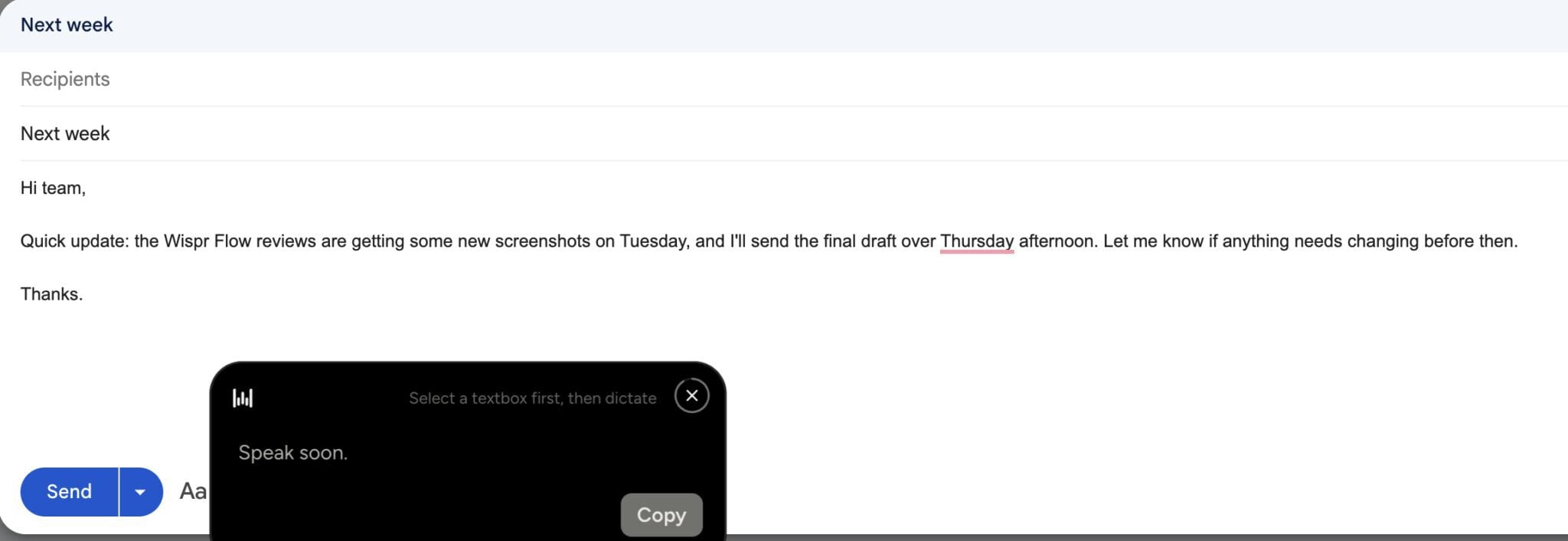
Wispr Flow è una tastiera vocale basata sull'intelligenza artificiale che funziona all'interno di tutte le app presenti sul tuo dispositivo. Basta premere un tasto di scelta rapida, parlare in modo naturale e il testo, pulito e ben formattato, verrà inserito direttamente nel punto in cui si trova il cursore, che si tratti di Gmail, Notion, Slack, VS Code o di un modulo qualsiasi su un sito web.
La parola chiave in questo caso è rifinito. Non si tratta di una trascrizione grezza. Wispr Flow elabora il tuo discorso attraverso modelli di IA basati su cloud che comprendono il contesto e rimuovono automaticamente le parole di riempimento, correggono la struttura delle frasi e formattano il risultato in base all'app in cui ti trovi.
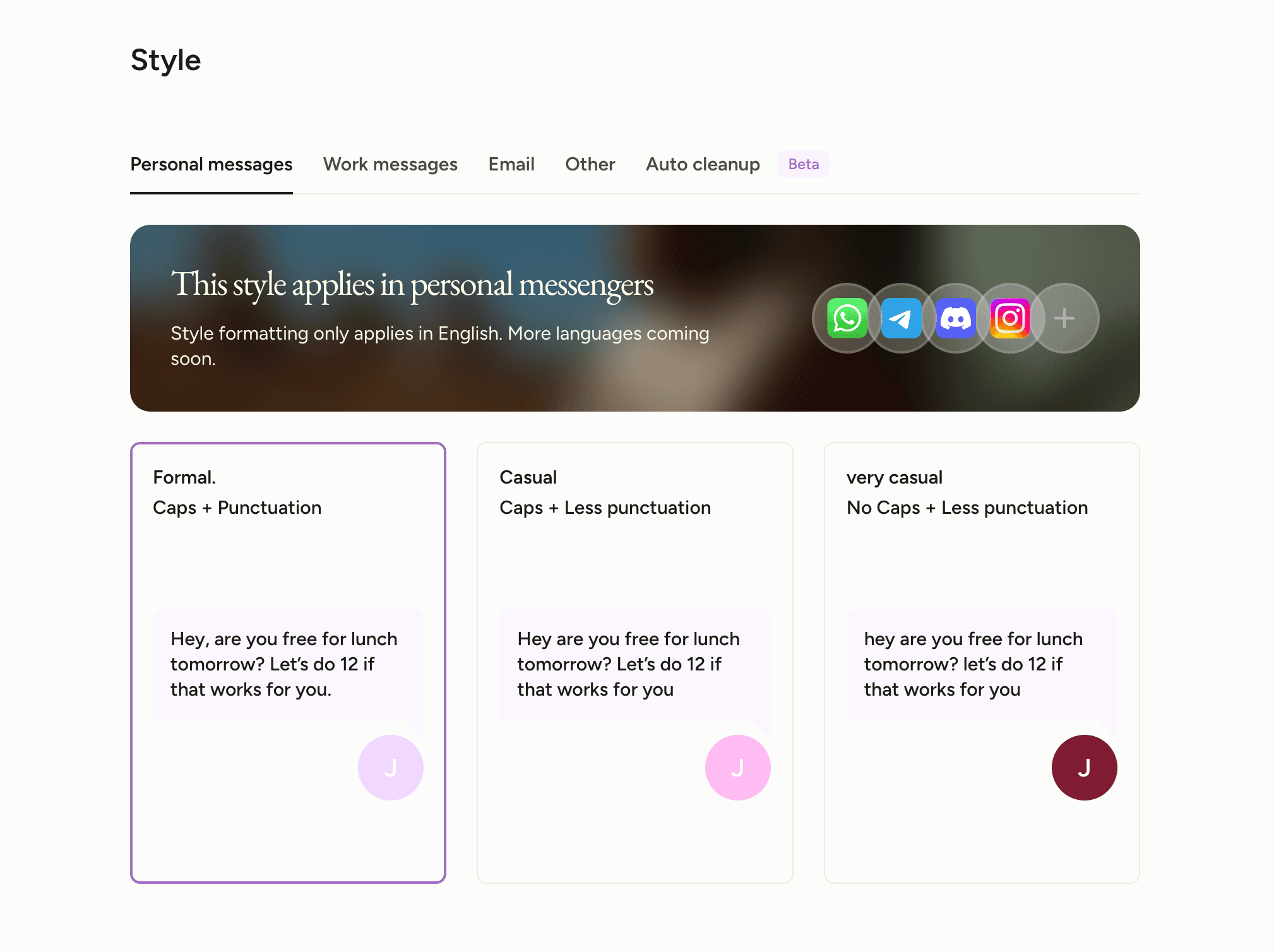
You control how that formatting behaves in Flow’s Style settings, with separate styles for personal messages, work messages, email and everything else, from formal to very casual.
L'azienda lo descrive come quattro volte più veloce della digitazione, il che equivale a circa 220 parole al minuto rispetto alla velocità media di digitazione di circa 45 parole al minuto. Nelle due settimane in cui l'ho provato, questa affermazione si è rivelata vera per i contenuti più lunghi, come e-mail e documenti. Per le risposte brevi e concise, il divario è minore ma comunque evidente.
In che cosa differisce da SuperWhisper?
È un argomento che ricorre costantemente in qualsiasi conversazione sull'uso dell'IA per la dettatura, quindi chiariamo subito questo punto.
SuperWhisper funziona interamente offline su Apple Silicon. I tuoi dati vocali non lasciano mai il tuo dispositivo. È uno strumento davvero potente per gli utenti esperti che desiderano configurare i propri modelli di IA, scegliere tra velocità e precisione e mantenere tutto in locale. Se sei un utente che utilizza esclusivamente Mac, ti occupi di attività altamente riservate e desideri evitare qualsiasi coinvolgimento del cloud, vale davvero la pena prendere in seria considerazione SuperWhisper.
Wispr Flow adotta un approccio opposto. È basato sul cloud, il che garantisce un’elaborazione più veloce e una percezione del contesto più intelligente, ma comporta anche che i tuoi audio vengano inviati a server esterni. Inoltre, funziona su Mac, Windows, iOS e Android, a differenza di SuperWhisper. Se passi da un dispositivo all’altro o da una piattaforma all’altra, questa sincronizzazione multipiattaforma cambia completamente le carte in tavola.
The community consensus, backed up nicely by this head-to-head comparison from Willow Voice, is roughly this: Wispr Flow is the more polished, more accessible, better-designed product for most professionals. SuperWhisper is the privacy-first powerhouse for technical users who want control.
Un creator di YouTube con 18.000 iscritti, che ha messo a confronto tutti e tre i principali strumenti, l'ha detto chiaramente: Wispr Flow «ha di gran lunga la migliore interfaccia utente». Questo corrisponde alla mia esperienza. Funziona subito, senza bisogno di configurazioni.
Caratteristiche principali: un'analisi dettagliata delle funzionalità di Wispr Flow
Test di velocità: riesci davvero a scrivere più di 150 parole al minuto?
Lo slogan pubblicitario recita: «4 volte più veloce della digitazione». In base ai miei test, questa affermazione è particolarmente vera quando si scrivono testi più lunghi di due frasi.
For email drafts, meeting notes, long Slack threads, or any kind of document work, speaking is dramatically faster than typing. Wispr puts the top end at around 220 words per minute, and how close you get depends on how freely you talk once you stop second-guessing yourself. The AI handles cleanup, so you don’t need to speak like you’re dictating to a court stenographer.
Nel caso di risposte molto brevi (due parole, una reazione istantanea), lo sforzo richiesto per attivare il tasto di scelta rapida e parlare rende l'operazione più o meno equivalente alla digitazione. Va bene così. Lo strumento è pensato per un uso intensivo.
Modalità comando: la funzione che cambia tutto
È proprio nella modalità Comando che Wispr Flow inizia a distinguersi davvero dagli strumenti di dettatura di base.
It’s switched off by default, so the first step is turning it on under Settings, then Experimental. It needs a paid plan or an active trial.
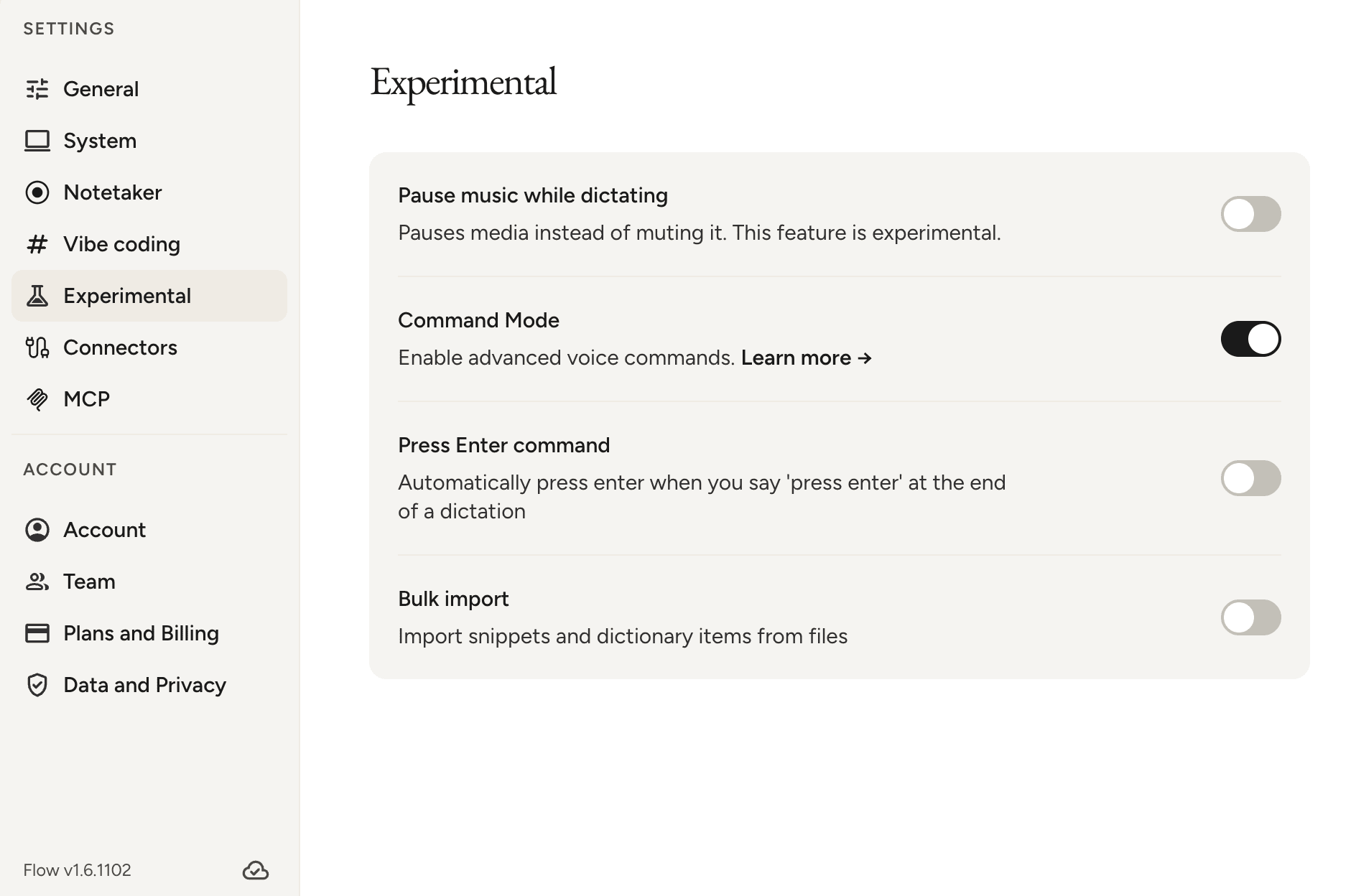
Here’s how it works: highlight some text, hold the Command Mode shortcut (Fn + Ctrl on a Mac), and say “make this more formal” or “translate this to Spanish” or “turn this into a bullet list.” Flow rewrites the selection. In apps where it can’t write back directly, such as Google Docs, it shows the new version in a popup for you to copy.
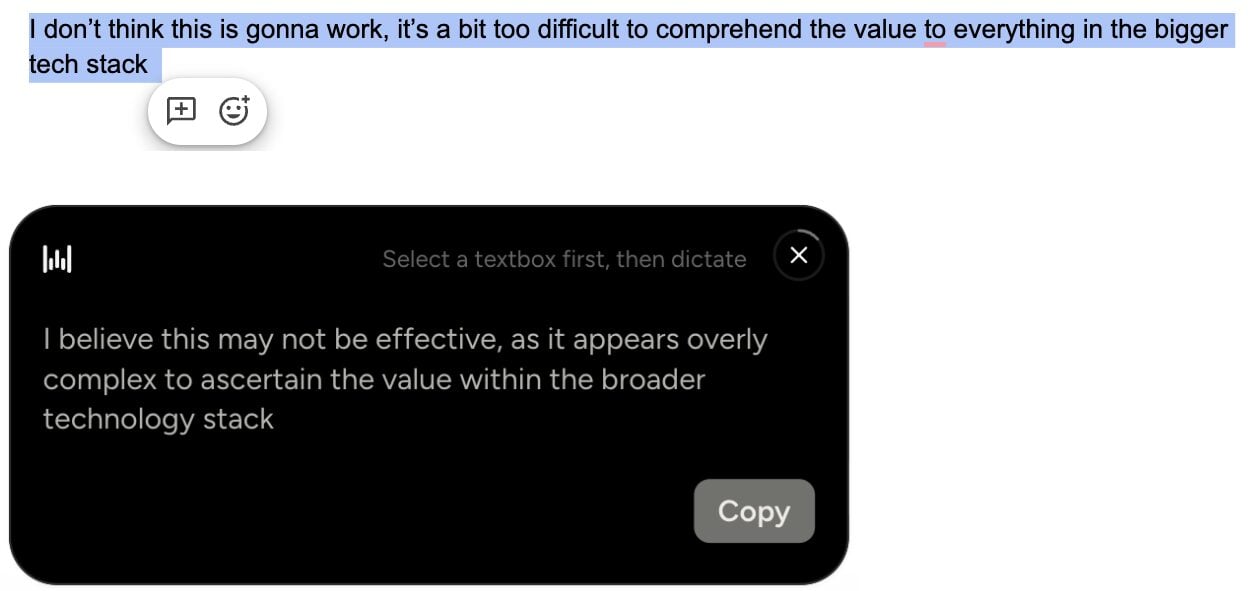
You can also use it to search. Ask a question in Command Mode on desktop and it opens Perplexity with your selected text added to the query.
Per chiunque scriva molto e utilizzi anche strumenti di IA come ChatGPT o Perplexity, la possibilità di inviare prompt direttamente tramite la voce è davvero utile. Un creatore che ha recensito Wispr Flow ha descritto l'utilizzo di questo strumento per “inviare prompt a ChatGPT e Perplexity direttamente con la voce” come uno dei suoi flussi di lavoro quotidiani più utilizzati. Capisco perché.
Watch this Command Mode demo if you want to see it in action before downloading.
Dizionario personalizzato e frammenti
Si tratta di una funzione discreta ma molto pratica.
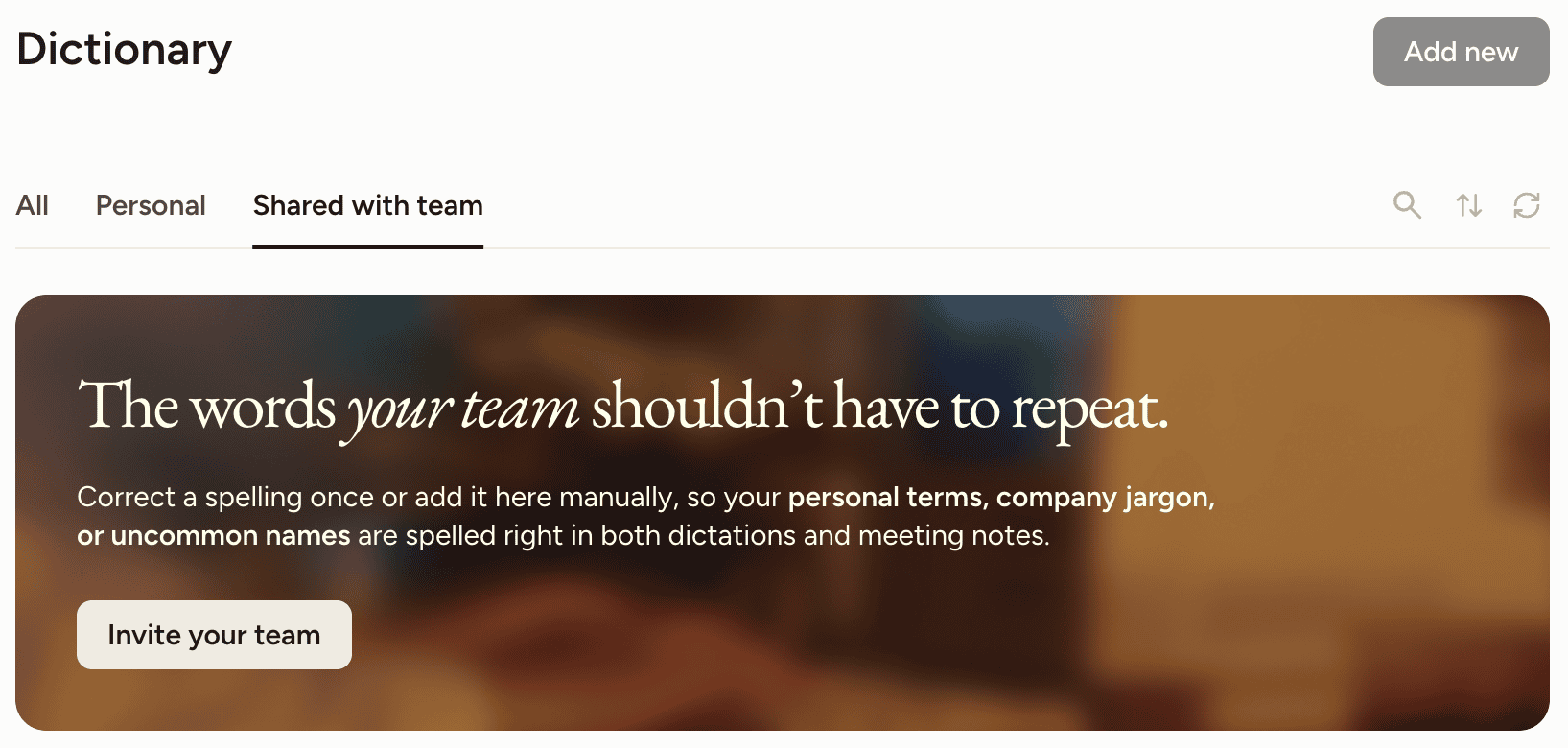
Custom dictionary lets you teach Flow unusual words, names, or jargon it would otherwise mangle. If your company name is something like “Morepalooza” or you work in a field with technical terminology, you register it once and Flow spells it your way from then on. You can also use it to correct a word Flow keeps getting wrong.
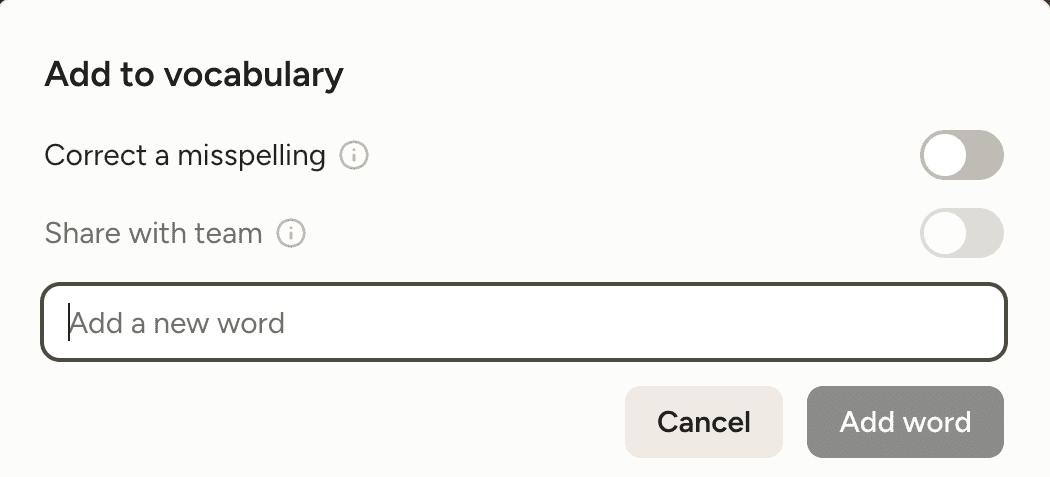
On a team, you can share dictionary words with everyone, so product names and client names are spelled the same way across the company, in both dictation and meeting notes.
Gli snippet ti consentono di definire comandi rapidi. Basta pronunciare una breve frase perché questa si trasformi in un blocco di testo più lungo che utilizzi spesso, come una formula di chiusura standard per le e-mail, un modello di invito a una riunione o una risposta di assistenza.
Entrambe queste funzioni si sincronizzano su tutti i tuoi dispositivi, il che ci porta al punto successivo.
Sincronizzazione multipiattaforma: il principale vantaggio pratico di Wispr Flow
Questa è davvero la caratteristica che distingue Wispr Flow dalla maggior parte dei concorrenti.
Il tuo dizionario personalizzato, i frammenti di testo, le impostazioni e le statistiche di utilizzo si sincronizzano su Mac, Windows, iPhone e Android. Inizia un flusso di lavoro sul tuo Mac, proseguilo sul tuo iPhone e passa a Windows in ufficio. Tutto è coerente e aggiornato.
SuperWhisper funziona solo su Mac e iOS. Se usi Windows per qualsiasi cosa, semplicemente non è un'opzione praticabile. Se hai uno smartphone Android, la situazione è la stessa.
Per i team e gli utenti che passano da un dispositivo all’altro e da un sistema operativo all’altro, questa compatibilità multipiattaforma rappresenta il vantaggio competitivo più evidente di Wispr Flow.
| Piattaforma | Wispr Flow | SuperWhisper | Dettatura Apple |
|---|---|---|---|
|
Mac |
Sì |
Sì |
Sì |
|
Windows |
Sì |
No |
No |
|
iPhone / iOS |
Sì |
Sì |
Sì |
|
Android |
Sì |
No |
No |
|
Funziona con tutte le app |
Sì |
Sì |
Per lo più |
|
Formattazione automatica |
Sì |
Sì |
No |
|
Elaborazione offline |
No |
Sì |
No |
Supporto per oltre 100 lingue
Wispr Flow dictates in over 100 languages. With auto-detect switched on, it works out which language you’re speaking on Mac, Windows and iOS, choosing one language per dictation. Android doesn’t have auto-detect, so you pick the language yourself.
For multilingual teams or individuals who work across languages, this is a real feature rather than a checkbox. You can move between languages from one dictation to the next without changing settings, and Flow follows some local writing rules, such as French spacing before punctuation and Swiss German spelling. Two limits are worth knowing. You can’t mix languages inside a single dictation, and Flow’s Style settings, which control how formal or casual your text sounds, only work in English for now.
Wispr Flow Notetaker: What You Need to Know
Everything above is dictation. On August 5, 2026, Wispr shipped its first product beyond it. Wispr Flow Notetaker is a meeting recorder that captures audio on your computer with no bot joining the call. It launched on Mac, came to Windows on September 15, and now transcribes 21 languages. It’s included on the free plan, with a weekly meeting limit, and recordings under five minutes don’t count toward it.
The one thing it does that rivals can’t copy: your personal dictionary carries over from dictation. Every acronym and product name you’ve taught Flow over months of dictating gets applied to your meeting transcripts. You also get a live transcript, a cleaner second pass afterwards, summaries grouped by topic, a “What did I miss?” button, and MCP access to Claude, ChatGPT and Gemini on the free plan.
Consent is on you. No bot means no automatic notification that transcription is happening. Wispr says so in its own FAQ and puts the responsibility on the user. Twelve US states require all-party consent, and GDPR requires informed consent regardless. We covered this in bot-free recording legality.
We’ve since tested it hands-on, including speaker identification, memory use and what its MCP can actually reach. Read the full Wispr Flow Notetaker review.
Prezzi di Wispr Flow: il piano Pro vale 12 dollari al mese?
Wispr Flow has four plans (checked October 2026):
Flow Free
- 2.000 parole a settimana su Mac o Windows
- 1,000 words per week on mobile
- Dizionario personalizzato e frammenti
- Supporto per oltre 100 lingue
- The option to switch off model training
- Notetaker included (Mac and Windows) with speaker identification, ask-anything, and MCP access, subject to a weekly meeting limit (recordings under five minutes don’t count)
Flow Pro ($12 per user a month billed annually, or $15 on the monthly plan)
- Numero illimitato di parole su tutte le piattaforme
- Modalità comandi per l'editing vocale
- Prioritized support and early access to new features
- Shared dictionary and snippets, a team workspace and centralized billing
- Free trial, no credit card required
- Higher Notetaker meeting limits and longer history
Flow Growth (contact Wispr for pricing)
- Everything in Pro plus SSO with SAML
- Organization-wide HIPAA enforcement with a signed BAA
- Admin control over model training and individual usage reporting
Flow Enterprise (contattare per informazioni sui prezzi)
- Everything in Growth plus SCIM, audit logs, MDM, domain capture and admin controls
- Notetaker, with admin controls including required consent confirmation, and model training locked off for the whole organization
Qualche considerazione da fare sui prezzi. Innanzitutto, le 2.000 parole settimanali del piano gratuito sono sufficienti per un uso personale occasionale, ma si raggiunge rapidamente il limite massimo se lo si utilizza per lavoro. Con il mio volume di attività (e-mail, appunti, documenti), ho esaurito il limite gratuito nel giro di due o tre giorni.
Second, the 20% saving on the annual plan is real. $12/month versus $15/month adds up to $36 in savings per year. Not life-changing but worth taking if you know you’re going to use the tool regularly. UK subscribers pay the same figure in pounds: £15 a month, with annual billing saving £36 a year.
Third, and this is worth flagging: you can switch off model training on any plan, including free, so you don’t have to upgrade to stop your dictation being used to train Wispr’s models. If you need HIPAA-ready dictation, individuals can sign a Business Associate Agreement in the desktop app, and Growth and Enterprise admins can sign one for the whole organization. One catch: according to Wispr’s docs, signing the HIPAA agreement blocks Notetaker from recording, so you can’t have both.
For a more detailed breakdown of what each tier includes, Eesel AI has a good explainer on Wispr Flow’s pricing structure if you want a third-party take on it.
Wispr Flow è affidabile? Cosa dicono gli utenti di lunga data
La domanda che vale la pena porsi riguardo a qualsiasi strumento in abbonamento non è come ci si trova nella prima settimana, ma come ci si trova al dodicesimo mese. Wispr Flow ha ormai un numero sufficiente di utenti di lunga data per rispondere a questa domanda, e la risposta è contrastante.
La lamentela ricorrente riguarda il peggioramento della qualità della dettatura nel corso del tempo. Un utente che ha dettato più di 350.000 parole dall’inizio del 2026 afferma che la qualità sia “notevolmente diminuita” e ha escluso la spiegazione più ovvia: utilizza un Elgato Wave 3 sulla sua scrivania, non gli AirPods. Ha trasferito il suo abbonamento a un concorrente. Un altro utente pagante di lunga data riferisce di dover attendere molto più a lungo affinché il testo venga visualizzato dopo aver parlato e sospetta che le nuove funzionalità, come la pulizia automatica del testo, stiano aumentando la latenza.
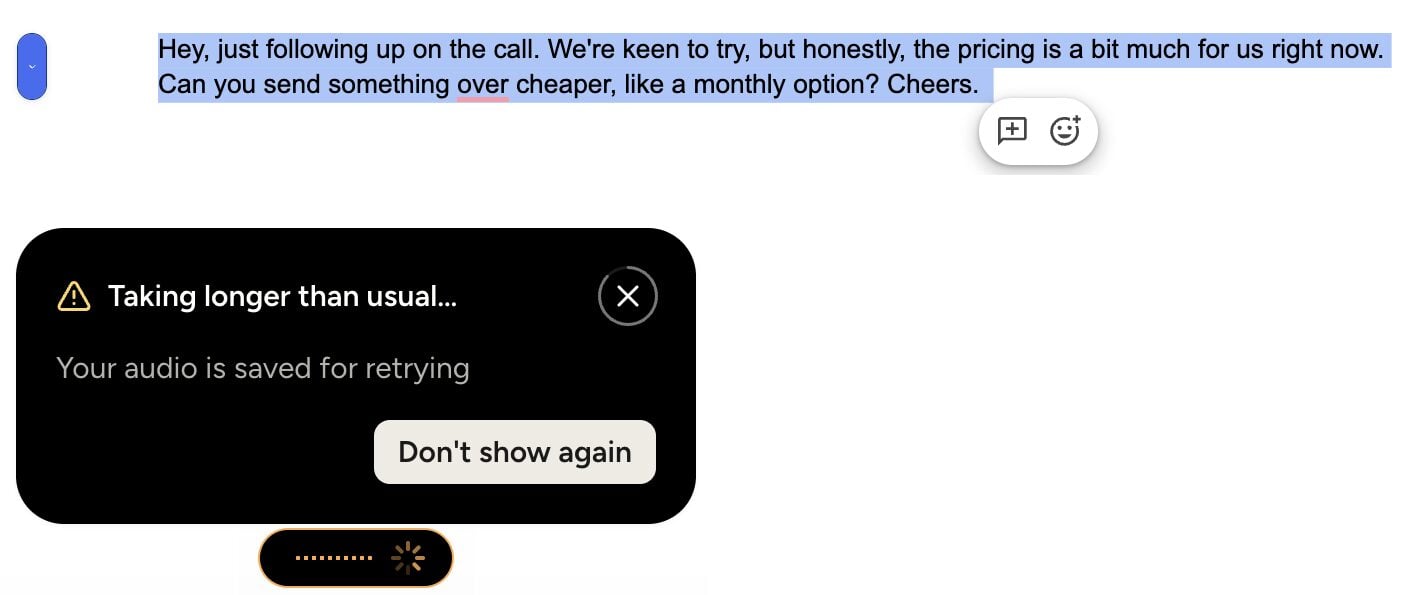
That complaint got louder in early October 2026, when a developer’s post on X saying Flow’s speech-to-text had become unusable drew hundreds of replies. Some paying users said they’d noticed the same drop. Others said they’d had no problems, and many recommended free, local alternatives instead. None of it is measured evidence, but it’s a pattern worth knowing about.
Il rovescio della medaglia è che questo fenomeno non è universale. Un utente assiduo, attivo dal novembre 2025, non segnala alcun calo di questo tipo. Questa differenza è significativa, perché indica che si tratta di un fenomeno condizionato da fattori specifici (rete, lingua, carico di lavoro, combinazione di funzionalità) piuttosto che di un calo generalizzato riscontrato da tutti.
My read: the core product is strong and the complaints cluster around consistency at scale rather than capability. Wispr has grown fast, and latency creep is what fast growth tends to look like from the outside. Worth knowing before you commit to an annual plan, not a reason to avoid the tool.
Privacy e sicurezza: Wispr Flow è sicuro per un uso professionale?
Questa è la domanda che ci viene posta più spesso riguardo a Wispr Flow, e merita una risposta chiara.
Is Wispr Flow Secure? HIPAA and Wispr’s Data Settings
In breve: sì, ma con un'importante precisazione che devi tenere presente.
Wispr Flow processes your audio in the cloud, and its security FAQ says it processes and stores customer data in the United States. That is not going to change. The company’s position is that cloud-based processing is what enables the fast, accurate, context-aware transcription that makes the product good. Local processing of the quality Wispr delivers is not yet practical at consumer scale.
Quello che puoi controllare è cosa succede a quei dati dopo l'elaborazione.
What used to be called Privacy Mode is now two separate settings in Settings under Data and Privacy. “Improve the model for everyone” controls whether your audio, transcripts, and edits are used for model training. “Dictation cloud storage” controls whether your dictation data is stored on Wispr’s servers. Turning off one doesn’t turn off the other, so switch both off and you get zero data retention for dictation. Usage statistics (like word count) are still collected, but the actual content of what you said is not retained.
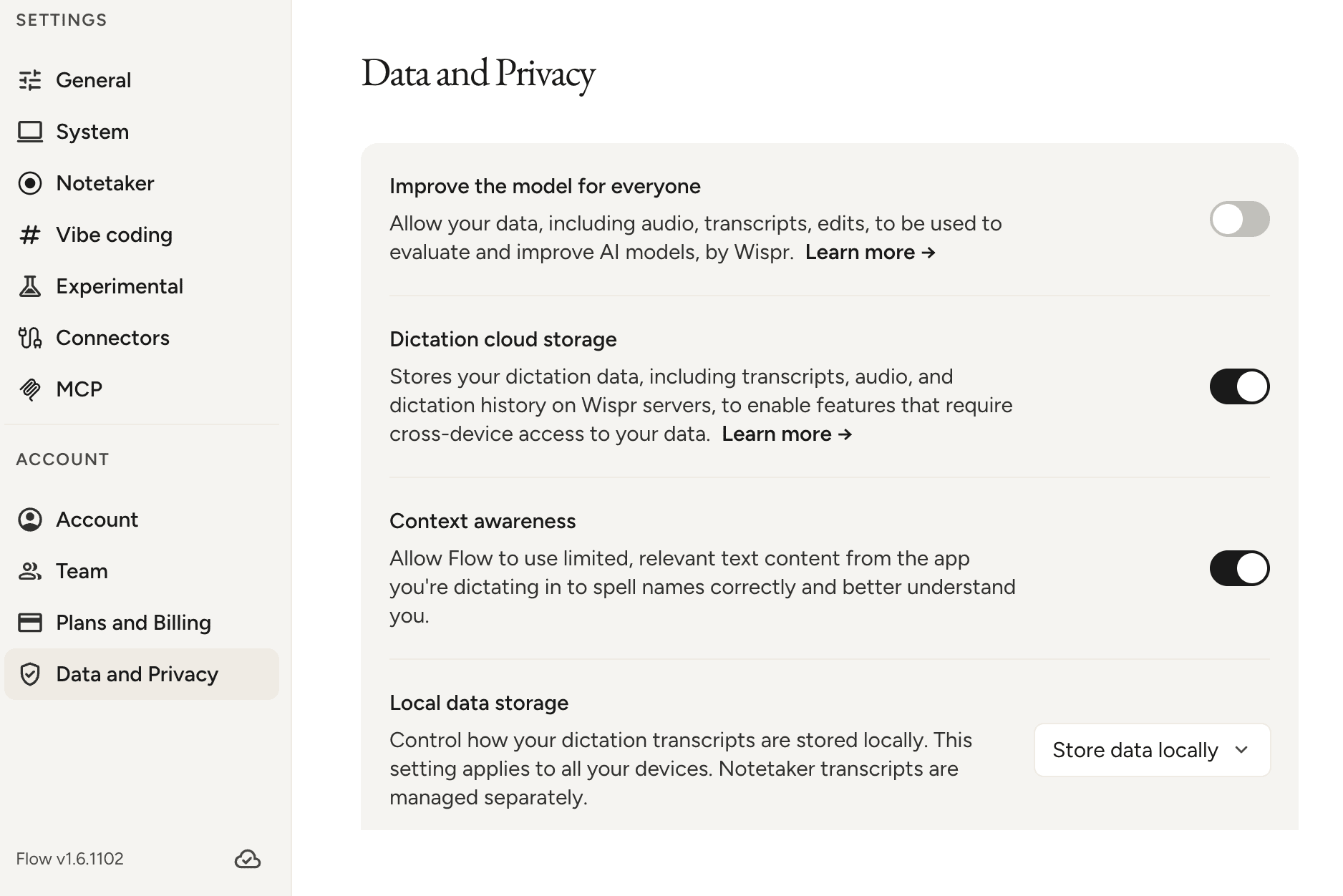
A newer setting, Local data storage, controls how your dictation transcripts are kept on your own devices, and applies across all of them. Notetaker transcripts are managed separately.
Watch the defaults. On the Free and Pro plans, “Improve the model for everyone” is on until you switch it off, so your dictation data can be used to improve Wispr’s models. On Enterprise, it’s off and locked.
Alcuni altri aspetti relativi alla sicurezza che vale la pena conoscere:
- HIPAA-ready dictation requires a signed Business Associate Agreement (BAA). Individuals can sign one in the desktop app, and Growth and Enterprise admins can sign one for the whole organization. Signing permanently switches off model training and dictation cloud storage for the account. According to Wispr’s docs, it also blocks Notetaker from recording.
- Wispr non vende mai i tuoi dati. Il suo modello di business si basa sugli abbonamenti ai software.
- Lo stato della certificazione ha subito un cambiamento significativo nel marzo 2026. Si veda la sezione seguente.
Lo stato della certificazione di Wispr è cambiato nel marzo 2026
Nel marzo 2026, un’indagine condotta da un informatore ha rivelato che Delve, una startup specializzata nell’automazione della conformità e sostenuta da Y Combinator, avrebbe prodotto su larga scala rapporti SOC 2 standardizzati. Secondo quanto riferito, un foglio di calcolo trapelato mostrava che 493 dei 494 rapporti di audit erano pressoché identici, con gli stessi paragrafi e gli stessi errori grammaticali, in cui era stato modificato solo il nome dell’azienda. Y Combinator ha rimosso Delve dal proprio elenco all’inizio di aprile 2026.
Wispr è stata coinvolta nell’onda d’urto. A suo merito, la risposta è stata quella giusta. Secondo le FAQ sulla sicurezza di Wispr, l’azienda ha invalidato in via proattiva le proprie certificazioni SOC 2 Tipo II (Accorp Partners) e ISO 27001 (Gradient) nel marzo 2026 «a causa di preoccupazioni relative all’integrità della piattaforma da parte dell’auditor originario», per poi ricostruire il sistema da zero con A-LIGN come auditor e Drata come piattaforma di conformità.
Where things stand as of October 2026:
- SOC 2 Tipo I: completato nell'aprile 2026 da A-LIGN, giudizio positivo senza riserve
- SOC 2 Type II and ISO 27001:2022: Wispr’s security FAQ now says both are available through its Trust Center. It doesn’t publish the issue dates or audit periods, so ask for them
- Scope: the audits cover Flow dictation. Wispr says Meeting Notetaker was not assessed
- HIPAA: BAA available for individuals and organizations. Signing it permanently switches off model training and dictation cloud storage, and blocks Notetaker from recording
- Test di penetrazione: l’ultimo è stato effettuato nel novembre 2025 da BSK Security LLC, con una metodologia basata su OWASP
Throwing out a certification you already hold because you don’t trust the auditor is the expensive, correct call, and most companies wouldn’t make it. One loose end: Wispr’s separate compliance help page still lists the old ACCORP Type II report and a Gradient ISO 27001 certificate that expired on September 7, 2026. If your procurement process needs a current SOC 2 Type II, request the new reports from Wispr’s Trust Center rather than relying on the help pages, and check whether Notetaker is in scope if you plan to use it.
Wispr Flow acquisisce schermate del tuo schermo?
This claim circulates widely, usually in the form “Wispr screenshots your active window every few seconds.” Wispr’s current documentation says otherwise.
Per Wispr’s Context Awareness help page (checked October 2026), the feature “works from text and does not take screenshots.” When it’s on, which it is by default, Flow reads text from the app you’re dictating in to improve formatting and proper-noun accuracy: the text around your cursor, on-screen text, file and variable names in coding apps, and conversation history. On a Mac it needs accessibility permissions.
Password field contents are never read, though Wispr notes that custom or web-based password fields may be treated as normal text. With model training and dictation cloud storage both switched off, any captured context is stripped server-side and not persisted.
So the accurate version: Wispr reads on-screen text by default and doesn’t take screenshots. That is still a meaningful amount of context leaving your machine, and if you work under NDA or handle privileged material you should turn Context Awareness off entirely in Settings under Data and Privacy. But “it silently screenshots you every few seconds” is not what the documentation describes, and several sites repeating that claim sell competing dictation tools.
One legitimate concern that third-party reviewers like Letterly have raised is that Wispr Flow’s early privacy policy was vague and created distrust, particularly around what “context collection” meant and which third-party providers were handling audio. Wispr has since made this much clearer, but if you’re in a regulated industry, it’s still worth reading the Privacy and Security docs before committing to a paid plan.
Chi garantisce l'affidabilità dell'architettura di sicurezza?
Da mettere in conto anche l’altra medaglia: l’ex CISO Rinki Sethi, già in forza presso Bill.com, Twitter e Rubrik, ha pubblicamente sostenuto l’architettura di Wispr e afferma di aver implementato Flow a livello aziendale presso Upwind Security. La motivazione da lei addotta è che “dove risiedono i dati, come si muovono, chi può accedervi” erano tutti aspetti chiaramente definibili, cosa che non è la norma per gli strumenti di IA. Si tratta di un’approvazione significativa da parte di una persona il cui lavoro consisteva proprio nel dire di no ai fornitori.
The honest summary for professionals: if you work in healthcare, law, or finance, switch off “Improve the model for everyone” and dictation cloud storage, sign the BAA (knowing it disables Notetaker), and turn off Context Awareness. If you’re a writer, marketer, or knowledge worker handling non-sensitive content, switching off model training on any plan is more than adequate.
Wispr Flow rispetto alla concorrenza
Wispr Flow contro SuperWhisper
Already covered in some depth above, but to give you the quick version for people skimming. For a full hands-on take, see our SuperWhisper review.
Choose Wispr Flow if: you use multiple devices or platforms, you want a tool that works out of the box, you need cross-platform sync, or you need HIPAA-ready dictation.
Scegli SuperWhisper se: utilizzi esclusivamente Mac e iOS, hai requisiti rigorosi in materia di sovranità dei dati, desideri configurare autonomamente i modelli di IA o vuoi davvero evitare qualsiasi coinvolgimento del cloud.
Puoi anche guardare questo video di 20 minuti che mette a confronto i tre principali strumenti per vedere il loro utilizzo pratico a confronto.
Wispr Flow vs. Dettatura Apple
Nel 2026 non sarà proprio una sfida alla pari, ma vale la pena parlarne perché molti utenti iniziano a usare la funzione di dettatura di Apple e si chiedono cosa si stiano perdendo.
La funzione Dettatura di Apple fornisce una trascrizione grezza. Non adatta il testo al contesto, non elimina le parole di riempimento e non distingue se ti trovi in un'e-mail o in un editor di codice. Quello che dici è più o meno quello che ottieni.
Wispr Flow formatta il testo in base al contesto, perfeziona l'espressione orale e migliora attivamente il testo mentre parli. Si tratta di una categoria di prodotti fondamentalmente diversa. L'unico motivo per continuare a usare la Dettatura di Apple è se utilizzi esclusivamente dispositivi Apple, dettando testi molto brevi e non vuoi pagare nulla.
Wispr Flow contro Otter.ai
Otter has been recording, transcribing and summarizing meetings for years, and Wispr Flow Notetaker is now doing that same job. The real difference is how each one gets into the room. Otter joins as a bot, which is clunkier but means everyone can see a recorder is present. Wispr Flow Notetaker captures locally and says nothing.
Per quanto riguarda la dettatura, non c’è paragone, perché Otter non ha mai avuto l’obiettivo di sostituire la tastiera. E se ciò che ti serve davvero è portare a termine il lavoro, la compatibilità multipiattaforma e gli anni di perfezionamento di Ottercontinuano a fare la differenza.
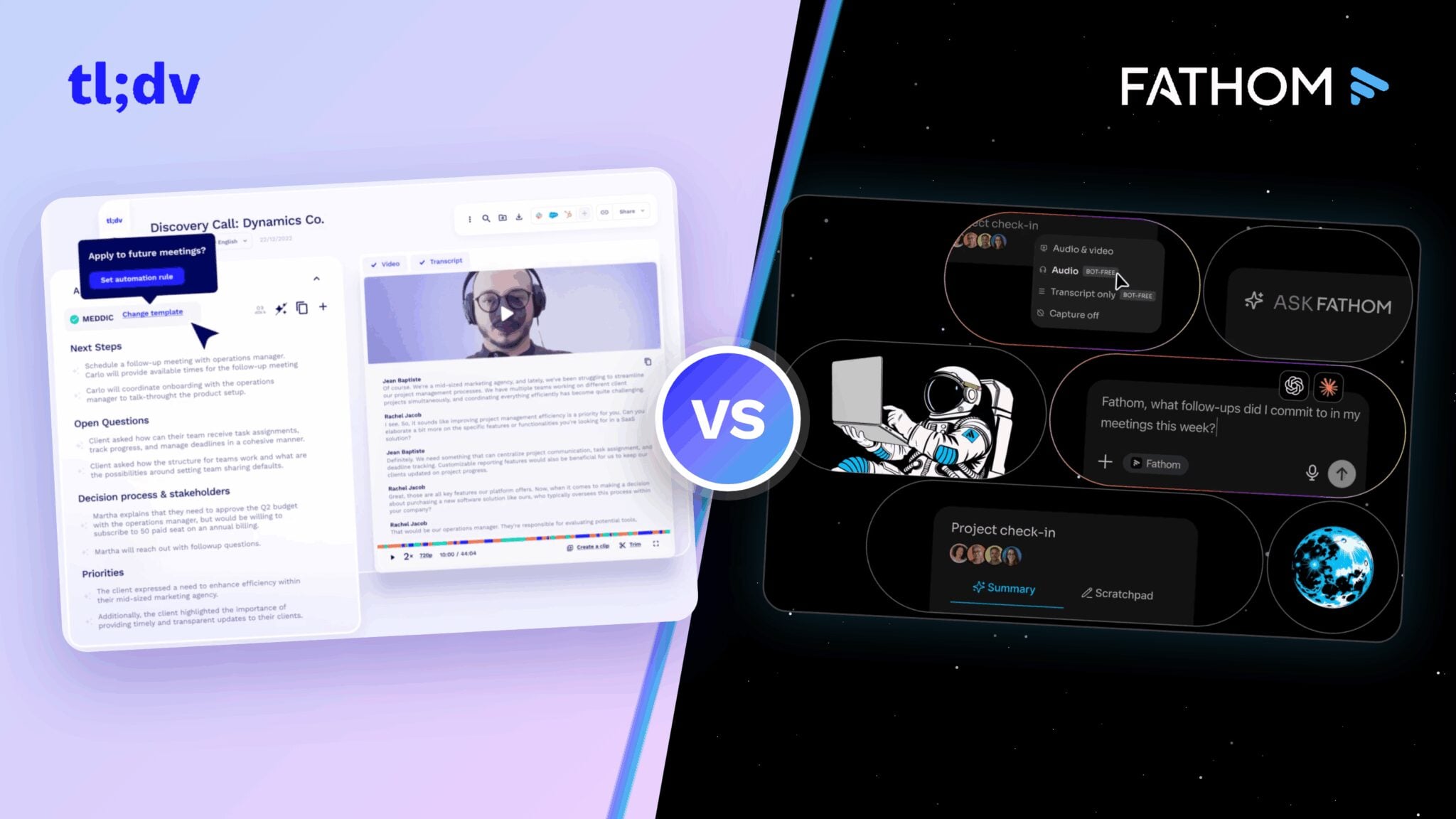
Wispr Flow vs. tl;dv: How They Compare in 2026
Wispr Flow Notetaker is a personal meeting recorder. It runs on your Mac or Windows PC, captures whatever audio is playing, and turns it into a transcript, a summary, and answers you can query later or pipe into Claude, ChatGPT and Gemini over MCP. It’s built for the person holding the laptop. For our hands-on test, including memory use and speaker identification, see the full Wispr Flow Notetaker review.
tl;dv meeting notetaker is built for the team around them. It records Zoom, Google Meet and Microsoft Teams in 30+ languages, as a bot or bot-free from the desktop app, and keeps the video and audio rather than the text alone. What it captures flows into HubSpot, Salesforce, Slack and 5,000+ other tools, and on the Business plan it scores calls against your sales playbook. It holds 4.7/5 on G2 from over 500 reviews and is used by more than 2 million users.
| Caratteristica | Wispr Flow Notetaker | tl;dv |
|---|---|---|
|
Piattaforma |
Mac and Windows. No mobile app for meetings |
Mac, Windows, iOS and Android |
|
Acquisizione senza bot |
Sì |
Sì |
|
Le lingue |
21 |
Oltre 30 con rilevamento automatico |
|
Trasferimento del vocabolario |
Eredita il tuo dizionario di dettatura |
Vocabolario personalizzato, configurato separatamente |
|
Registrazione conservata |
Trascrizione e sintesi |
Video e audio, archivio consultabile |
|
Clip con indicazione dell'ora e raccolte dei momenti salienti |
No |
Sì |
|
Note informative preliminari alla riunione |
Sì, riunioni esterne |
No |
|
Analisi della durata delle chiamate |
No |
Sì |
|
CRM |
Tramite MCP, crealo da solo |
HubSpot nativo, Salesforce, Pipedrive |
|
Coaching e valutazione " playbook " |
No |
Sì, piano aziendale |
|
Ricerca a livello di team |
No |
Sì |
|
Piano Enterprise |
Sì |
Sì |
|
Residenza dei dati |
Stati Uniti |
EU |
|
Piano gratuito |
Limite settimanale di riunioni, MCP incluso |
Unlimited recording, AI notes on 10 meetings |
Wispr Flow Notetaker è la scelta più adatta se:
- Work on Mac or Windows and mostly take notes for yourself
- Sei già abbonato a Flow e desideri ricevere gli appunti delle riunioni inclusi senza costi aggiuntivi
- Run your meetings in one of its 21 languages
- Desidero ricevere briefing prima delle riunioni relative alle chiamate esterne
- Preferisco inserire le note tramite piping in Claude o ChatGPT piuttosto che utilizzare un flusso di lavoro integrato
tl;dv la scelta più adatta se:
- Need meetings covered on mobile as well as desktop
- Run calls in languages outside Wispr’s 21
- Mi serve la registrazione vera e propria, non solo una trascrizione
- Si desidera che i campi CRM vengano compilati automaticamente anziché essere esportati tramite MCP
- Hai bisogno di coaching, valutazione “ playbook ” o monitoraggio delle obiezioni in un archivio di chiamate?
- Need your data stored in the EU
Il verdetto finale: a chi è consigliato Wispr Flow?
Dopo due settimane di prove, ecco a quale conclusione sono giunto.
Wispr Flow started as a dictation tool, and on that job it’s good. The AI formatting works, the cross-platform sync works, and Command Mode is useful once you get the hang of it. If you want to stop typing emails and Slack messages, the free plan is enough to find out whether it suits you.
But with Notetaker, Wispr is no longer just a dictation tool. It now wants to record your meetings too, and that’s a different job with a much higher bar. Notetaker is built for one person taking their own notes. It keeps the transcript, not the recording. There’s no mobile app for meetings, no native CRM sync, and your data is processed and stored in the US. In our hands-on Notetaker review, it also slowed calls on an 8 GB Mac.
If your meetings matter to more people than the person who took the notes, you need the recording, a library your team can search, and your CRM updated without anyone remembering to do it. That’s the job tl;dv was built for. It records Zoom, Google Meet and Microsoft Teams in 30+ languages, with a bot or bot-free from the desktop app. It keeps the video from bot recordings, fills in HubSpot, Salesforce and Pipedrive automatically, and stores your data in the EU.
Use Wispr Flow to dictate. Use tl;dv to record and share your meetings. The free plan gives you unlimited recordings, so you can try it on your next call. Try tl;dv free.
FAQs About Wispr Flow
Wispr Flow è gratuito?
Yes. Wispr Flow’s free plan includes 2,000 words a week on Mac or Windows and 1,000 words a week on mobile, plus the custom dictionary, snippets and Notetaker with a weekly meeting limit. You can switch off model training on the free plan. Pro removes the word limit for $12 a month billed annually, or $15 monthly.
Wispr Flow funziona su Windows?
Yes. Wispr Flow runs on Windows as well as Mac, iPhone and Android, and your dictionary, snippets and settings sync across all of them. That cross-platform support is one of its biggest advantages over SuperWhisper, which only runs on Mac and iOS. Like the Mac app, it works inside any app where you can type.
Cos'è Wispr Flow Pro e ne vale la pena?
Flow Pro costs $12 a month billed annually, or $15 monthly. It removes the weekly word limits, adds Command Mode for editing text by voice, raises Notetaker’s meeting limits and adds shared team dictionaries. If you dictate daily for work, you’ll hit the free limit within days, so Pro is worth it for regular users.
Wispr Flow è sicuro e garantisce la privacy?
Wispr Flow processes audio in the cloud and stores data in the US, with no offline mode. You can switch off model training and dictation cloud storage in Data and Privacy settings. Model training is on by default on Free and Pro. Wispr’s security FAQ says its new SOC 2 Type II and ISO 27001 reports are available through its Trust Center.
Come funziona la modalità Comando in Wispr Flow?
Command Mode lets you edit text by voice. Switch it on under Settings, then Experimental, highlight some text, hold Fn + Ctrl on a Mac and say an instruction such as “make this more formal”. Flow rewrites the selection, or shows it to copy in apps like Google Docs. It needs a paid plan or an active trial.
Quali lingue supporta Wispr Flow?
Wispr Flow dictates in over 100 languages. With auto-detect switched on, it identifies the language you’re speaking on Mac, Windows and iOS, choosing one language per dictation. Android needs you to pick the language yourself. Flow’s Style settings, which control how formal or casual your text sounds, currently only work in English.
L'app per prendere appunti Wispr Flow funziona su Windows?
Yes. Wispr Flow Notetaker launched on Mac on August 5, 2026, and came to Windows on September 15, 2026. It records meetings without a bot joining the call and transcribes 21 languages. There’s no mobile app for meetings. Notetaker is included on the free plan with a weekly meeting limit, and recordings under five minutes don’t count.