Ir al contenido





⚡Opinión rápida (en resumen)
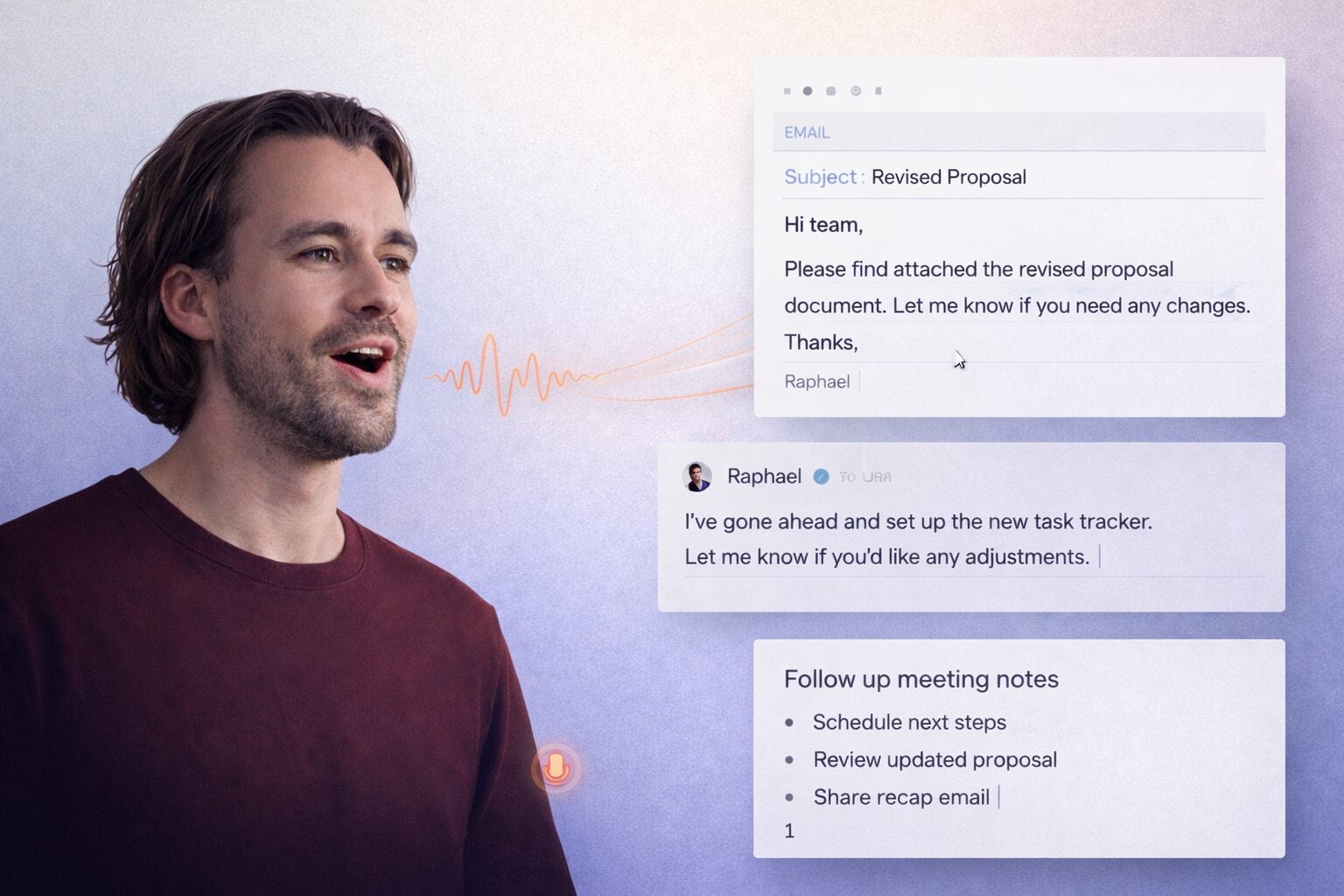
What Wispr Flow is: An AI voice keyboard that works inside every app on Mac, Windows, iOS, and Android. Press a hotkey, speak naturally, and get clean, context-aware, formatted text wherever your cursor is sitting. No separate editor, no switching windows. It now also ships Wispr Flow Notetaker, a bot-free meeting recorder on Mac and Windows, which we’ve reviewed separately in our Wispr Flow Notetaker review.
Who it’s good for: Knowledge workers who write heavily across email, Slack, docs, and notes. Professionals who move between multiple devices or operating systems. Healthcare and legal teams who need HIPAA-ready dictation without paying enterprise prices. Anyone who already lives in AI tools like ChatGPT or Perplexity and wants to drive them by voice.
Who should avoid it: Users who need fully offline, on-device processing with zero cloud involvement. Mac-only power users who want to configure their own AI models (SuperWhisper is the better fit there). Very light users who won’t come close to the 2,000-word weekly free limit. Teams hoping the bundled notetaker will cover their meetings. It has no mobile app, trains on your data by default, and in our hands-on test it made calls lag on an 8 GB Mac. Dictation itself is unaffected.
The one thing you must know before subscribing: All transcription happens in the cloud, and Wispr processes and stores data in the United States, with no EU region. There is no offline mode. If sending audio to external servers is a hard no for your workflow, Wispr Flow is not the right tool regardless of plan.
Overall rating: 4.3 / 5: One of the most polished AI dictation tools available right now. The cloud-only architecture is the one very real caveat, but the “Improve the model for everyone” setting (formerly Privacy Mode) handles it well for most professional use cases, once you switch it off.
For businesses prioritizing strict data privacy and compliance across their entire workflow, exploring other GDPR-compliant enterprise AI platforms like Langdock can provide additional solutions.
Por qué dejé de escribir: mi experiencia de dos semanas con el Wispr Flow Pro
Escribo rápido. Siempre lo he hecho. Así que cuando un compañero me dijo que «en vez de eso, probara a hablarle al ordenador», me sentí un poco orgulloso de mí mismo.
Al final probé Wispr Flow durante dos semanas en un MacBook M3, un PC con Windows 11 y un iPhone 16 Pro. Y tengo que ser sincero: ya casi nunca vuelvo a escribir de la forma tradicional.
Eso no es algo que se diga a la ligera. Dirigir una empresa como tl;dv, donde pensamos en la voz y la IA todos los días, hace que me cueste mucho impresionarme con las afirmaciones sobre tecnología de voz. Aun así, Wispr Flow me impresionó.
He usado el dictado de Apple, he luchado con el reconocimiento de voz de Google y me pasé una tarde con SuperWhisper convencido de que iba a cambiarlo todo (pero no fue así, al menos para mí). Lo que hace Wispr Flow de forma diferente es sutil, pero real: no se limita a transcribir lo que dices, sino que deduce lo que querías escribir y le da formato en consecuencia.
Los mensajes de Slack suenan informales. Los correos electrónicos suenan profesionales. Los comentarios del código se generan sin todas esas palabras de relleno que dices mientras piensas. Es capaz de adaptarse al contexto de una forma que realmente me ha sorprendido.
Bueno. ¿Es realmente la mejor herramienta de dictado con IA para Mac, Windows y dispositivos móviles en 2026? Vamos a analizarlo a fondo.
¿Qué es Wispr Flow? (Y en qué se diferencia de SuperWhisper)
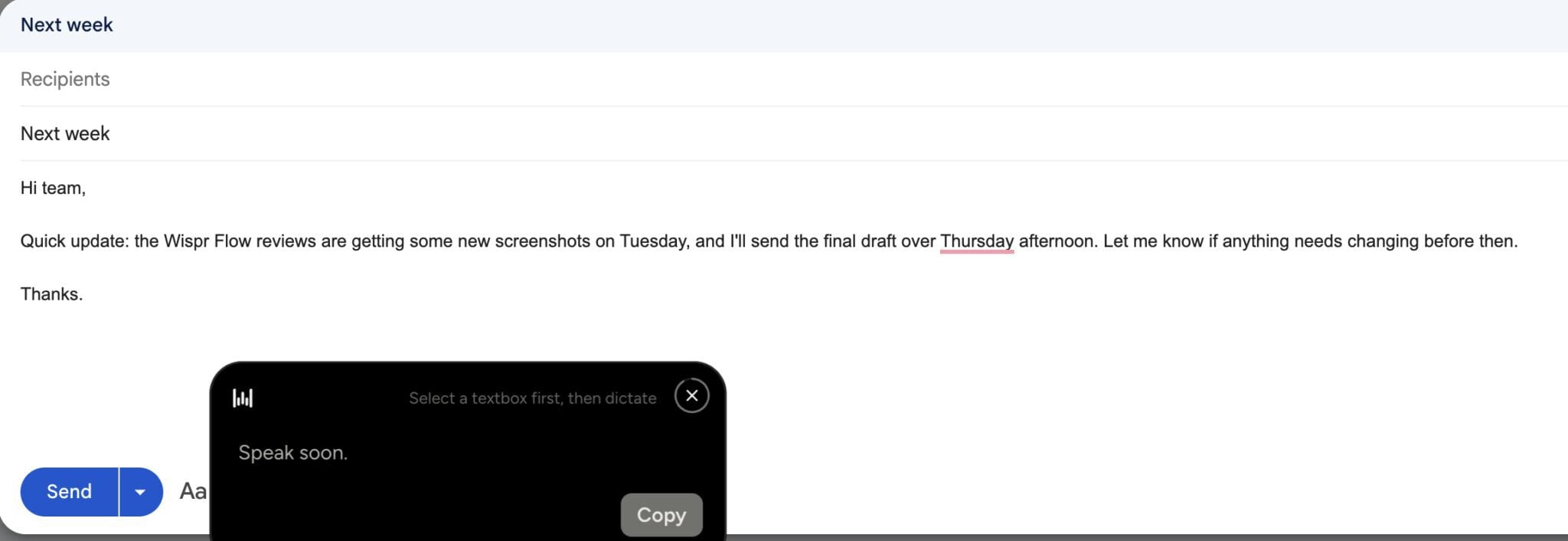
Wispr Flow es un teclado de voz con IA que funciona en todas las aplicaciones de tu dispositivo. Solo tienes que pulsar una tecla de acceso rápido, hablar con naturalidad y él insertará un texto limpio y pulido justo donde esté el cursor, ya sea en Gmail, Notion, Slack, VS Code o cualquier formulario de una página web.
La palabra clave aquí es pulido. No se trata de una transcripción sin pulir. Wispr Flow procesa tu discurso mediante modelos de IA basados en la nube que entienden el contexto y eliminan automáticamente las palabras de relleno, corrigen la estructura de las frases y adaptan el formato del resultado a la aplicación en la que te encuentres.
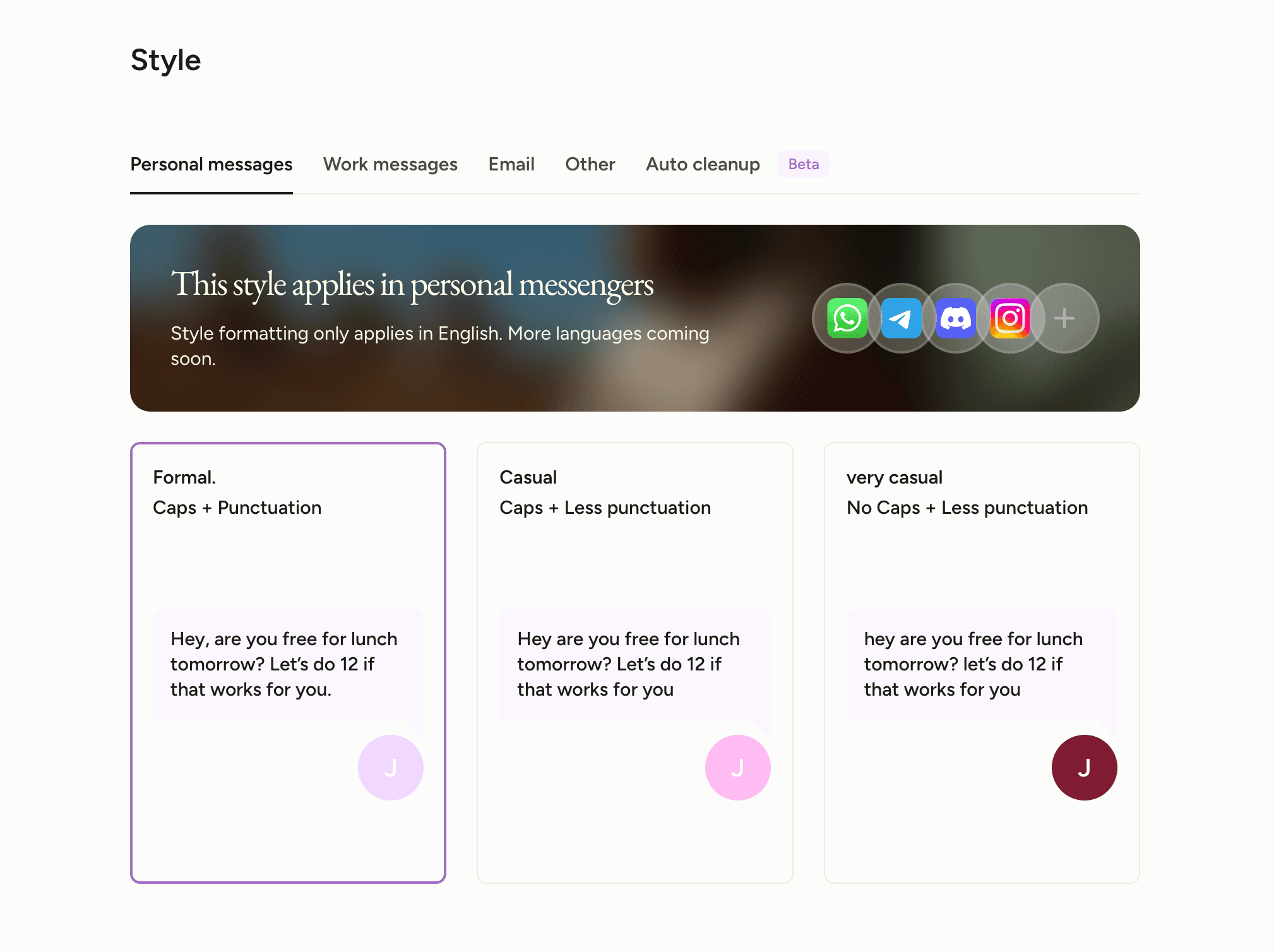
You control how that formatting behaves in Flow’s Style settings, with separate styles for personal messages, work messages, email and everything else, from formal to very casual.
La empresa dice que es cuatro veces más rápido que escribir a máquina, lo que supone unas 220 palabras por minuto frente a la velocidad media de escritura a máquina, que ronda las 45 palabras por minuto. En las dos semanas que lo he probado, esa afirmación se ha cumplido con contenidos más largos, como correos electrónicos y documentos. En el caso de respuestas breves y concisas, la diferencia es menor, pero sigue siendo notable.
¿En qué se diferencia de SuperWhisper?
Esto sale a colación constantemente en cualquier conversación sobre el dictado con IA, así que vamos a aclararlo de una vez.
SuperWhisper funciona totalmente sin conexión en Apple Silicon. Tus datos de voz nunca salen de tu dispositivo. Es una herramienta realmente potente para usuarios avanzados que quieren configurar sus propios modelos de IA, elegir entre velocidad y precisión, y mantenerlo todo en el dispositivo. Si solo usas Mac, trabajas con información muy confidencial y no quieres que la nube intervenga en absoluto, vale la pena que te plantees seriamente usar SuperWhisper.
Wispr Flow adopta un enfoque totalmente diferente. Está basado en la nube, lo que significa un procesamiento más rápido y una detección del contexto más inteligente, pero también implica que tu audio se envía a servidores externos. Además, funciona en Mac, Windows, iOS y Android, algo que SuperWhisper no hace. Si cambias de dispositivo o de plataforma, esa sincronización multiplataforma por sí sola cambia por completo las reglas del juego.
The community consensus, backed up nicely by this head-to-head comparison from Willow Voice, is roughly this: Wispr Flow is the more polished, more accessible, better-designed product for most professionals. SuperWhisper is the privacy-first powerhouse for technical users who want control.
Un creador de YouTube con 18 000 suscriptores que comparó las tres principales herramientas lo expresó de forma sencilla: Wispr Flow «tiene, con diferencia, la mejor interfaz de usuario». Eso coincide con mi experiencia. Funciona nada más instalarlo. No hace falta configurarlo.
Características principales: un análisis detallado de lo que realmente hace Wispr Flow
Prueba de velocidad: ¿De verdad puedes escribir más de 150 palabras por minuto?
Lo que dicen en el titular es que es cuatro veces más rápido que escribir a mano. Según mis pruebas, esto es más cierto cuando escribes algo de más de dos frases.
For email drafts, meeting notes, long Slack threads, or any kind of document work, speaking is dramatically faster than typing. Wispr puts the top end at around 220 words per minute, and how close you get depends on how freely you talk once you stop second-guessing yourself. The AI handles cleanup, so you don’t need to speak like you’re dictating to a court stenographer.
En el caso de respuestas muy breves (una respuesta de dos palabras, una reacción rápida), el esfuerzo que supone pulsar la tecla de acceso rápido y hablar hace que resulte más o menos lo mismo que escribir. No pasa nada. La herramienta está pensada para un uso intensivo.
Modo de comandos: la función que lo cambia todo
El «Modo de comando» es donde Wispr Flow empieza a marcar una diferencia real con respecto a las herramientas básicas de dictado.
It’s switched off by default, so the first step is turning it on under Settings, then Experimental. It needs a paid plan or an active trial.
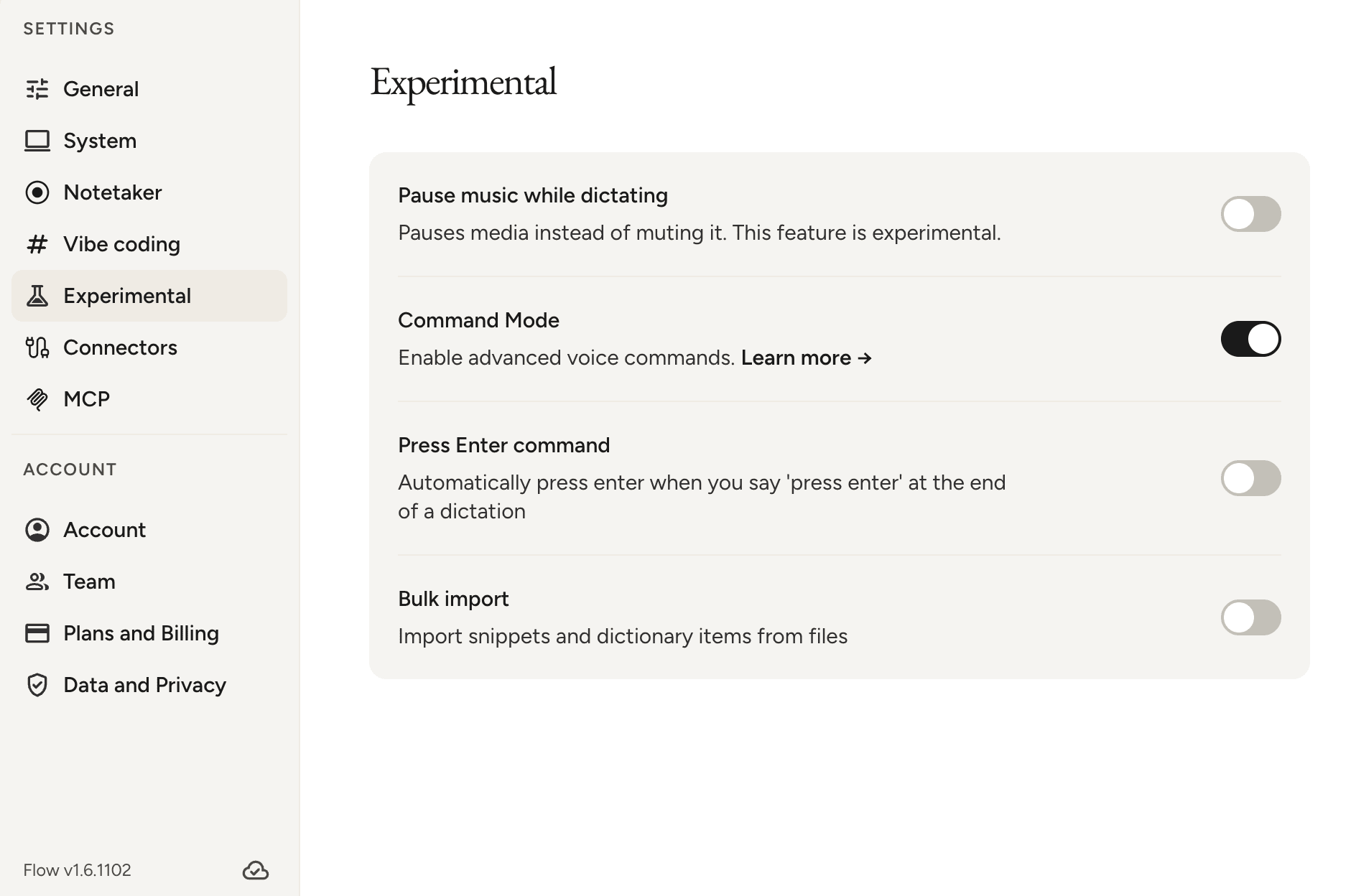
Here’s how it works: highlight some text, hold the Command Mode shortcut (Fn + Ctrl on a Mac), and say “make this more formal” or “translate this to Spanish” or “turn this into a bullet list.” Flow rewrites the selection. In apps where it can’t write back directly, such as Google Docs, it shows the new version in a popup for you to copy.
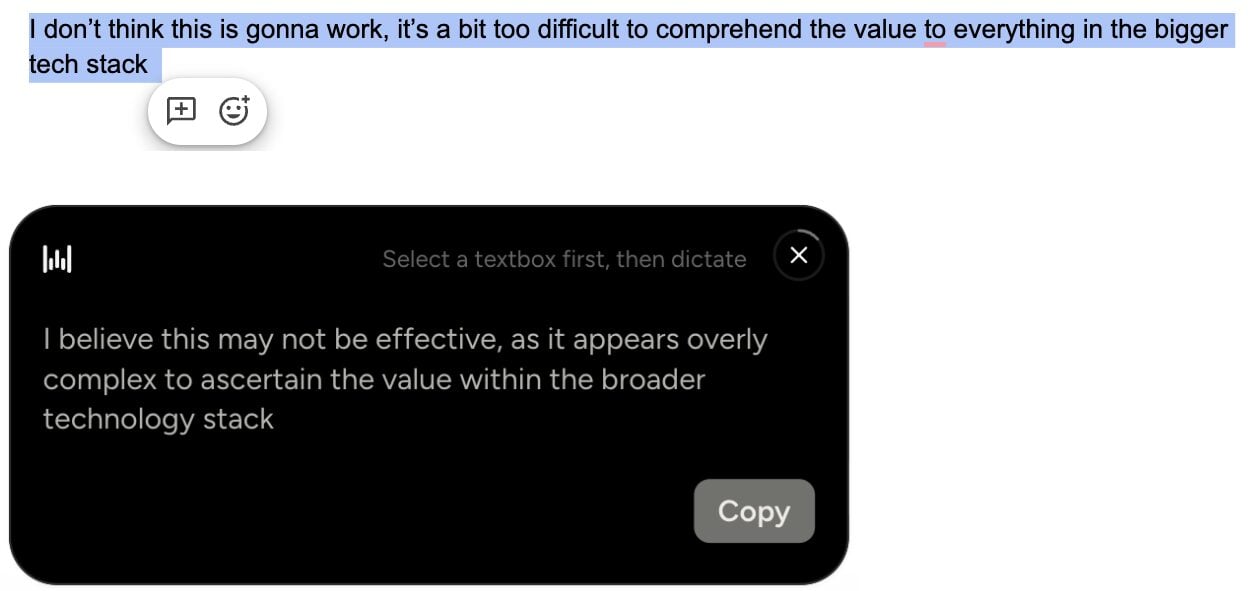
You can also use it to search. Ask a question in Command Mode on desktop and it opens Perplexity with your selected text added to the query.
Para cualquiera que escriba mucho y también use herramientas de IA como ChatGPT o Perplexity, la posibilidad de enviar comandos directamente con la voz es realmente útil. Un creador que reseñó Wispr Flow describió su uso para «enviar comandos a ChatGPT y Perplexity directamente con la voz» como uno de sus flujos de trabajo diarios más habituales. Entiendo perfectamente por qué.
Watch this Command Mode demo if you want to see it in action before downloading.
Diccionario personalizado y fragmentos
Es una función discreta, pero muy práctica.
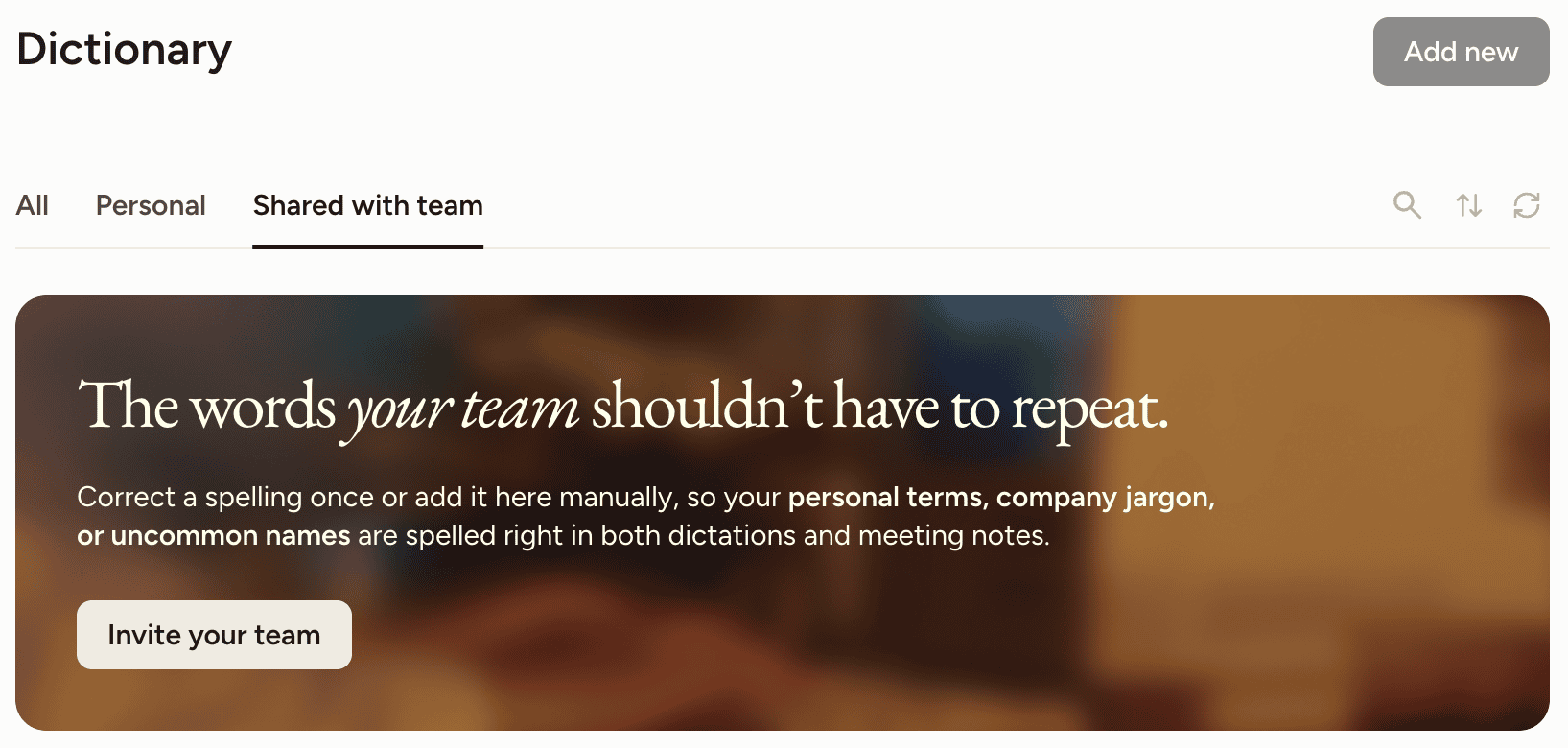
Custom dictionary lets you teach Flow unusual words, names, or jargon it would otherwise mangle. If your company name is something like “Morepalooza” or you work in a field with technical terminology, you register it once and Flow spells it your way from then on. You can also use it to correct a word Flow keeps getting wrong.
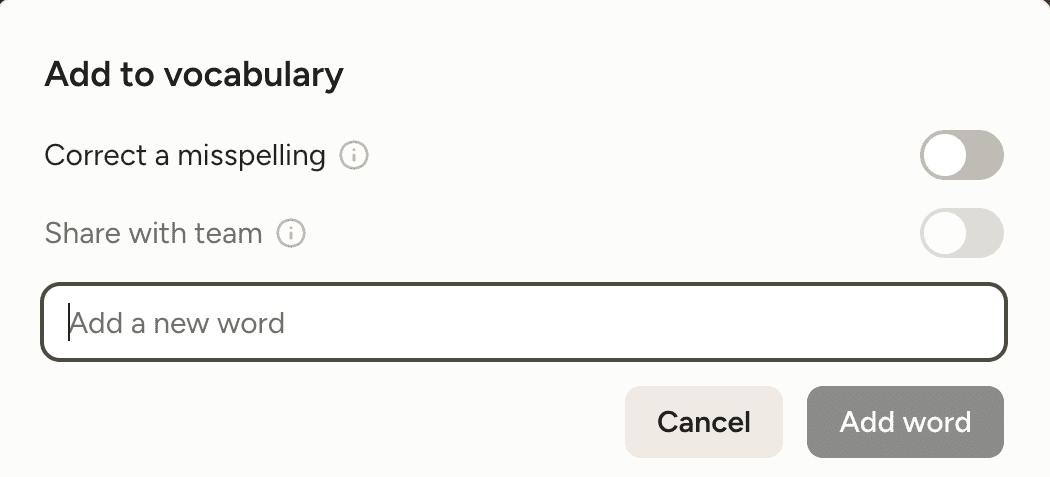
On a team, you can share dictionary words with everyone, so product names and client names are spelled the same way across the company, in both dictation and meeting notes.
Los fragmentos te permiten definir atajos. Di una frase corta y se convertirá en un bloque de texto más largo que uses a menudo, como una despedida estándar en un correo electrónico, una plantilla para invitar a una reunión o una respuesta de asistencia técnica.
Ambas se sincronizan en todos tus dispositivos, lo que nos lleva al siguiente punto.
Sincronización multiplataforma: la mayor ventaja práctica de Wispr Flow
Esta es, sin duda, la característica que distingue a Wispr Flow de la mayoría de sus competidores.
Tu diccionario personalizado, fragmentos, ajustes y estadísticas de uso se sincronizan entre Mac, Windows, iPhone y Android. Empieza un flujo de trabajo en tu Mac, continúalo en tu iPhone y cambia a Windows en la oficina. Todo está sincronizado y actualizado.
SuperWhisper solo funciona en Mac y iOS. Si usas Windows para cualquier cosa, simplemente no es una opción. Si tienes un teléfono Android, pasa lo mismo.
Para los equipos y las personas que cambian constantemente de dispositivo y de sistema operativo, esta compatibilidad multiplataforma es la ventaja competitiva más clara de Wispr Flow.
| Plataforma | Wispr Flow | SuperWhisper | Dictado de Apple |
|---|---|---|---|
|
Mac |
Sí |
Sí |
Sí |
|
Ventanas |
Sí |
No |
No |
|
iPhone / iOS |
Sí |
Sí |
Sí |
|
Android |
Sí |
No |
No |
|
Funciona en todas las apps |
Sí |
Sí |
Sobre todo |
|
Formato generado por IA |
Sí |
Sí |
No |
|
Procesamiento sin conexión |
No |
Sí |
No |
Compatibilidad con más de 100 idiomas
Wispr Flow dictates in over 100 languages. With auto-detect switched on, it works out which language you’re speaking on Mac, Windows and iOS, choosing one language per dictation. Android doesn’t have auto-detect, so you pick the language yourself.
For multilingual teams or individuals who work across languages, this is a real feature rather than a checkbox. You can move between languages from one dictation to the next without changing settings, and Flow follows some local writing rules, such as French spacing before punctuation and Swiss German spelling. Two limits are worth knowing. You can’t mix languages inside a single dictation, and Flow’s Style settings, which control how formal or casual your text sounds, only work in English for now.
Wispr Flow Notetaker: What You Need to Know
Everything above is dictation. On August 5, 2026, Wispr shipped its first product beyond it. Wispr Flow Notetaker is a meeting recorder that captures audio on your computer with no bot joining the call. It launched on Mac, came to Windows on September 15, and now transcribes 21 languages. It’s included on the free plan, with a weekly meeting limit, and recordings under five minutes don’t count toward it.
The one thing it does that rivals can’t copy: your personal dictionary carries over from dictation. Every acronym and product name you’ve taught Flow over months of dictating gets applied to your meeting transcripts. You also get a live transcript, a cleaner second pass afterwards, summaries grouped by topic, a “What did I miss?” button, and MCP access to Claude, ChatGPT and Gemini on the free plan.
Consent is on you. No bot means no automatic notification that transcription is happening. Wispr says so in its own FAQ and puts the responsibility on the user. Twelve US states require all-party consent, and GDPR requires informed consent regardless. We covered this in bot-free recording legality.
We’ve since tested it hands-on, including speaker identification, memory use and what its MCP can actually reach. Read the full Wispr Flow Notetaker review.
Precios de Wispr Flow: ¿merece la pena el plan Pro por 12 $ al mes?
Wispr Flow has four plans (checked October 2026):
Flow Free
- 2000 palabras a la semana en Mac o Windows
- 1,000 words per week on mobile
- Diccionario personalizado y fragmentos
- Compatibilidad con más de 100 idiomas
- The option to switch off model training
- Notetaker included (Mac and Windows) with speaker identification, ask-anything, and MCP access, subject to a weekly meeting limit (recordings under five minutes don’t count)
Flow Pro ($12 per user a month billed annually, or $15 on the monthly plan)
- Sin límite de palabras en todas las plataformas
- Modo de comandos para la edición de voz
- Prioritized support and early access to new features
- Shared dictionary and snippets, a team workspace and centralized billing
- Free trial, no credit card required
- Higher Notetaker meeting limits and longer history
Flow Growth (contact Wispr for pricing)
- Everything in Pro plus SSO with SAML
- Organization-wide HIPAA enforcement with a signed BAA
- Admin control over model training and individual usage reporting
Flow Enterprise (ponte en contacto con nosotros para conocer los precios)
- Everything in Growth plus SCIM, audit logs, MDM, domain capture and admin controls
- Notetaker, with admin controls including required consent confirmation, and model training locked off for the whole organization
Hay algunas cosas que vale la pena destacar sobre los precios. En primer lugar, las 2000 palabras semanales del plan gratuito son realmente suficientes para un uso personal ocasional, pero te quedarás sin espacio enseguida si lo usas para el trabajo. Con el volumen de uso que yo probé (correos electrónicos, notas, documentos), agotaba el límite gratuito en dos o tres días.
Second, the 20% saving on the annual plan is real. $12/month versus $15/month adds up to $36 in savings per year. Not life-changing but worth taking if you know you’re going to use the tool regularly. UK subscribers pay the same figure in pounds: £15 a month, with annual billing saving £36 a year.
Third, and this is worth flagging: you can switch off model training on any plan, including free, so you don’t have to upgrade to stop your dictation being used to train Wispr’s models. If you need HIPAA-ready dictation, individuals can sign a Business Associate Agreement in the desktop app, and Growth and Enterprise admins can sign one for the whole organization. One catch: according to Wispr’s docs, signing the HIPAA agreement blocks Notetaker from recording, so you can’t have both.
For a more detailed breakdown of what each tier includes, Eesel AI has a good explainer on Wispr Flow’s pricing structure if you want a third-party take on it.
¿Es fiable Wispr Flow? Lo que dicen los usuarios que lo llevan usando mucho tiempo
La pregunta que vale la pena hacerse sobre cualquier herramienta de suscripción no es cómo te parece la primera semana, sino cómo te parece al cabo de doce meses. Wispr Flow ya cuenta con suficientes usuarios que llevan mucho tiempo usándola como para responder a eso, y la respuesta es variada.
La queja más habitual es que la calidad del dictado va empeorando con el tiempo. Un usuario que ha dictado más de 350 000 palabras desde principios de 2026 dice que la calidad ha «disminuido notablemente» y descarta la explicación más obvia: usa un Elgato Wave 3 en su escritorio, no los AirPods. Se ha cambiado a la suscripción de la competencia. Otro usuario de pago desde hace mucho tiempo cuenta que tiene que esperar bastante más a que aparezca el texto después de hablar, y sospecha que las nuevas funciones, como la limpieza automática del texto, están aumentando la latencia.
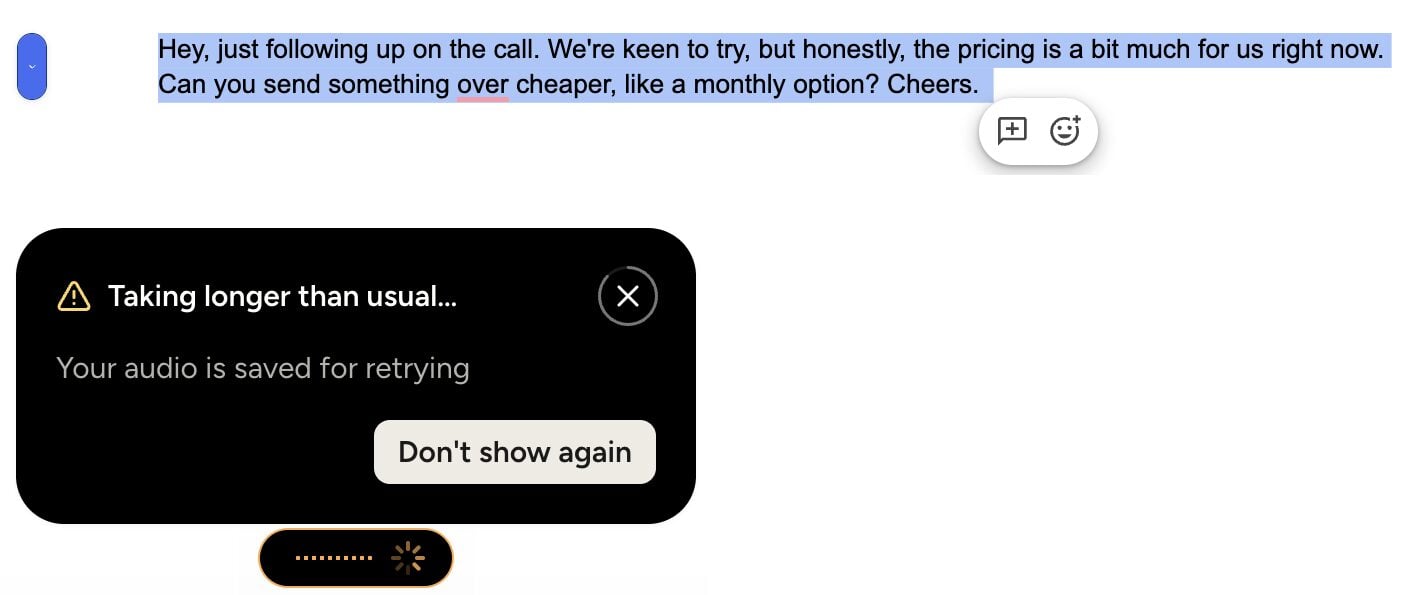
That complaint got louder in early October 2026, when a developer’s post on X saying Flow’s speech-to-text had become unusable drew hundreds of replies. Some paying users said they’d noticed the same drop. Others said they’d had no problems, and many recommended free, local alternatives instead. None of it is measured evidence, but it’s a pattern worth knowing about.
La otra cara de la moneda es que esto no es algo generalizado. Un usuario que lo usa mucho desde noviembre de 2025 no ha notado ese descenso. Esa diferencia es importante, porque apunta a algo que depende de ciertas condiciones (red, idioma, carga de trabajo, combinación de funciones) en lugar de una caída generalizada que todos experimenten.
My read: the core product is strong and the complaints cluster around consistency at scale rather than capability. Wispr has grown fast, and latency creep is what fast growth tends to look like from the outside. Worth knowing before you commit to an annual plan, not a reason to avoid the tool.
Privacidad y seguridad: ¿Es Wispr Flow seguro para uso profesional?
Esta es la pregunta que más se hace sobre Wispr Flow, y merece una respuesta clara.
Is Wispr Flow Secure? HIPAA and Wispr’s Data Settings
En resumen: sí, pero hay una salvedad importante que debes tener en cuenta.
Wispr Flow processes your audio in the cloud, and its security FAQ says it processes and stores customer data in the United States. That is not going to change. The company’s position is that cloud-based processing is what enables the fast, accurate, context-aware transcription that makes the product good. Local processing of the quality Wispr delivers is not yet practical at consumer scale.
Lo que sí puedes controlar es lo que ocurre con esos datos una vez procesados.
What used to be called Privacy Mode is now two separate settings in Settings under Data and Privacy. “Improve the model for everyone” controls whether your audio, transcripts, and edits are used for model training. “Dictation cloud storage” controls whether your dictation data is stored on Wispr’s servers. Turning off one doesn’t turn off the other, so switch both off and you get zero data retention for dictation. Usage statistics (like word count) are still collected, but the actual content of what you said is not retained.
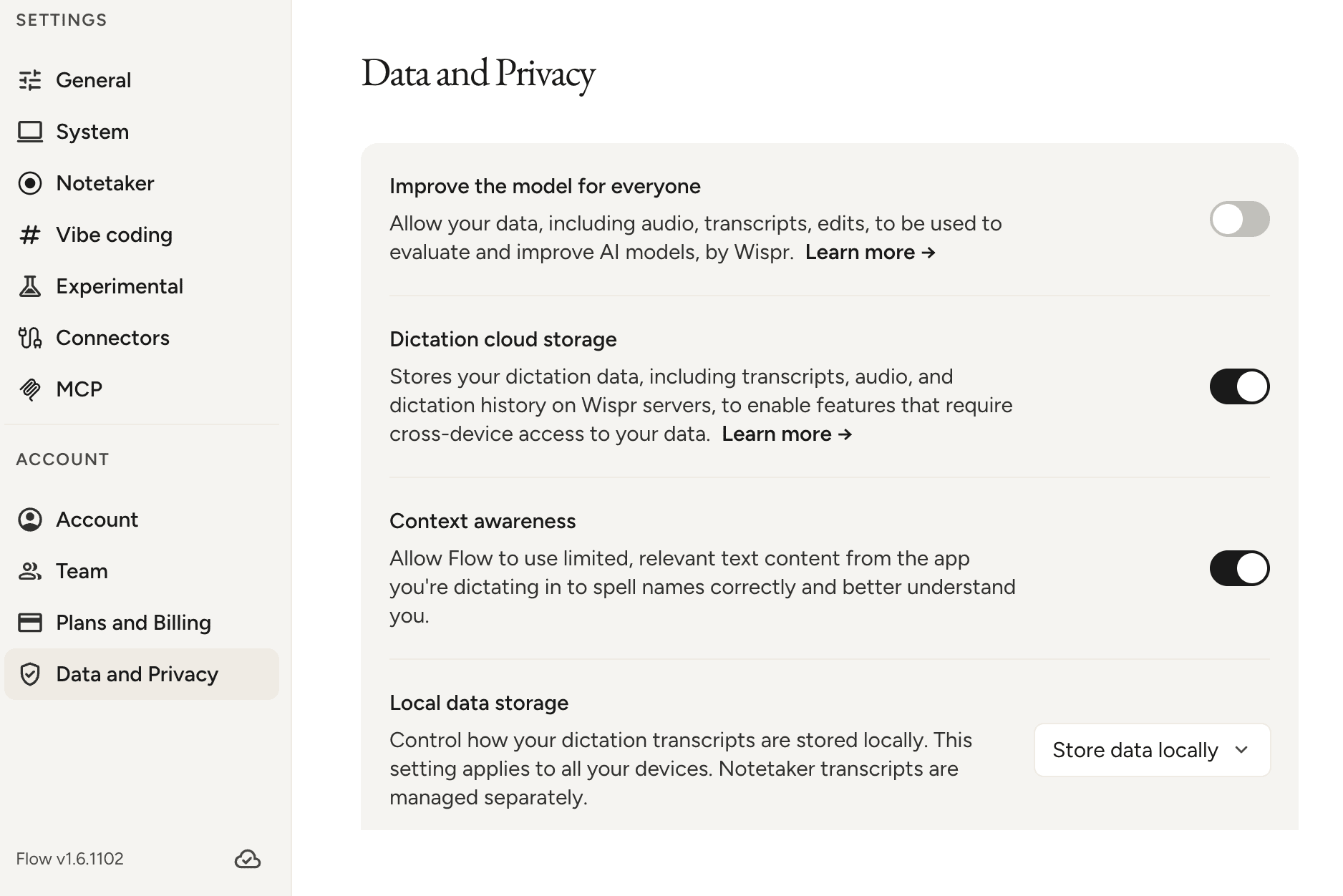
A newer setting, Local data storage, controls how your dictation transcripts are kept on your own devices, and applies across all of them. Notetaker transcripts are managed separately.
Watch the defaults. On the Free and Pro plans, “Improve the model for everyone” is on until you switch it off, so your dictation data can be used to improve Wispr’s models. On Enterprise, it’s off and locked.
Otros datos sobre seguridad que conviene saber:
- HIPAA-ready dictation requires a signed Business Associate Agreement (BAA). Individuals can sign one in the desktop app, and Growth and Enterprise admins can sign one for the whole organization. Signing permanently switches off model training and dictation cloud storage for the account. According to Wispr’s docs, it also blocks Notetaker from recording.
- Wispr nunca vende tus datos. Su modelo de negocio se basa en las suscripciones de software.
- La situación de la certificación cambió bastante en marzo de 2026. Echa un vistazo a la sección de más abajo.
El estado de la certificación de Wispr cambió en marzo de 2026
En marzo de 2026, una investigación a raíz de una denuncia reveló que Delve, una startup de automatización del cumplimiento normativo respaldada por Y Combinator, había elaborado informes SOC 2 tipo a gran escala. Según se dice, una hoja de cálculo filtrada mostraba que 493 de los 494 informes de auditoría eran prácticamente idénticos, con los mismos párrafos y los mismos errores gramaticales, y en los que solo se había cambiado el nombre de la empresa. Y Combinator eliminó a Delve de su directorio a principios de abril de 2026.
Wispr se vio afectada por la onda expansiva. Hay que reconocer que su respuesta fue la correcta. Según las propias preguntas frecuentes sobre seguridad de Wispr, la empresa invalidó de forma proactiva sus certificaciones SOC 2 Tipo II (Accorp Partners) e ISO 27001 (Gradient) en marzo de 2026 «debido a problemas de integridad de la plataforma por parte del auditor original», y luego volvió a empezar desde cero con A-LIGN como auditor y Drata como plataforma de cumplimiento.
Where things stand as of October 2026:
- SOC 2 Tipo I: finalizado en abril de 2026 por A-LIGN, dictamen sin salvedades
- SOC 2 Type II and ISO 27001:2022: Wispr’s security FAQ now says both are available through its Trust Center. It doesn’t publish the issue dates or audit periods, so ask for them
- Scope: the audits cover Flow dictation. Wispr says Meeting Notetaker was not assessed
- HIPAA: BAA available for individuals and organizations. Signing it permanently switches off model training and dictation cloud storage, and blocks Notetaker from recording
- Pruebas de penetración: las últimas se realizaron en noviembre de 2025 por BSK Security LLC, con una metodología basada en OWASP
Throwing out a certification you already hold because you don’t trust the auditor is the expensive, correct call, and most companies wouldn’t make it. One loose end: Wispr’s separate compliance help page still lists the old ACCORP Type II report and a Gradient ISO 27001 certificate that expired on September 7, 2026. If your procurement process needs a current SOC 2 Type II, request the new reports from Wispr’s Trust Center rather than relying on the help pages, and check whether Notetaker is in scope if you plan to use it.
¿Wispr Flow hace capturas de pantalla de tu pantalla?
This claim circulates widely, usually in the form “Wispr screenshots your active window every few seconds.” Wispr’s current documentation says otherwise.
Per Wispr’s Context Awareness help page (checked October 2026), the feature “works from text and does not take screenshots.” When it’s on, which it is by default, Flow reads text from the app you’re dictating in to improve formatting and proper-noun accuracy: the text around your cursor, on-screen text, file and variable names in coding apps, and conversation history. On a Mac it needs accessibility permissions.
Password field contents are never read, though Wispr notes that custom or web-based password fields may be treated as normal text. With model training and dictation cloud storage both switched off, any captured context is stripped server-side and not persisted.
So the accurate version: Wispr reads on-screen text by default and doesn’t take screenshots. That is still a meaningful amount of context leaving your machine, and if you work under NDA or handle privileged material you should turn Context Awareness off entirely in Settings under Data and Privacy. But “it silently screenshots you every few seconds” is not what the documentation describes, and several sites repeating that claim sell competing dictation tools.
One legitimate concern that third-party reviewers like Letterly have raised is that Wispr Flow’s early privacy policy was vague and created distrust, particularly around what “context collection” meant and which third-party providers were handling audio. Wispr has since made this much clearer, but if you’re in a regulated industry, it’s still worth reading the Privacy and Security docs before committing to a paid plan.
¿Quién responde de la arquitectura de seguridad?
Vale la pena añadir esto al otro lado de la balanza: la ex-CISO Rinki Sethi, que antes trabajó en Bill.com, Twitter y Rubrik, ha respaldado públicamente la arquitectura de Wispr y dice que implementó Flow en toda la empresa en Upwind Security. La razón que dio fue que «dónde están los datos, cómo se mueven y quién puede acceder a ellos» eran preguntas a las que se podía responder con claridad, algo que no suele ser habitual en las herramientas de IA. Es un respaldo significativo por parte de alguien cuyo trabajo consistía precisamente en decir que no a los proveedores.
The honest summary for professionals: if you work in healthcare, law, or finance, switch off “Improve the model for everyone” and dictation cloud storage, sign the BAA (knowing it disables Notetaker), and turn off Context Awareness. If you’re a writer, marketer, or knowledge worker handling non-sensitive content, switching off model training on any plan is more than adequate.
Wispr Flow frente a la competencia
Wispr Flow frente a SuperWhisper
Already covered in some depth above, but to give you the quick version for people skimming. For a full hands-on take, see our SuperWhisper review.
Choose Wispr Flow if: you use multiple devices or platforms, you want a tool that works out of the box, you need cross-platform sync, or you need HIPAA-ready dictation.
Elige SuperWhisper si: solo usas Mac e iOS, tienes requisitos estrictos de soberanía de datos, quieres configurar tú mismo los modelos de IA o realmente no quieres que la nube intervenga en absoluto.
También puedes ver este vídeo de 20 minutos en el que se comparan tres herramientas principales para ver cómo se usan en la práctica, una al lado de la otra.
Wispr Flow frente a Dictado de Apple
En 2026 no es precisamente una competencia justa, pero vale la pena hablar de ello porque mucha gente empieza con el dictado de Apple y se pregunta qué se está perdiendo.
La función de dictado de Apple te ofrece una transcripción sin editar. No adapta el formato al contexto, no elimina las palabras de relleno y no distingue si estás escribiendo un correo electrónico o en un editor de código. Lo que dices es, más o menos, lo que obtienes.
Wispr Flow formatea el texto según el contexto, depura los patrones del habla y mejora activamente el texto mientras hablas. Se trata de una categoría de producto totalmente diferente. La única razón para seguir usando el dictado de Apple es si solo utilizas dispositivos Apple, dictas textos muy breves y no quieres pagar nada.
Wispr Flow frente a Otter.ai
Otter has been recording, transcribing and summarizing meetings for years, and Wispr Flow Notetaker is now doing that same job. The real difference is how each one gets into the room. Otter joins as a bot, which is clunkier but means everyone can see a recorder is present. Wispr Flow Notetaker captures locally and says nothing.
En cuanto al dictado, no hay color, porque Otter nunca pretendió sustituir a tu teclado. Y si lo que realmente necesitas es sacar adelante tu trabajo, la compatibilidad multiplataforma de Ottery sus años de perfeccionamiento siguen siendo una gran ventaja.
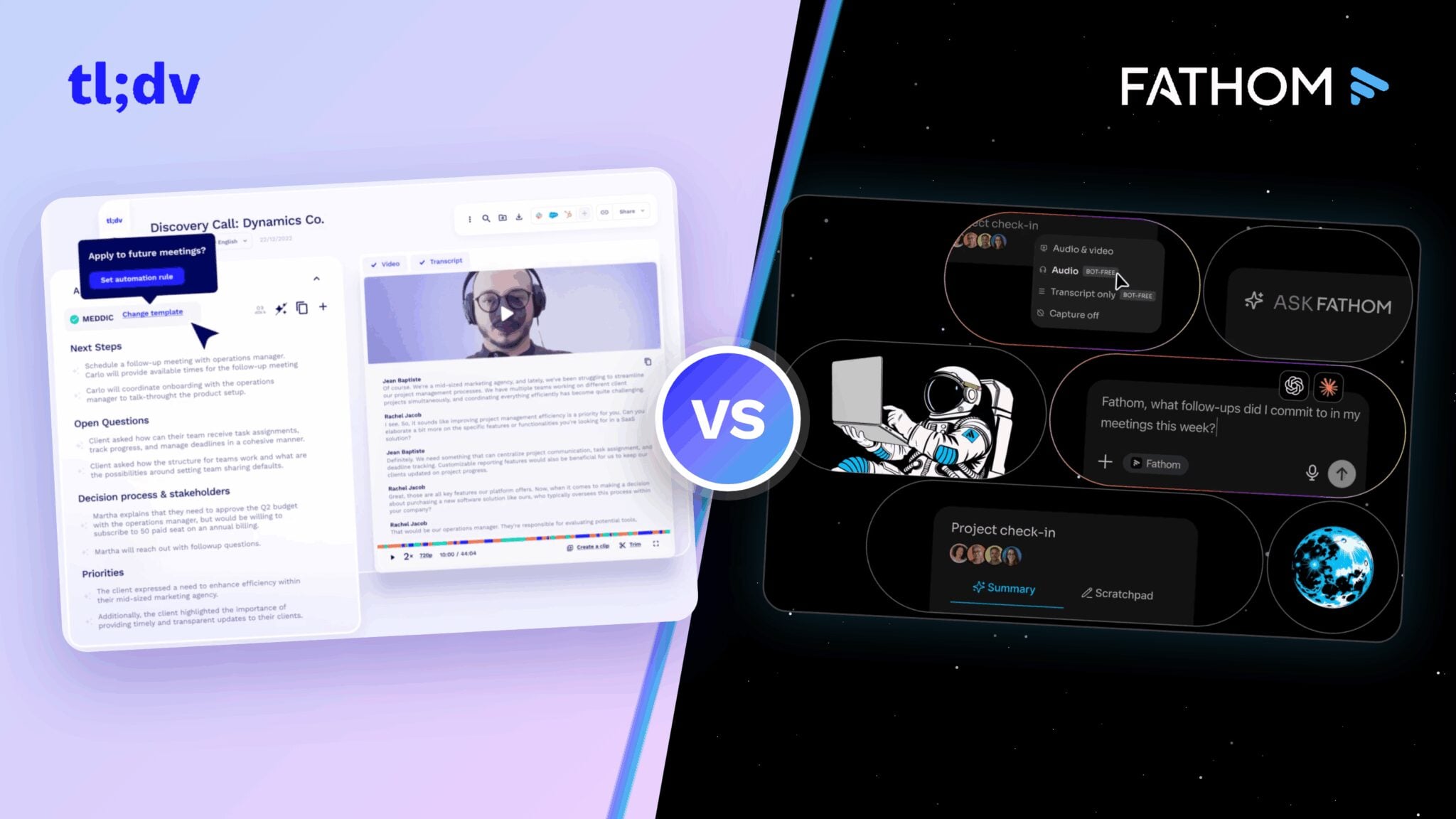
Wispr Flow vs. tl;dv: How They Compare in 2026
Wispr Flow Notetaker is a personal meeting recorder. It runs on your Mac or Windows PC, captures whatever audio is playing, and turns it into a transcript, a summary, and answers you can query later or pipe into Claude, ChatGPT and Gemini over MCP. It’s built for the person holding the laptop. For our hands-on test, including memory use and speaker identification, see the full Wispr Flow Notetaker review.
tl;dv meeting notetaker is built for the team around them. It records Zoom, Google Meet and Microsoft Teams in 30+ languages, as a bot or bot-free from the desktop app, and keeps the video and audio rather than the text alone. What it captures flows into HubSpot, Salesforce, Slack and 5,000+ other tools, and on the Business plan it scores calls against your sales playbook. It holds 4.7/5 on G2 from over 500 reviews and is used by more than 2 million users.
| Función | Wispr Flow Notetaker | tl;dv |
|---|---|---|
|
Plataforma |
Mac and Windows. No mobile app for meetings |
Mac, Windows, iOS and Android |
|
Captura sin bots |
Sí |
Sí |
|
Idiomas |
21 |
Más de 30 con detección automática |
|
Transferencia de vocabulario |
Hereda tu diccionario de dictado |
Vocabulario personalizado, que se configura por separado |
|
Se ha guardado la grabación |
Transcripción y resumen |
Vídeos y audios, biblioteca con función de búsqueda |
|
Vídeos con marcas de tiempo y recopilaciones de lo más destacado |
No |
Sí |
|
Resúmenes previos a la reunión |
Sí, reuniones externas |
No |
|
Análisis del tiempo de conversación |
No |
Sí |
|
CRM |
A través de MCP, configúralo tú mismo |
Native HubSpot, Salesforce, Pipedrive |
|
Entrenamiento y puntuación en « playbook » |
No |
Sí, plan de negocio |
|
Búsqueda en todo el equipo |
No |
Sí |
|
Plan de empresa |
Sí |
Sí |
|
Residencia de datos |
EE. UU. |
EU |
|
Plan gratuito |
Límite de reuniones semanales, incluido el MCP |
Unlimited recording, AI notes on 10 meetings |
Wispr Flow Notetaker es la mejor opción si:
- Work on Mac or Windows and mostly take notes for yourself
- ¿Ya pagas por Flow y quieres que las notas de las reuniones estén incluidas sin coste adicional?
- Run your meetings in one of its 21 languages
- ¿Quieres recibir resúmenes previos a las reuniones sobre las llamadas externas?
- Prefiero introducir notas en Claude o ChatGPT en lugar de usar un flujo de trabajo integrado
tl;dv la mejor opción si:
- Need meetings covered on mobile as well as desktop
- Run calls in languages outside Wispr’s 21
- Necesito la grabación en sí, no solo la transcripción
- ¿Quieres que los campos del CRM se rellenen automáticamente en lugar de exportarlos a través de MCP?
- ¿Necesitas asesoramiento, puntuación de « playbook » o seguimiento de objeciones en toda una biblioteca de llamadas?
- Need your data stored in the EU
El veredicto final: ¿Quién debería usar Wispr Flow?
Después de dos semanas probando, esto es lo que he concluido.
Wispr Flow started as a dictation tool, and on that job it’s good. The AI formatting works, the cross-platform sync works, and Command Mode is useful once you get the hang of it. If you want to stop typing emails and Slack messages, the free plan is enough to find out whether it suits you.
But with Notetaker, Wispr is no longer just a dictation tool. It now wants to record your meetings too, and that’s a different job with a much higher bar. Notetaker is built for one person taking their own notes. It keeps the transcript, not the recording. There’s no mobile app for meetings, no native CRM sync, and your data is processed and stored in the US. In our hands-on Notetaker review, it also slowed calls on an 8 GB Mac.
If your meetings matter to more people than the person who took the notes, you need the recording, a library your team can search, and your CRM updated without anyone remembering to do it. That’s the job tl;dv was built for. It records Zoom, Google Meet and Microsoft Teams in 30+ languages, with a bot or bot-free from the desktop app. It keeps the video from bot recordings, fills in HubSpot, Salesforce and Pipedrive automatically, and stores your data in the EU.
Use Wispr Flow to dictate. Use tl;dv to record and share your meetings. The free plan gives you unlimited recordings, so you can try it on your next call. Try tl;dv free.
FAQs About Wispr Flow
¿Wispr Flow es gratis?
Yes. Wispr Flow’s free plan includes 2,000 words a week on Mac or Windows and 1,000 words a week on mobile, plus the custom dictionary, snippets and Notetaker with a weekly meeting limit. You can switch off model training on the free plan. Pro removes the word limit for $12 a month billed annually, or $15 monthly.
¿Funciona Wispr Flow en Windows?
Yes. Wispr Flow runs on Windows as well as Mac, iPhone and Android, and your dictionary, snippets and settings sync across all of them. That cross-platform support is one of its biggest advantages over SuperWhisper, which only runs on Mac and iOS. Like the Mac app, it works inside any app where you can type.
¿Qué es el Wispr Flow Pro y vale la pena comprarlo?
Flow Pro costs $12 a month billed annually, or $15 monthly. It removes the weekly word limits, adds Command Mode for editing text by voice, raises Notetaker’s meeting limits and adds shared team dictionaries. If you dictate daily for work, you’ll hit the free limit within days, so Pro is worth it for regular users.
¿Es Wispr Flow seguro y confidencial?
Wispr Flow processes audio in the cloud and stores data in the US, with no offline mode. You can switch off model training and dictation cloud storage in Data and Privacy settings. Model training is on by default on Free and Pro. Wispr’s security FAQ says its new SOC 2 Type II and ISO 27001 reports are available through its Trust Center.
¿Cómo funciona el modo de comando en Wispr Flow?
Command Mode lets you edit text by voice. Switch it on under Settings, then Experimental, highlight some text, hold Fn + Ctrl on a Mac and say an instruction such as “make this more formal”. Flow rewrites the selection, or shows it to copy in apps like Google Docs. It needs a paid plan or an active trial.
¿Qué idiomas admite Wispr Flow?
Wispr Flow dictates in over 100 languages. With auto-detect switched on, it identifies the language you’re speaking on Mac, Windows and iOS, choosing one language per dictation. Android needs you to pick the language yourself. Flow’s Style settings, which control how formal or casual your text sounds, currently only work in English.
¿Funciona la aplicación para tomar notas Wispr Flow en Windows?
Yes. Wispr Flow Notetaker launched on Mac on August 5, 2026, and came to Windows on September 15, 2026. It records meetings without a bot joining the call and transcribes 21 languages. There’s no mobile app for meetings. Notetaker is included on the free plan with a weekly meeting limit, and recordings under five minutes don’t count.