Przejdź do treści





⚡Krótka ocena (w skrócie)
What Wispr Flow is: An AI voice keyboard that works inside every app on Mac, Windows, iOS, and Android. Press a hotkey, speak naturally, and get clean, context-aware, formatted text wherever your cursor is sitting. No separate editor, no switching windows. It now also ships Wispr Flow Notetaker, a bot-free meeting recorder on Mac and Windows, which we’ve reviewed separately in our Wispr Flow Notetaker review.
Who it’s good for: Knowledge workers who write heavily across email, Slack, docs, and notes. Professionals who move between multiple devices or operating systems. Healthcare and legal teams who need HIPAA-ready dictation without paying enterprise prices. Anyone who already lives in AI tools like ChatGPT or Perplexity and wants to drive them by voice.
Who should avoid it: Users who need fully offline, on-device processing with zero cloud involvement. Mac-only power users who want to configure their own AI models (SuperWhisper is the better fit there). Very light users who won’t come close to the 2,000-word weekly free limit. Teams hoping the bundled notetaker will cover their meetings. It has no mobile app, trains on your data by default, and in our hands-on test it made calls lag on an 8 GB Mac. Dictation itself is unaffected.
The one thing you must know before subscribing: All transcription happens in the cloud, and Wispr processes and stores data in the United States, with no EU region. There is no offline mode. If sending audio to external servers is a hard no for your workflow, Wispr Flow is not the right tool regardless of plan.
Overall rating: 4.3 / 5: One of the most polished AI dictation tools available right now. The cloud-only architecture is the one very real caveat, but the “Improve the model for everyone” setting (formerly Privacy Mode) handles it well for most professional use cases, once you switch it off.
For businesses prioritizing strict data privacy and compliance across their entire workflow, exploring other GDPR-compliant enterprise AI platforms like Langdock can provide additional solutions.
Dlaczego przestałem pisać na klawiaturze: mój dwutygodniowy eksperyment z Wispr Flow Pro
Piszę szybko. Zawsze tak było. Kiedy więc kolega poradził mi, żebym „po prostu spróbował porozmawiać z komputerem”, poczułem się nieco zadowolony z siebie.
Przez dwa tygodnie testowałem Wispr Flow na MacBooku M3, komputerze z systemem Windows 11 oraz iPhonie 16 Pro. I muszę przyznać szczerze: już nie wracam tak często do tradycyjnego pisania na klawiaturze.
To nie jest zwykła uwaga. Prowadzenie firmy takiej jak tl;dv, gdzie codziennie zajmujemy się technologią głosową i sztuczną inteligencją, sprawia, że trudno mnie zaimponować deklaracjami dotyczącymi technologii głosowej. Wispr Flow i tak zrobił na mnie wrażenie.
Korzystałem z funkcji dyktowania Apple, zmagałem się z funkcją wprowadzania głosowego Google i spędziłem całe popołudnie z aplikacją SuperWhisper, przekonany, że to całkowicie zmieni moje życie (tak się nie stało, przynajmniej nie w moim przypadku). To, co wyróżnia Wispr Flow, jest subtelne, ale realne: aplikacja nie tylko zapisuje to, co mówisz, ale także rozpoznaje, co chciałeś napisać i odpowiednio to formatuje.
Wiadomości na Slacku brzmią swobodnie. E-maile brzmią profesjonalnie. Komentarze w kodzie nie zawierają tych wszystkich wypełniaczy, które wypowiadasz, gdy się zastanawiasz. To rozpoznawanie kontekstu naprawdę mnie zaskoczyło.
No więc. Czy to rzeczywiście najlepsze narzędzie do dyktowania oparte na sztucznej inteligencji na komputery Mac, Windows i urządzenia mobilne w 2026 roku? Przyjrzyjmy się temu dokładniej.
Czym jest Wispr Flow? (I czym różni się od SuperWhisper)
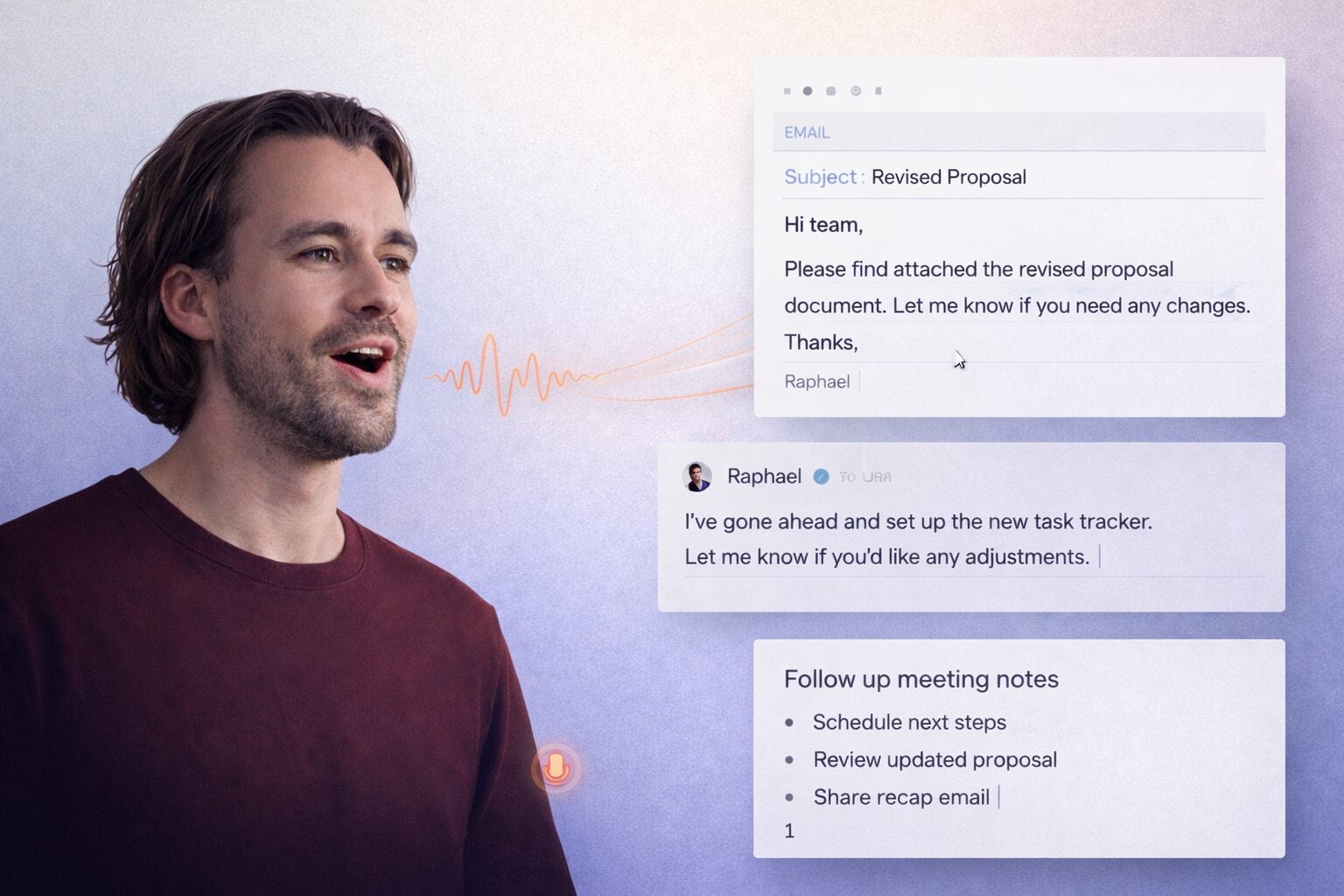
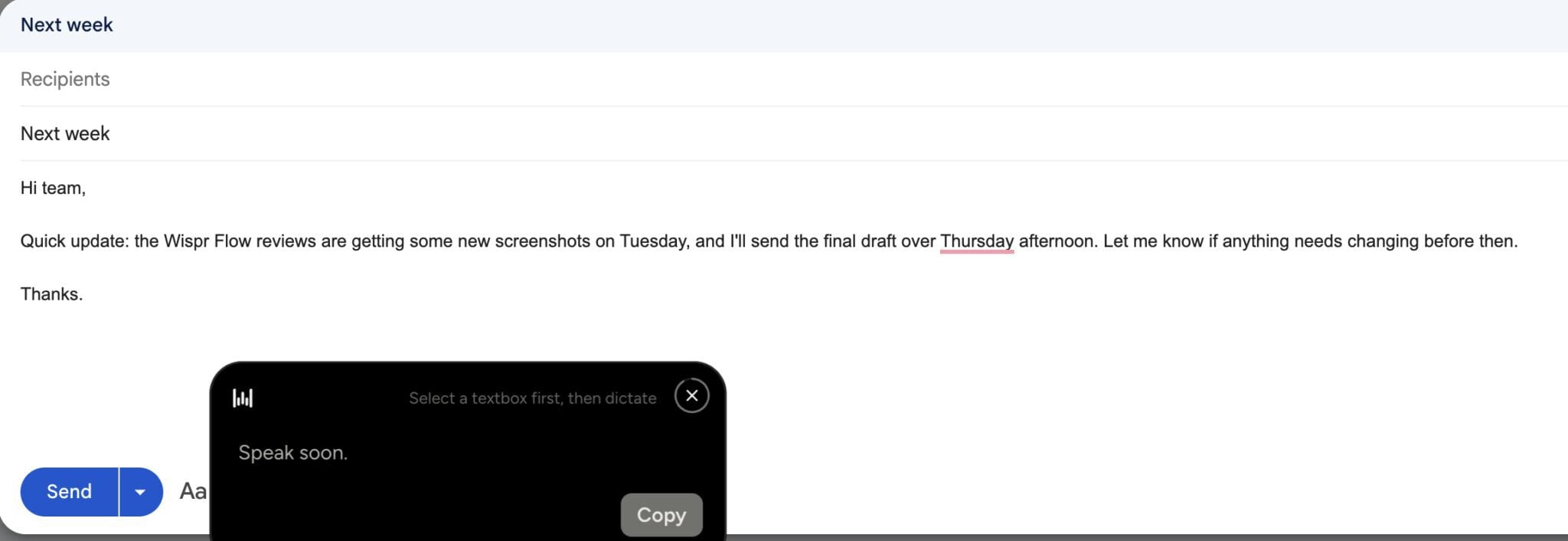
Wispr Flow to klawiatura głosowa oparta na sztucznej inteligencji, która działa w każdej aplikacji zainstalowanej na Twoim urządzeniu. Wystarczy nacisnąć skrót klawiszowy, mówić naturalnym językiem, a aplikacja wstawi poprawny, dopracowany tekst dokładnie w miejscu, w którym znajduje się kursor – niezależnie od tego, czy jest to Gmail, Notion, Slack, VS Code, czy przypadkowy formularz na stronie internetowej.
Kluczowym słowem jest tutaj wypolerowany. To nie jest surowa transkrypcja. Wispr Flow przetwarza Twoją mowę za pomocą opartych na chmurze modeli AI, które rozumieją kontekst i automatycznie usuwają wypełniacze, poprawiają strukturę zdań oraz formatują wynik pod kątem aplikacji, w której aktualnie się znajdujesz.
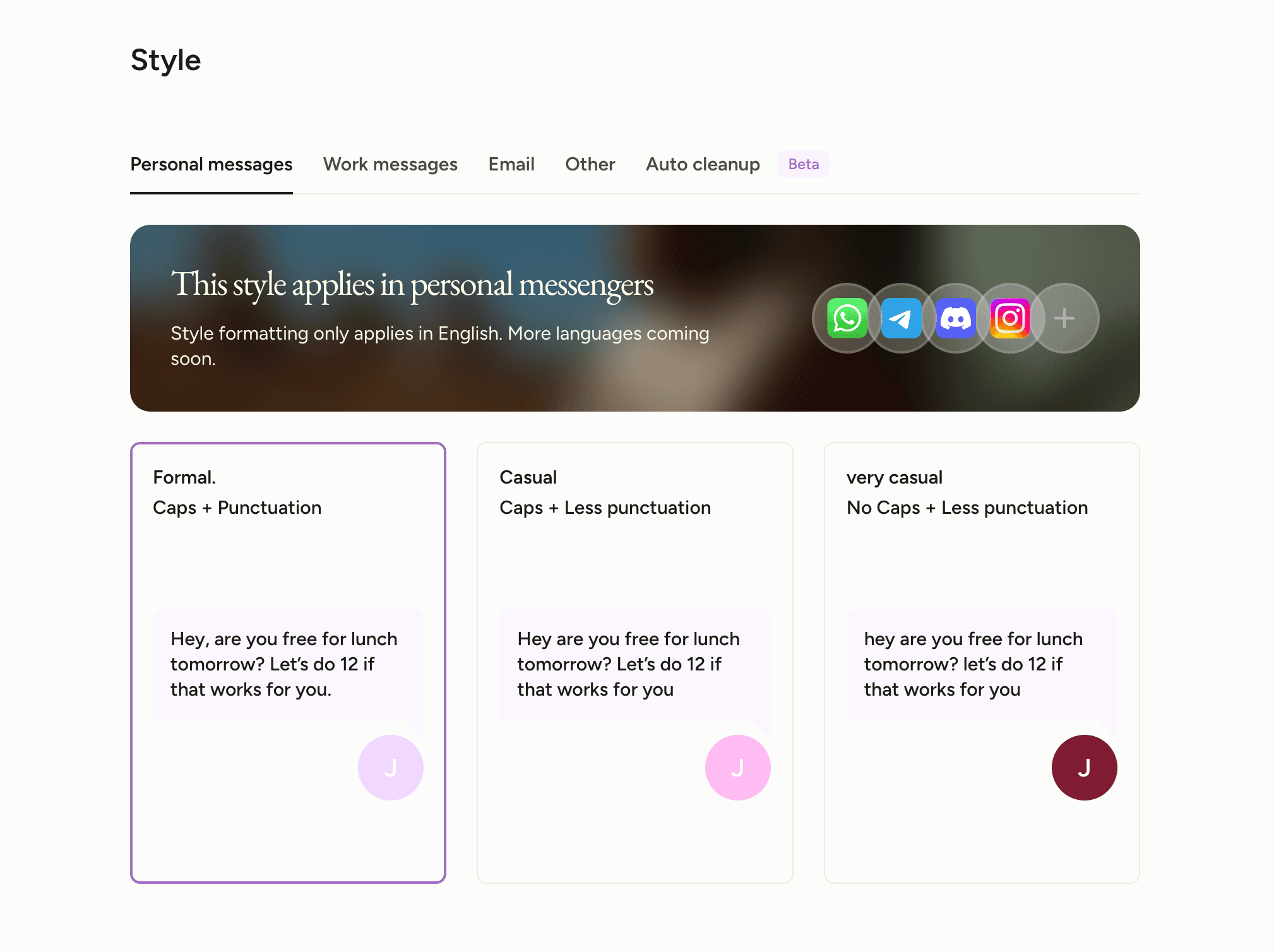
You control how that formatting behaves in Flow’s Style settings, with separate styles for personal messages, work messages, email and everything else, from formal to very casual.
Firma twierdzi, że jest to rozwiązanie czterokrotnie szybsze niż pisanie na klawiaturze, co przekłada się na około 220 słów na minutę w porównaniu ze średnią prędkością pisania wynoszącą około 45 słów na minutę. Podczas moich dwutygodniowych testów twierdzenie to sprawdziło się w przypadku dłuższych treści, takich jak e-maile i dokumenty. W przypadku krótkich, zwięzłych odpowiedzi różnica jest mniejsza, ale nadal zauważalna.
Czym więc różni się od SuperWhisper?
Kwestia ta pojawia się nieustannie w każdej rozmowie na temat dyktowania z wykorzystaniem sztucznej inteligencji, więc omówmy ją jasno.
SuperWhisper działa całkowicie w trybie offline na platformie Apple Silicon. Dane głosowe nigdy nie opuszczają urządzenia. To naprawdę potężne narzędzie dla zaawansowanych użytkowników, którzy chcą konfigurować własne modele sztucznej inteligencji, wybierać między szybkością a dokładnością oraz przechowywać wszystkie dane lokalnie. Jeśli korzystasz wyłącznie z komputerów Mac, zajmujesz się sprawami o wysokim stopniu poufności i nie chcesz mieć nic wspólnego z chmurą, warto poważnie rozważyć SuperWhisper.
Wispr Flow stosuje zupełnie inne podejście. Jest to rozwiązanie oparte na chmurze, co oznacza szybsze przetwarzanie i inteligentniejsze rozpoznawanie kontekstu, ale wiąże się to również z przesyłaniem nagrań audio na serwery zewnętrzne. Działa ono również na systemach Mac, Windows, iOS i Android, czego nie można powiedzieć o SuperWhisper. Jeśli korzystasz z różnych urządzeń lub platform, sama synchronizacja między nimi całkowicie zmienia sytuację.
The community consensus, backed up nicely by this head-to-head comparison from Willow Voice, is roughly this: Wispr Flow is the more polished, more accessible, better-designed product for most professionals. SuperWhisper is the privacy-first powerhouse for technical users who want control.
Jeden z twórców na YouTube, mający 18 tysięcy subskrybentów, który porównał wszystkie trzy najpopularniejsze narzędzia, ujął to w prosty sposób: Wispr Flow „ma zdecydowanie najlepszy interfejs użytkownika”. Zgadza się to z moimi doświadczeniami. Działa od razu po uruchomieniu. Nie wymaga żadnej konfiguracji.
Najważniejsze cechy: szczegółowe omówienie działania aplikacji Wispr Flow
Test szybkości: Czy naprawdę potrafisz pisać ponad 150 słów na minutę?
W nagłówku podano, że jest to czterokrotnie szybsze niż pisanie na klawiaturze. Z moich testów wynika, że stwierdzenie to sprawdza się najlepiej w przypadku tekstów dłuższych niż dwa zdania.
For email drafts, meeting notes, long Slack threads, or any kind of document work, speaking is dramatically faster than typing. Wispr puts the top end at around 220 words per minute, and how close you get depends on how freely you talk once you stop second-guessing yourself. The AI handles cleanup, so you don’t need to speak like you’re dictating to a court stenographer.
W przypadku bardzo krótkich odpowiedzi (dwuwyrazowa odpowiedź, szybka reakcja) nakład pracy związany z użyciem skrótu klawiszowego i wypowiedzeniem odpowiedzi sprawia, że jest to mniej więcej tak samo czasochłonne jak wpisanie tekstu. Nie ma w tym nic złego. To narzędzie zostało stworzone z myślą o dużej liczbie wiadomości.
Tryb poleceń: funkcja, która zmienia wszystko
W trybie poleceń Wispr Flow zaczyna naprawdę wyróżniać się na tle podstawowych narzędzi do dyktowania.
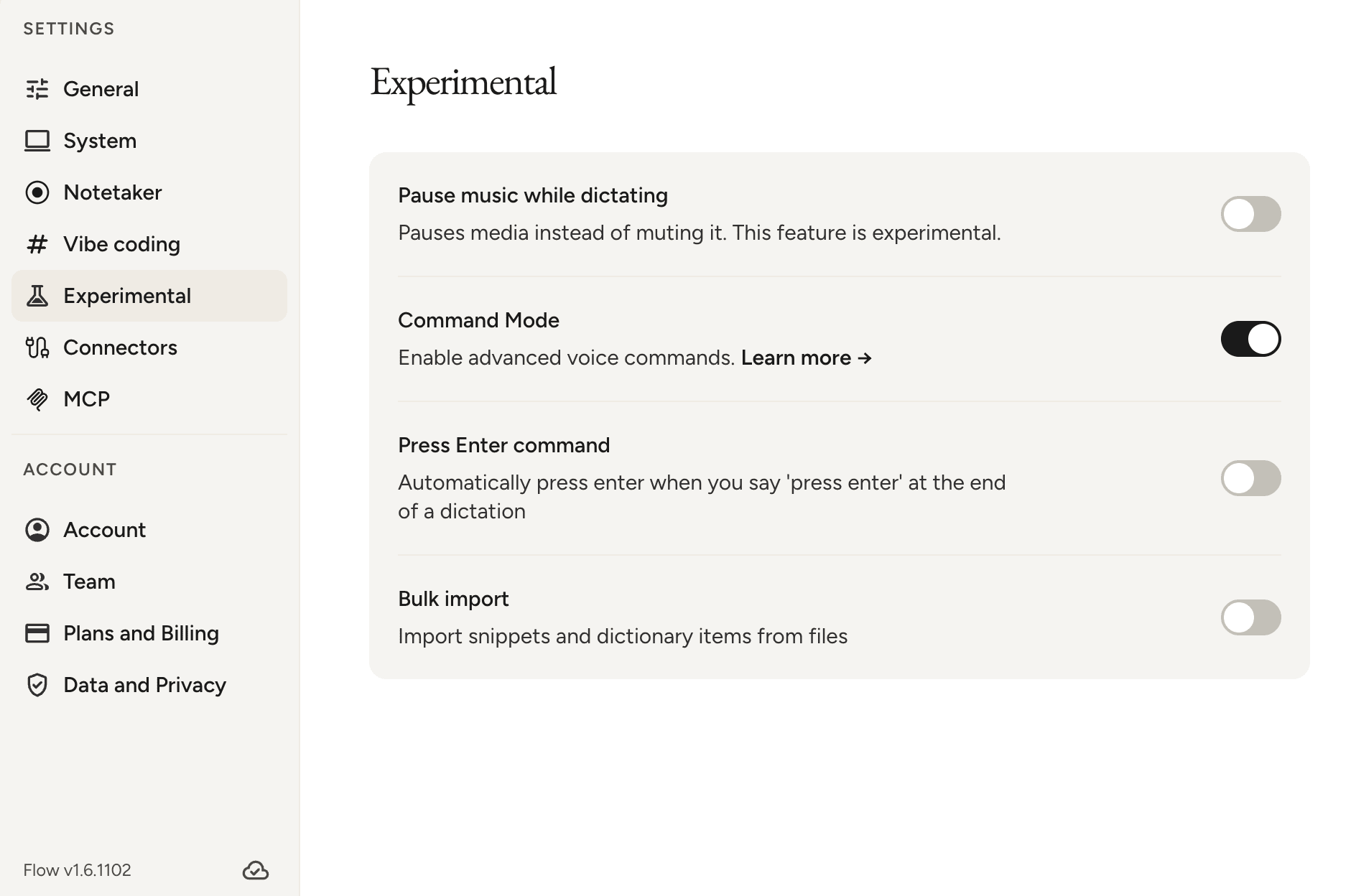
It’s switched off by default, so the first step is turning it on under Settings, then Experimental. It needs a paid plan or an active trial.
Here’s how it works: highlight some text, hold the Command Mode shortcut (Fn + Ctrl on a Mac), and say “make this more formal” or “translate this to Spanish” or “turn this into a bullet list.” Flow rewrites the selection. In apps where it can’t write back directly, such as Google Docs, it shows the new version in a popup for you to copy.
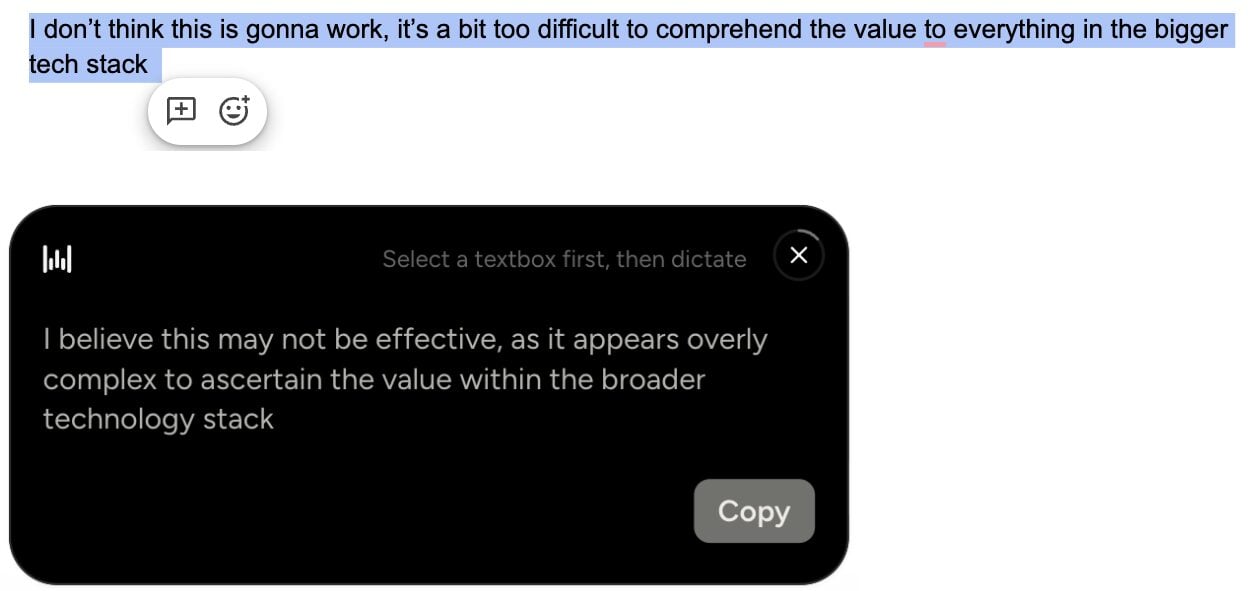
You can also use it to search. Ask a question in Command Mode on desktop and it opens Perplexity with your selected text added to the query.
Dla wszystkich, którzy dużo piszą i korzystają z narzędzi AI, takich jak ChatGPT lub Perplexity, możliwość wysyłania poleceń bezpośrednio za pomocą głosu jest naprawdę przydatna. Jeden z twórców, który recenzował Wispr Flow, opisał korzystanie z niego do „wysyłania poleceń do ChatGPT i Perplexity AI bezpośrednio za pomocą głosu” jako jeden ze swoich najczęściej stosowanych codziennych procesów pracy. Rozumiem dlaczego.
Watch this Command Mode demo if you want to see it in action before downloading.
Słownik niestandardowy i fragmenty kodu
To cicha, ale bardzo praktyczna funkcja.
Custom dictionary lets you teach Flow unusual words, names, or jargon it would otherwise mangle. If your company name is something like “Morepalooza” or you work in a field with technical terminology, you register it once and Flow spells it your way from then on. You can also use it to correct a word Flow keeps getting wrong.
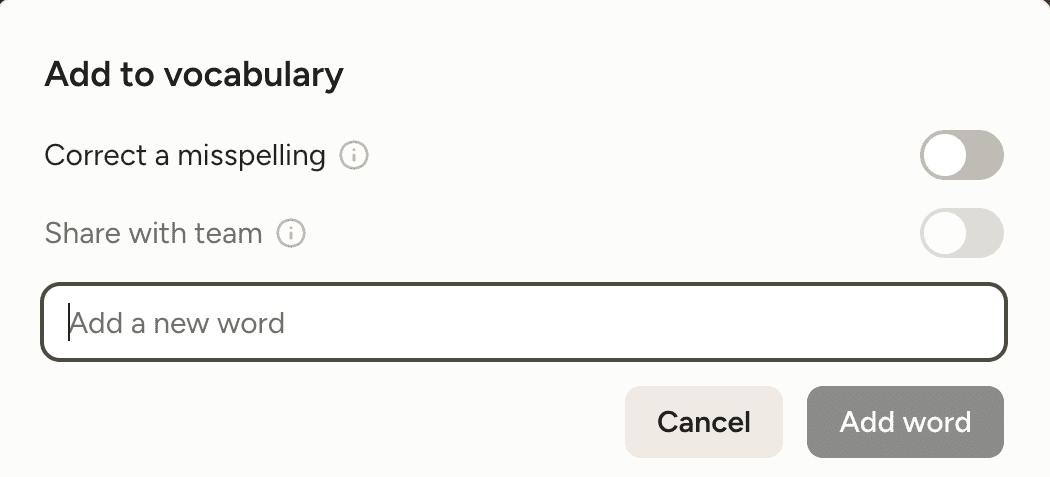
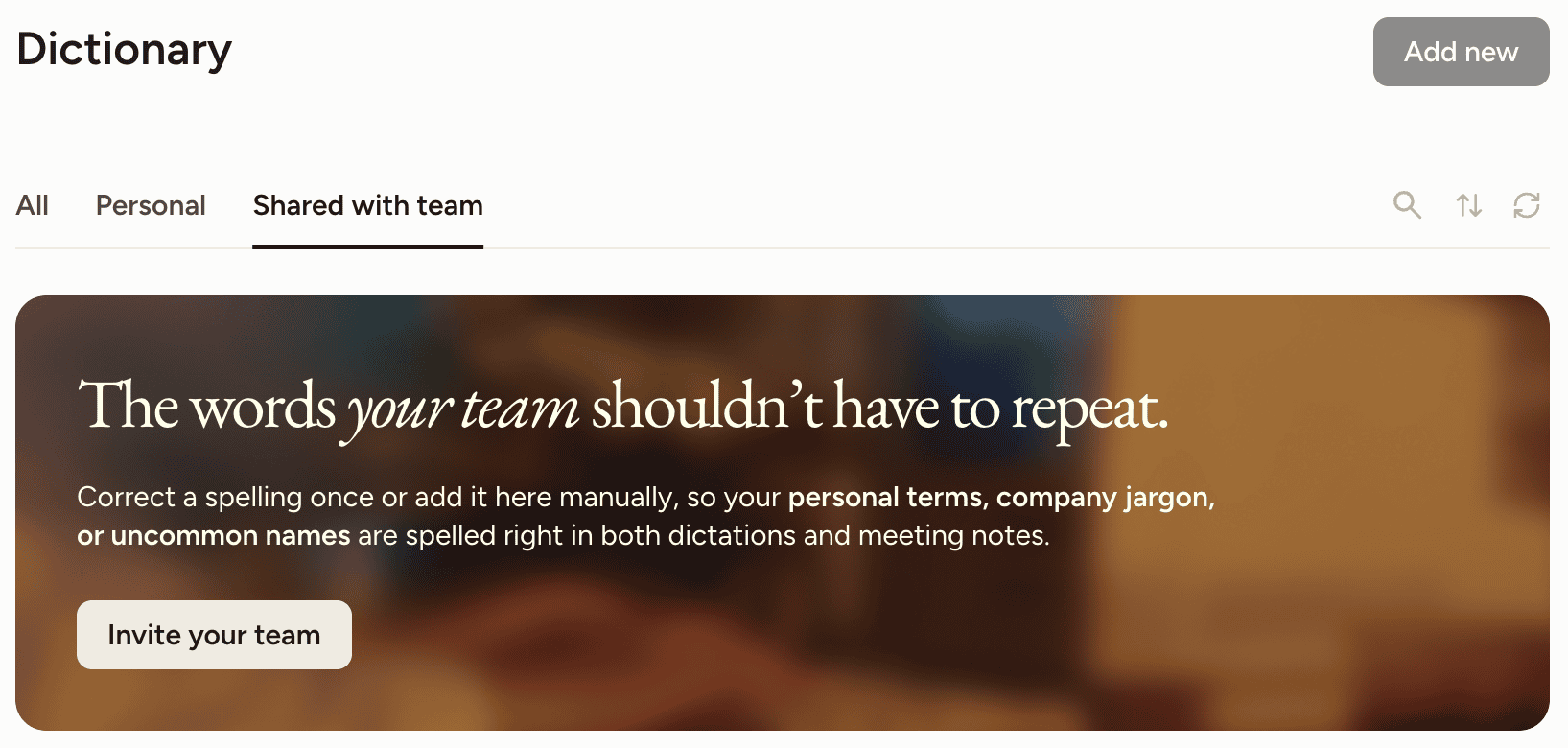
On a team, you can share dictionary words with everyone, so product names and client names are spelled the same way across the company, in both dictation and meeting notes.
Fragmenty tekstu pozwalają definiować skrócone wyzwalacze. Wystarczy wypowiedzieć krótką frazę, a zostanie ona rozwinięta w dłuższy fragment tekstu, którego często używasz, np. standardowe zakończenie wiadomości e-mail, szablon zaproszenia na spotkanie lub odpowiedź działu pomocy technicznej.
Obie te funkcje synchronizują się między urządzeniami, co prowadzi nas do kolejnego punktu.
Synchronizacja między platformami: największa praktyczna zaleta Wispr Flow
To właśnie ta funkcja naprawdę wyróżnia Wispr Flow na tle większości konkurentów.
Twój spersonalizowany słownik, fragmenty tekstu, ustawienia i statystyki użytkowania są synchronizowane między komputerami Mac, Windows, iPhone'ami i urządzeniami z systemem Android. Rozpocznij pracę na komputerze Mac, kontynuuj ją na iPhonie, a w biurze przejdź na system Windows. Wszystko działa spójnie i jest zawsze aktualne.
Aplikacja SuperWhisper działa wyłącznie na komputerach Mac i urządzeniach z systemem iOS. Jeśli korzystasz z systemu Windows, po prostu nie masz wyboru. To samo dotyczy telefonów z systemem Android.
Dla zespołów i osób, które korzystają z różnych urządzeń i systemów operacyjnych, ta wieloplatformowość stanowi najwyraźniejszą przewagę konkurencyjną Wispr Flow.
| Platforma | Wispr Flow | SuperWhisper | Dyktowanie Apple |
|---|---|---|---|
|
Mac |
Tak |
Tak |
Tak |
|
Windows |
Tak |
Nie |
Nie |
|
iPhone / iOS |
Tak |
Tak |
Tak |
|
Android |
Tak |
Nie |
Nie |
|
Działa we wszystkich aplikacjach |
Tak |
Tak |
Przeważnie |
|
Formatowanie przez sztuczną inteligencję |
Tak |
Tak |
Nie |
|
Przetwarzanie w trybie offline |
Nie |
Tak |
Nie |
Obsługa ponad 100 języków
Wispr Flow dictates in over 100 languages. With auto-detect switched on, it works out which language you’re speaking on Mac, Windows and iOS, choosing one language per dictation. Android doesn’t have auto-detect, so you pick the language yourself.
For multilingual teams or individuals who work across languages, this is a real feature rather than a checkbox. You can move between languages from one dictation to the next without changing settings, and Flow follows some local writing rules, such as French spacing before punctuation and Swiss German spelling. Two limits are worth knowing. You can’t mix languages inside a single dictation, and Flow’s Style settings, which control how formal or casual your text sounds, only work in English for now.
Wispr Flow Notetaker: What You Need to Know
Everything above is dictation. On August 5, 2026, Wispr shipped its first product beyond it. Wispr Flow Notetaker is a meeting recorder that captures audio on your computer with no bot joining the call. It launched on Mac, came to Windows on September 15, and now transcribes 21 languages. It’s included on the free plan, with a weekly meeting limit, and recordings under five minutes don’t count toward it.
The one thing it does that rivals can’t copy: your personal dictionary carries over from dictation. Every acronym and product name you’ve taught Flow over months of dictating gets applied to your meeting transcripts. You also get a live transcript, a cleaner second pass afterwards, summaries grouped by topic, a “What did I miss?” button, and MCP access to Claude, ChatGPT and Gemini on the free plan.
Consent is on you. No bot means no automatic notification that transcription is happening. Wispr says so in its own FAQ and puts the responsibility on the user. Twelve US states require all-party consent, and GDPR requires informed consent regardless. We covered this in bot-free recording legality.
We’ve since tested it hands-on, including speaker identification, memory use and what its MCP can actually reach. Read the full Wispr Flow Notetaker review.
Ceny Wispr Flow: czy plan Pro jest wart 12 dolarów miesięcznie?
Wispr Flow has four plans (checked October 2026):
Flow Free
- 2000 słów tygodniowo na komputerze Mac lub Windows
- 1,000 words per week on mobile
- Słownik niestandardowy i fragmenty kodu
- Obsługa ponad 100 języków
- The option to switch off model training
- Notetaker included (Mac and Windows) with speaker identification, ask-anything, and MCP access, subject to a weekly meeting limit (recordings under five minutes don’t count)
Flow Pro ($12 per user a month billed annually, or $15 on the monthly plan)
- Nieograniczona liczba słów na wszystkich platformach
- Tryb poleceń do edycji głosu
- Prioritized support and early access to new features
- Shared dictionary and snippets, a team workspace and centralized billing
- Free trial, no credit card required
- Higher Notetaker meeting limits and longer history
Flow Growth (contact Wispr for pricing)
- Everything in Pro plus SSO with SAML
- Organization-wide HIPAA enforcement with a signed BAA
- Admin control over model training and individual usage reporting
Flow Enterprise (w sprawie cen prosimy o kontakt)
- Everything in Growth plus SCIM, audit logs, MDM, domain capture and admin controls
- Notetaker, with admin controls including required consent confirmation, and model training locked off for the whole organization
Kilka uwag na temat cen. Po pierwsze, limit 2000 słów tygodniowo w ramach planu bezpłatnego wystarcza na zwykłe, prywatne potrzeby, ale szybko go wyczerpiesz, jeśli będziesz korzystać z serwisu w celach zawodowych. Przy moim natężeniu użytkowania (maile, notatki, dokumenty) limit bezpłatnego pakietu wyczerpywał mi się w ciągu dwóch–trzech dni.
Second, the 20% saving on the annual plan is real. $12/month versus $15/month adds up to $36 in savings per year. Not life-changing but worth taking if you know you’re going to use the tool regularly. UK subscribers pay the same figure in pounds: £15 a month, with annual billing saving £36 a year.
Third, and this is worth flagging: you can switch off model training on any plan, including free, so you don’t have to upgrade to stop your dictation being used to train Wispr’s models. If you need HIPAA-ready dictation, individuals can sign a Business Associate Agreement in the desktop app, and Growth and Enterprise admins can sign one for the whole organization. One catch: according to Wispr’s docs, signing the HIPAA agreement blocks Notetaker from recording, so you can’t have both.
For a more detailed breakdown of what each tier includes, Eesel AI has a good explainer on Wispr Flow’s pricing structure if you want a third-party take on it.
Czy Wispr Flow jest niezawodny? Co mówią długoletni użytkownicy
Warto zadać sobie pytanie nie o to, jakie wrażenia wywołuje dane narzędzie oparte na subskrypcji w pierwszym tygodniu, ale o to, jakie wrażenia wywołuje w dwunastym miesiącu. Wispr Flow ma obecnie wystarczająco dużo długoterminowych użytkowników, by odpowiedzieć na to pytanie, a odpowiedź jest niejednoznaczna.
Często powtarzającą się skargą jest pogorszenie jakości dyktowania z upływem czasu. Jeden z użytkowników, który od początku 2026 roku podyktował ponad 350 000 słów, twierdzi, że jakość „wyraźnie spadła”, i wykluczył oczywiste wyjaśnienie: na biurku używa mikrofonu Elgato Wave 3, a nie słuchawek AirPods. Przeniósł swoją subskrypcję do konkurencji. Inny długoletni płatny użytkownik zgłasza, że po wypowiedzeniu tekstu czeka znacznie dłużej na jego wyświetlenie i podejrzewa, że nowsze funkcje, takie jak automatyczne czyszczenie tekstu, powodują opóźnienia.
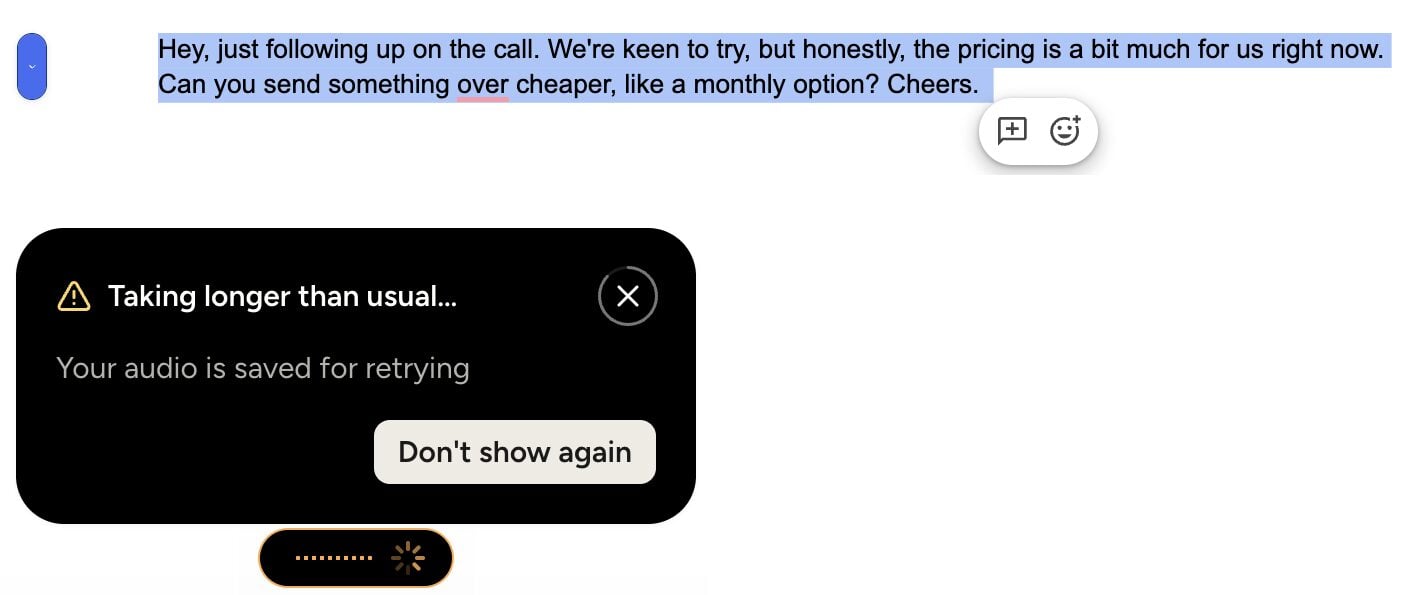
That complaint got louder in early October 2026, when a developer’s post on X saying Flow’s speech-to-text had become unusable drew hundreds of replies. Some paying users said they’d noticed the same drop. Others said they’d had no problems, and many recommended free, local alternatives instead. None of it is measured evidence, but it’s a pattern worth knowing about.
Z drugiej strony nie jest to zjawisko powszechne. Użytkownik intensywnie korzystający z serwisu od listopada 2025 r. nie odnotował takiego spadku. To rozróżnienie ma znaczenie, ponieważ wskazuje na czynnik warunkowy (sieć, język, obciążenie, zestaw funkcji), a nie na ogólną tendencję spadkową, której doświadczają wszyscy.
My read: the core product is strong and the complaints cluster around consistency at scale rather than capability. Wispr has grown fast, and latency creep is what fast growth tends to look like from the outside. Worth knowing before you commit to an annual plan, not a reason to avoid the tool.
Prywatność i bezpieczeństwo: czy Wispr Flow nadaje się do użytku profesjonalnego?
To pytanie pojawia się najczęściej w kontekście Wispr Flow i zasługuje na jasną odpowiedź.
Is Wispr Flow Secure? HIPAA and Wispr’s Data Settings
W skrócie: tak, ale jest jedna ważna rzecz, o której musisz wiedzieć.
Wispr Flow processes your audio in the cloud, and its security FAQ says it processes and stores customer data in the United States. That is not going to change. The company’s position is that cloud-based processing is what enables the fast, accurate, context-aware transcription that makes the product good. Local processing of the quality Wispr delivers is not yet practical at consumer scale.
Możesz decydować o tym, co dzieje się z tymi danymi po ich przetworzeniu.
What used to be called Privacy Mode is now two separate settings in Settings under Data and Privacy. “Improve the model for everyone” controls whether your audio, transcripts, and edits are used for model training. “Dictation cloud storage” controls whether your dictation data is stored on Wispr’s servers. Turning off one doesn’t turn off the other, so switch both off and you get zero data retention for dictation. Usage statistics (like word count) are still collected, but the actual content of what you said is not retained.
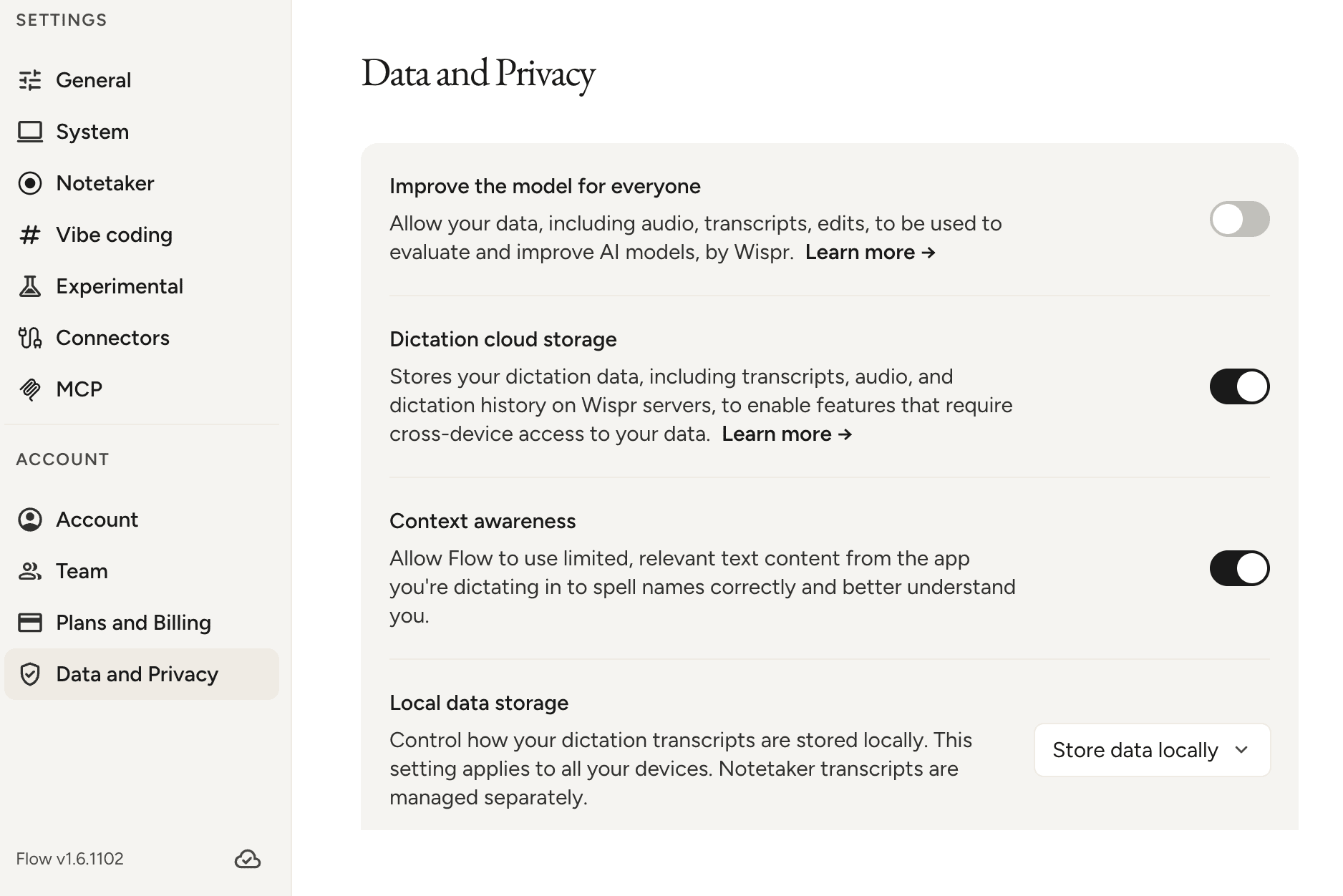
A newer setting, Local data storage, controls how your dictation transcripts are kept on your own devices, and applies across all of them. Notetaker transcripts are managed separately.
Watch the defaults. On the Free and Pro plans, “Improve the model for everyone” is on until you switch it off, so your dictation data can be used to improve Wispr’s models. On Enterprise, it’s off and locked.
Kilka innych faktów dotyczących bezpieczeństwa, o których warto wiedzieć:
- HIPAA-ready dictation requires a signed Business Associate Agreement (BAA). Individuals can sign one in the desktop app, and Growth and Enterprise admins can sign one for the whole organization. Signing permanently switches off model training and dictation cloud storage for the account. According to Wispr’s docs, it also blocks Notetaker from recording.
- Wispr nigdy nie sprzedaje danych użytkowników. Ich model biznesowy opiera się na subskrypcjach oprogramowania.
- W marcu 2026 r. nastąpiła znacząca zmiana statusu certyfikacji. Zobacz poniższy rozdział.
W marcu 2026 r. zmienił się status certyfikacji firmy Wispr
W marcu 2026 r. w wyniku dochodzenia przeprowadzonego na podstawie zgłoszenia informatora wysunięto zarzut, że Delve – start-up zajmujący się automatyzacją procesów zgodności z przepisami, wspierany przez Y Combinator – generował na dużą skalę szablonowe raporty SOC 2. Zgodnie z doniesieniami, z ujawnionego arkusza kalkulacyjnego wynikało, że 493 z 494 raportów audytowych były niemal identyczne – zawierały te same akapity i te same błędy gramatyczne, a jedyną zmianą była nazwa firmy. Na początku kwietnia 2026 r. Y Combinator usunął Delve ze swojego katalogu.
Firma Wispr znalazła się w zasięgu wybuchu. Trzeba jej jednak przyznać, że zareagowała właściwie. Zgodnie z własnym FAQ dotyczącym bezpieczeństwa firmy Wispr, w marcu 2026 r. firma proaktywnie unieważniła swoje dotychczasowe certyfikaty SOC 2 Type II (Accorp Partners) i ISO 27001 (Gradient) „z powodu obaw dotyczących integralności platformy ze strony pierwotnego audytora”, a następnie odbudowała system od podstaw, wybierając firmę A-LIGN jako audytora oraz Drata jako platformę zapewniającą zgodność z przepisami.
Where things stand as of October 2026:
- SOC 2 typu I: audyt przeprowadzony w kwietniu 2026 r. przez firmę A-LIGN, opinia bez zastrzeżeń
- SOC 2 Type II and ISO 27001:2022: Wispr’s security FAQ now says both are available through its Trust Center. It doesn’t publish the issue dates or audit periods, so ask for them
- Scope: the audits cover Flow dictation. Wispr says Meeting Notetaker was not assessed
- HIPAA: BAA available for individuals and organizations. Signing it permanently switches off model training and dictation cloud storage, and blocks Notetaker from recording
- Testy penetracyjne: ostatnie przeprowadzone w listopadzie 2025 r. przez firmę BSK Security LLC, zgodnie z metodologią opartą na standardach OWASP
Throwing out a certification you already hold because you don’t trust the auditor is the expensive, correct call, and most companies wouldn’t make it. One loose end: Wispr’s separate compliance help page still lists the old ACCORP Type II report and a Gradient ISO 27001 certificate that expired on September 7, 2026. If your procurement process needs a current SOC 2 Type II, request the new reports from Wispr’s Trust Center rather than relying on the help pages, and check whether Notetaker is in scope if you plan to use it.
Czy aplikacja Wispr Flow robi zrzuty ekranu?
This claim circulates widely, usually in the form “Wispr screenshots your active window every few seconds.” Wispr’s current documentation says otherwise.
Per Wispr’s Context Awareness help page (checked October 2026), the feature “works from text and does not take screenshots.” When it’s on, which it is by default, Flow reads text from the app you’re dictating in to improve formatting and proper-noun accuracy: the text around your cursor, on-screen text, file and variable names in coding apps, and conversation history. On a Mac it needs accessibility permissions.
Password field contents are never read, though Wispr notes that custom or web-based password fields may be treated as normal text. With model training and dictation cloud storage both switched off, any captured context is stripped server-side and not persisted.
So the accurate version: Wispr reads on-screen text by default and doesn’t take screenshots. That is still a meaningful amount of context leaving your machine, and if you work under NDA or handle privileged material you should turn Context Awareness off entirely in Settings under Data and Privacy. But “it silently screenshots you every few seconds” is not what the documentation describes, and several sites repeating that claim sell competing dictation tools.
One legitimate concern that third-party reviewers like Letterly have raised is that Wispr Flow’s early privacy policy was vague and created distrust, particularly around what “context collection” meant and which third-party providers were handling audio. Wispr has since made this much clearer, but if you’re in a regulated industry, it’s still worth reading the Privacy and Security docs before committing to a paid plan.
Kto gwarantuje bezpieczeństwo tej architektury?
Warto odnotować również drugą stronę medalu: była dyrektor ds. bezpieczeństwa informacji (CISO) Rinki Sethi, która wcześniej pracowała w firmach Bill.com, Twitter i Rubrik, publicznie pochwaliła architekturę Wispr i stwierdziła, że wdrożyła rozwiązanie Flow w całej organizacji Upwind Security. Jako powód podała, że „gdzie znajdują się dane, jak się przemieszczają i kto ma do nich dostęp” – na wszystkie te pytania można było uzyskać jasną odpowiedź, co nie jest normą w przypadku narzędzi opartych na sztucznej inteligencji. To znaczące poparcie ze strony osoby, której zadaniem było odrzucanie ofert dostawców.
The honest summary for professionals: if you work in healthcare, law, or finance, switch off “Improve the model for everyone” and dictation cloud storage, sign the BAA (knowing it disables Notetaker), and turn off Context Awareness. If you’re a writer, marketer, or knowledge worker handling non-sensitive content, switching off model training on any plan is more than adequate.
Wispr Flow a konkurencja
Wispr Flow kontra SuperWhisper
Already covered in some depth above, but to give you the quick version for people skimming. For a full hands-on take, see our SuperWhisper review.
Choose Wispr Flow if: you use multiple devices or platforms, you want a tool that works out of the box, you need cross-platform sync, or you need HIPAA-ready dictation.
Wybierz SuperWhisper, jeśli: korzystasz wyłącznie z systemów Mac i iOS, masz surowe wymagania dotyczące suwerenności danych, chcesz samodzielnie konfigurować modele AI lub naprawdę nie chcesz korzystać z chmury.
Możesz również obejrzeć ten 20-minutowy film, w którym porównano trzy główne narzędzia , aby zobaczyć ich praktyczne zastosowanie w porównaniu.
Wispr Flow a funkcja dyktowania Apple
W 2026 roku nie będzie to zbyt wyrównana rywalizacja, ale warto o tym wspomnieć, ponieważ wiele osób zaczyna od funkcji Apple Dictation i zastanawia się, czego im brakuje.
Funkcja Apple Dictation zapewnia surowy zapis wypowiedzi. Nie dostosowuje tekstu do kontekstu, nie usuwa wypełniaczy i nie rozróżnia, czy piszesz wiadomość e-mail, czy korzystasz z edytora kodu. To, co powiesz, jest w przybliżeniu tym, co otrzymasz.
Wispr Flow formatuje tekst w zależności od kontekstu, poprawia strukturę wypowiedzi i aktywnie udoskonala tekst w trakcie mówienia. To zupełnie inna kategoria produktów. Jedynym powodem, dla którego warto pozostać przy funkcji dyktowania Apple, jest sytuacja, gdy korzystasz wyłącznie z urządzeń Apple, dyktujesz bardzo krótkie teksty i nie chcesz za nic płacić.
Wispr Flow kontra Otter.ai
Otter has been recording, transcribing and summarizing meetings for years, and Wispr Flow Notetaker is now doing that same job. The real difference is how each one gets into the room. Otter joins as a bot, which is clunkier but means everyone can see a recorder is present. Wispr Flow Notetaker captures locally and says nothing.
Jeśli chodzi o dyktowanie, nie ma co porównywać, ponieważ Otter nigdy nie miało na celu zastąpienia klawiatury. A jeśli to właśnie spotkania są tym, co naprawdę musisz załatwić, to wieloplatformowość serwisu Otteroraz lata udoskonaleń wciąż mają ogromne znaczenie.
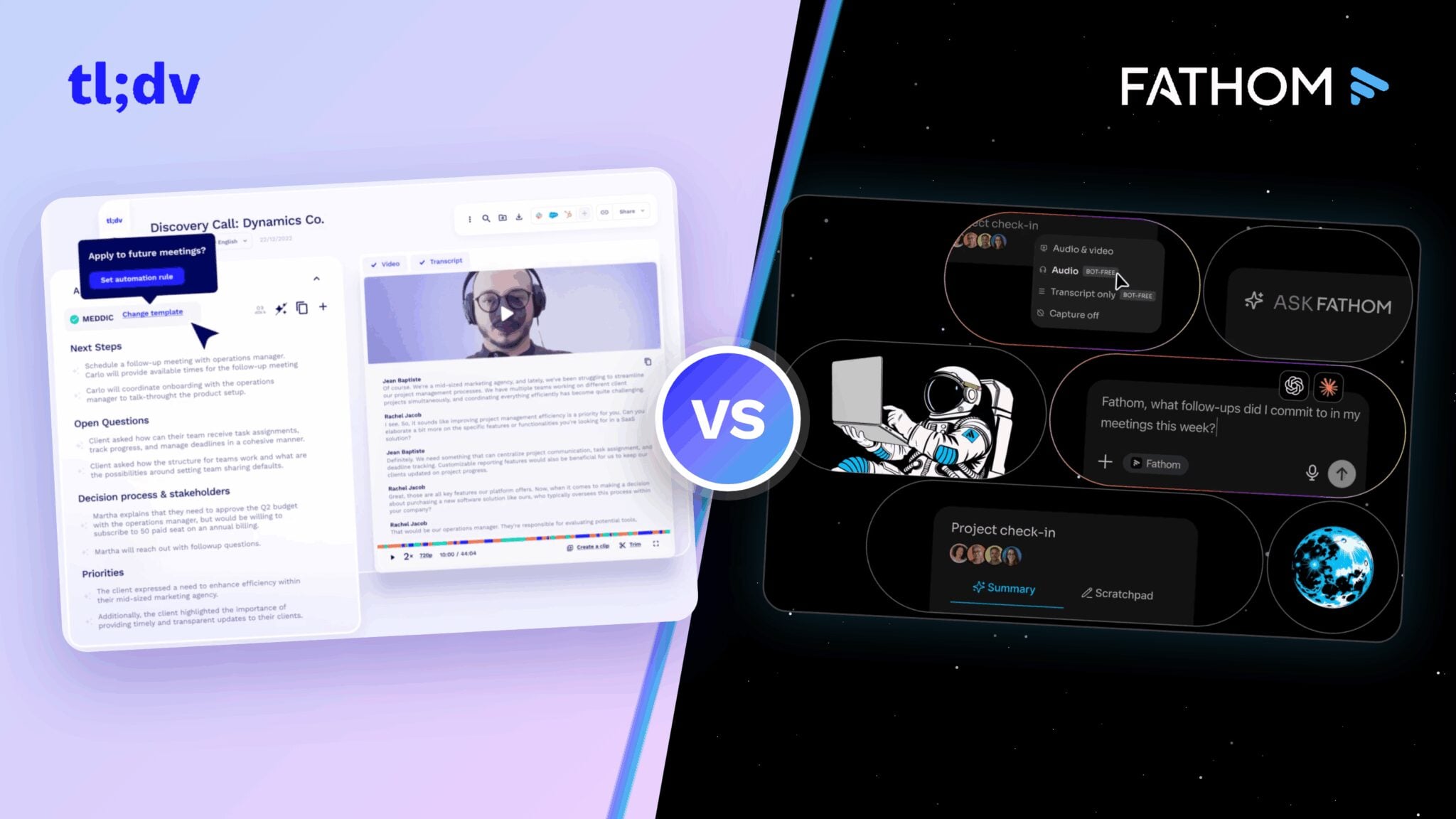
Wispr Flow vs. tl;dv: How They Compare in 2026
Wispr Flow Notetaker is a personal meeting recorder. It runs on your Mac or Windows PC, captures whatever audio is playing, and turns it into a transcript, a summary, and answers you can query later or pipe into Claude, ChatGPT and Gemini over MCP. It’s built for the person holding the laptop. For our hands-on test, including memory use and speaker identification, see the full Wispr Flow Notetaker review.
tl;dv meeting notetaker is built for the team around them. It records Zoom, Google Meet and Microsoft Teams in 30+ languages, as a bot or bot-free from the desktop app, and keeps the video and audio rather than the text alone. What it captures flows into HubSpot, Salesforce, Slack and 5,000+ other tools, and on the Business plan it scores calls against your sales playbook. It holds 4.7/5 on G2 from over 500 reviews and is used by more than 2 million users.
| Funkcja | Notatnik Wispr Flow | tl;dv |
|---|---|---|
|
Platforma |
Mac and Windows. No mobile app for meetings |
Mac, Windows, iOS and Android |
|
Rejestracja bez botów |
Tak |
Tak |
|
Języki |
21 |
Ponad 30 z funkcją automatycznego wykrywania |
|
Przeniesienie słownictwa |
Przejmuje słownik dyktowania użytkownika |
Słownictwo niestandardowe, konfigurowane osobno |
|
Zapis zachowano |
Transkrypcja i streszczenie |
Biblioteka materiałów wideo i audio z funkcją wyszukiwania |
|
Klipy z oznaczeniami czasowymi i kompilacje najlepszych momentów |
Nie |
Tak |
|
Materiały informacyjne przed spotkaniem |
Tak, spotkania poza firmą |
Nie |
|
Analiza czasu rozmów |
Nie |
Tak |
|
CRM |
Za pośrednictwem MCP – skompiluj samodzielnie |
Native HubSpot, Salesforce, Pipedrive |
|
Coaching i punktacja w programie „ playbook ” |
Nie |
Tak, biznesplan |
|
Wyszukiwanie w całej drużynie |
Nie |
Tak |
|
Plan dla przedsiębiorstw |
Tak |
Tak |
|
Lokalizacja danych |
USA |
EU |
|
Plan bezpłatny |
Tygodniowy limit spotkań, w tym MCP |
Unlimited recording, AI notes on 10 meetings |
Wispr Flow Notetaker będzie dla Ciebie lepszym wyborem, jeśli:
- Work on Mac or Windows and mostly take notes for yourself
- Korzystasz już z usługi Flow i chcesz otrzymywać notatki ze spotkań w pakiecie bez dodatkowych kosztów
- Run your meetings in one of its 21 languages
- Czy chcesz otrzymywać podsumowania przed spotkaniami dotyczące rozmów z podmiotami zewnętrznymi?
- Wolę wprowadzać notatki za pomocą funkcji „piping” do Claude’a lub ChatGPT zamiast korzystać z wbudowanego przepływu pracy
tl;dv lepszym wyborem, jeśli:
- Need meetings covered on mobile as well as desktop
- Run calls in languages outside Wispr’s 21
- Potrzebuję samego nagrania, a nie tylko transkrypcji
- Chciałbym, aby pola CRM były wypełniane automatycznie, a nie eksportowane za pośrednictwem MCP
- Potrzebujesz wsparcia coachingowego, oceny rozmów typu „ playbook ” lub śledzenia zastrzeżeń w bibliotece rozmów?
- Need your data stored in the EU
Ostateczny werdykt: dla kogo przeznaczony jest Wispr Flow?
Po dwóch tygodniach testów oto, do jakich wniosków doszedłem.
Wispr Flow started as a dictation tool, and on that job it’s good. The AI formatting works, the cross-platform sync works, and Command Mode is useful once you get the hang of it. If you want to stop typing emails and Slack messages, the free plan is enough to find out whether it suits you.
But with Notetaker, Wispr is no longer just a dictation tool. It now wants to record your meetings too, and that’s a different job with a much higher bar. Notetaker is built for one person taking their own notes. It keeps the transcript, not the recording. There’s no mobile app for meetings, no native CRM sync, and your data is processed and stored in the US. In our hands-on Notetaker review, it also slowed calls on an 8 GB Mac.
If your meetings matter to more people than the person who took the notes, you need the recording, a library your team can search, and your CRM updated without anyone remembering to do it. That’s the job tl;dv was built for. It records Zoom, Google Meet and Microsoft Teams in 30+ languages, with a bot or bot-free from the desktop app. It keeps the video from bot recordings, fills in HubSpot, Salesforce and Pipedrive automatically, and stores your data in the EU.
Use Wispr Flow to dictate. Use tl;dv to record and share your meetings. The free plan gives you unlimited recordings, so you can try it on your next call. Try tl;dv free.
FAQs About Wispr Flow
Czy Wispr Flow jest darmowy?
Yes. Wispr Flow’s free plan includes 2,000 words a week on Mac or Windows and 1,000 words a week on mobile, plus the custom dictionary, snippets and Notetaker with a weekly meeting limit. You can switch off model training on the free plan. Pro removes the word limit for $12 a month billed annually, or $15 monthly.
Czy Wispr Flow działa w systemie Windows?
Yes. Wispr Flow runs on Windows as well as Mac, iPhone and Android, and your dictionary, snippets and settings sync across all of them. That cross-platform support is one of its biggest advantages over SuperWhisper, which only runs on Mac and iOS. Like the Mac app, it works inside any app where you can type.
Czym jest Wispr Flow Pro i czy warto go kupić?
Flow Pro costs $12 a month billed annually, or $15 monthly. It removes the weekly word limits, adds Command Mode for editing text by voice, raises Notetaker’s meeting limits and adds shared team dictionaries. If you dictate daily for work, you’ll hit the free limit within days, so Pro is worth it for regular users.
Czy Wispr Flow jest bezpieczny i zapewnia prywatność?
Wispr Flow processes audio in the cloud and stores data in the US, with no offline mode. You can switch off model training and dictation cloud storage in Data and Privacy settings. Model training is on by default on Free and Pro. Wispr’s security FAQ says its new SOC 2 Type II and ISO 27001 reports are available through its Trust Center.
Jak działa tryb poleceń w aplikacji Wispr Flow?
Command Mode lets you edit text by voice. Switch it on under Settings, then Experimental, highlight some text, hold Fn + Ctrl on a Mac and say an instruction such as “make this more formal”. Flow rewrites the selection, or shows it to copy in apps like Google Docs. It needs a paid plan or an active trial.
Jakie języki obsługuje Wispr Flow?
Wispr Flow dictates in over 100 languages. With auto-detect switched on, it identifies the language you’re speaking on Mac, Windows and iOS, choosing one language per dictation. Android needs you to pick the language yourself. Flow’s Style settings, which control how formal or casual your text sounds, currently only work in English.
Czy aplikacja Wispr Flow do sporządzania notatek działa w systemie Windows?
Yes. Wispr Flow Notetaker launched on Mac on August 5, 2026, and came to Windows on September 15, 2026. It records meetings without a bot joining the call and transcribes 21 languages. There’s no mobile app for meetings. Notetaker is included on the free plan with a weekly meeting limit, and recordings under five minutes don’t count.