Zum Inhalt





⚡Kurzfazit (TL;DR)
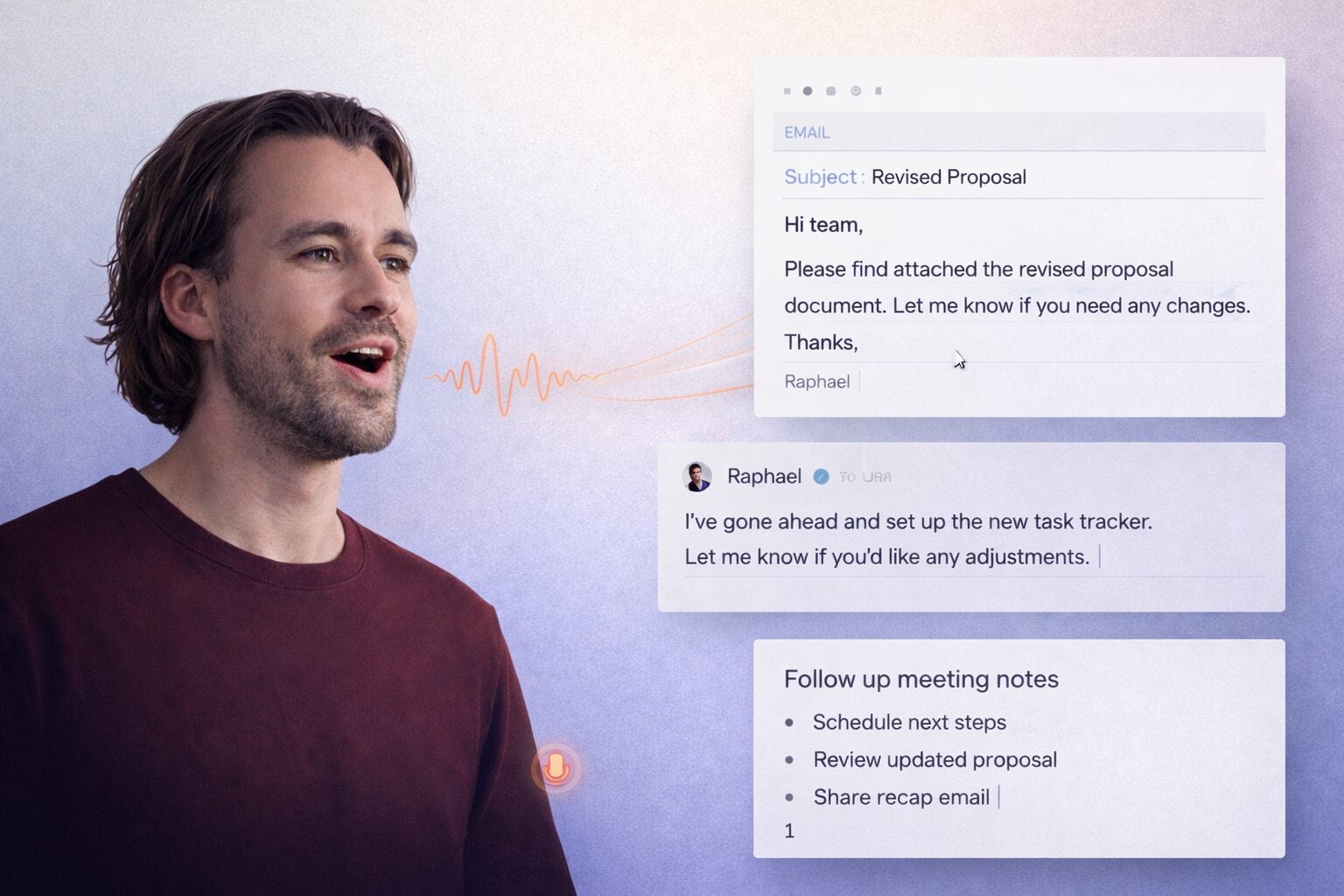
What Wispr Flow is: An AI voice keyboard that works inside every app on Mac, Windows, iOS, and Android. Press a hotkey, speak naturally, and get clean, context-aware, formatted text wherever your cursor is sitting. No separate editor, no switching windows. It now also ships Wispr Flow Notetaker, a bot-free meeting recorder on Mac and Windows, which we’ve reviewed separately in our Wispr Flow Notetaker review.
Who it’s good for: Knowledge workers who write heavily across email, Slack, docs, and notes. Professionals who move between multiple devices or operating systems. Healthcare and legal teams who need HIPAA-ready dictation without paying enterprise prices. Anyone who already lives in AI tools like ChatGPT or Perplexity and wants to drive them by voice.
Who should avoid it: Users who need fully offline, on-device processing with zero cloud involvement. Mac-only power users who want to configure their own AI models (SuperWhisper is the better fit there). Very light users who won’t come close to the 2,000-word weekly free limit. Teams hoping the bundled notetaker will cover their meetings. It has no mobile app, trains on your data by default, and in our hands-on test it made calls lag on an 8 GB Mac. Dictation itself is unaffected.
The one thing you must know before subscribing: All transcription happens in the cloud, and Wispr processes and stores data in the United States, with no EU region. There is no offline mode. If sending audio to external servers is a hard no for your workflow, Wispr Flow is not the right tool regardless of plan.
Overall rating: 4.3 / 5: One of the most polished AI dictation tools available right now. The cloud-only architecture is the one very real caveat, but the “Improve the model for everyone” setting (formerly Privacy Mode) handles it well for most professional use cases, once you switch it off.
For businesses prioritizing strict data privacy and compliance across their entire workflow, exploring other GDPR-compliant enterprise AI platforms like Langdock can provide additional solutions.
Warum ich aufgehört habe zu tippen: Mein zweiwöchiges Experiment mit dem Wispr Flow Pro
Ich tippe schnell. Das war schon immer so. Als mir also ein Kollege sagte, ich solle „es doch mal versuchen, stattdessen mit meinem Computer zu sprechen“, war ich ein bisschen selbstgefällig.
Dann habe ich Wispr Flow tatsächlich zwei Wochen lang ausprobiert – auf einem MacBook M3, einem Windows-11-PC und einem iPhone 16 Pro. Und ich muss ehrlich sagen: Ich greife nicht mehr so oft auf das herkömmliche Tippen zurück.
Das ist keine beiläufige Bemerkung. Ein Unternehmen wie tl;dvzu leiten, wo wir uns täglich mit Sprachtechnologie und KI beschäftigen, bedeutet, dass ich von Behauptungen über Sprachtechnologie nur schwer zu beeindrucken bin. Wispr Flow hat mich dennoch beeindruckt.
Ich habe Apple Dictation ausprobiert, mich mit der Spracheingabe von Google herumgeschlagen und einen Nachmittag mit SuperWhisper verbracht, in der Überzeugung, dass es alles verändern würde (das tat es nicht, zumindest nicht für mich). Was Wispr Flow anders macht, ist subtil, aber deutlich: Es transkribiert nicht nur, was man sagt, sondern erkennt, was man schreiben schreiben wollten, und formatiert es entsprechend.
Slack-Nachrichten klingen eher locker. E-Mails klingen eher professionell. Code-Kommentare kommen ohne all die Füllwörter daher, die man beim Nachdenken verwendet. Es ist auf eine Weise kontextbewusst, die mich wirklich überrascht hat.
Also. Ist es tatsächlich das beste KI-Diktat-Tool für Mac, Windows und Mobilgeräte im Jahr 2026? Schauen wir uns das einmal genauer an.
Was ist Wispr Flow? (Und wie unterscheidet es sich von SuperWhisper?)
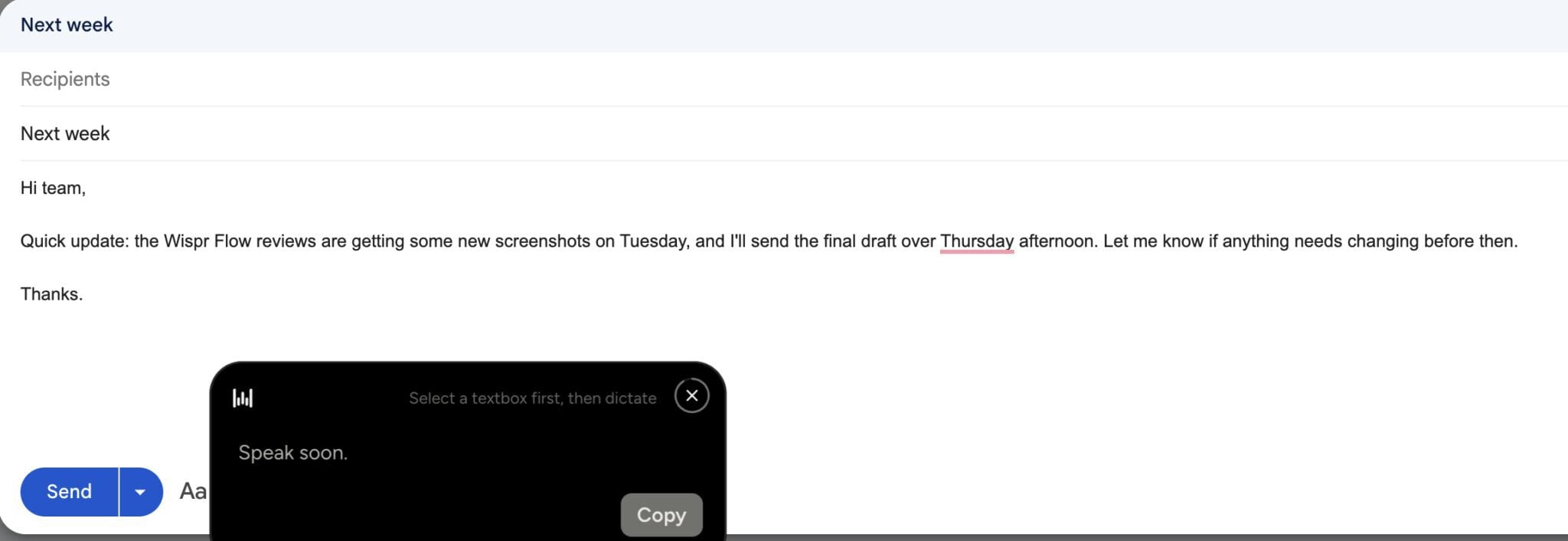
Wispr Flow ist eine KI-Sprach-Tastatur, die in jeder App auf deinem Gerät funktioniert. Du drückst eine Tastenkombination, sprichst ganz normal, und schon wird sauberer, formierter Text genau dort eingefügt, wo sich dein Cursor gerade befindet – egal, ob in Gmail, Notion, Slack, VS Code oder einem beliebigen Formular auf einer Website.
Das Schlüsselwort hier lautet ausgefeilt. Dies ist keine rohe Transkription. Wispr Flow lässt Ihre Rede durch cloudbasierte KI-Modelle laufen, die den Kontext verstehen und automatisch Füllwörter entfernen, die Satzstruktur korrigieren und die Ausgabe für die jeweilige App, in der Sie sich gerade befinden, formatieren.
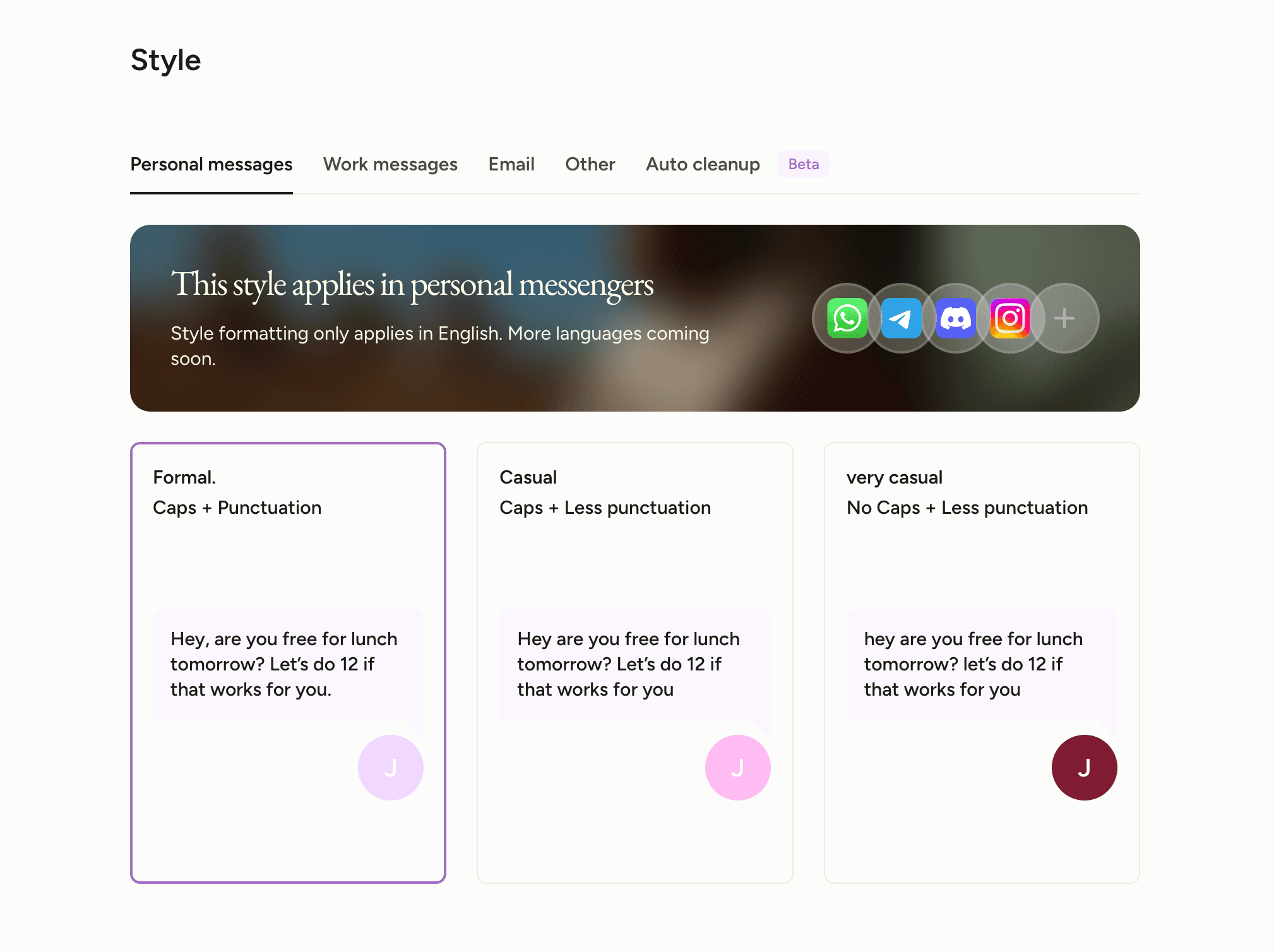
You control how that formatting behaves in Flow’s Style settings, with separate styles for personal messages, work messages, email and everything else, from formal to very casual.
Das Unternehmen beschreibt es als viermal schneller als das Tippen, was etwa 220 Wörtern pro Minute entspricht, verglichen mit einer durchschnittlichen Tippgeschwindigkeit von etwa 45 Wörtern pro Minute. In meinen zweiwöchigen Tests hat sich diese Behauptung bei längeren Texten wie E-Mails und Dokumenten bestätigt. Bei kurzen, prägnanten Antworten ist der Unterschied zwar geringer, aber dennoch spürbar.
Wie unterscheidet es sich also von SuperWhisper?
Das kommt in jedem Gespräch über KI-Diktat immer wieder zur Sprache, also lassen Sie uns das einmal klarstellen.
SuperWhisper läuft auf Apple Silicon vollständig offline. Ihre Sprachdaten verlassen Ihr Gerät zu keinem Zeitpunkt. Das Programm ist besonders leistungsstark für fortgeschrittene Nutzer, die ihre eigenen KI-Modelle konfigurieren, zwischen Geschwindigkeit und Genauigkeit abwägen und alles lokal behalten möchten. Wenn Sie ausschließlich einen Mac nutzen, mit hochsensiblen Daten arbeiten und keinerlei Cloud-Einbindung wünschen, ist SuperWhisper eine ernsthafte Überlegung wert.
Wispr Flow verfolgt einen gegenteiligen Ansatz. Es ist cloudbasiert, was eine schnellere Verarbeitung und eine intelligentere Kontexterkennung bedeutet, allerdings werden Ihre Audiodaten dabei an externe Server übertragen. Außerdem läuft es auf Mac, Windows, iOS und Android, was bei SuperWhisper nicht der Fall ist. Wenn Sie zwischen verschiedenen Geräten oder Plattformen wechseln, verändert allein diese plattformübergreifende Synchronisierung die Situation grundlegend.
The community consensus, backed up nicely by this head-to-head comparison from Willow Voice, is roughly this: Wispr Flow is the more polished, more accessible, better-designed product for most professionals. SuperWhisper is the privacy-first powerhouse for technical users who want control.
Ein YouTube-Creator mit 18.000 Abonnenten, der alle drei führenden Tools verglichen hat, brachte es auf den Punkt: Wispr Flow „hat mit Abstand die beste Benutzeroberfläche.“ Das deckt sich mit meinen Erfahrungen. Es funktioniert sofort. Es ist keine Konfiguration erforderlich.
Hauptmerkmale: Eine detaillierte Erklärung der Funktionen von Wispr Flow
Geschwindigkeitstest: Kannst du wirklich mehr als 150 Wörter pro Minute tippen?
Die Werbeaussage lautet: „Viermal schneller als Tippen“. Nach meinen Tests trifft dies vor allem dann zu, wenn man Texte verfasst, die länger als zwei Sätze sind.
For email drafts, meeting notes, long Slack threads, or any kind of document work, speaking is dramatically faster than typing. Wispr puts the top end at around 220 words per minute, and how close you get depends on how freely you talk once you stop second-guessing yourself. The AI handles cleanup, so you don’t need to speak like you’re dictating to a court stenographer.
Bei sehr kurzen Antworten (zwei Wörter, eine kurze Reaktion) ist der Aufwand für das Auslösen des Hotkeys und das Sprechen in etwa so hoch wie beim Tippen. Das ist in Ordnung. Das Tool ist auf hohe Nutzungshäufigkeit ausgelegt.
Befehlsmodus: Die Funktion, die alles verändert
Im Befehlsmodus beginnt sich Wispr Flow wirklich von einfachen Diktier-Tools zu unterscheiden.
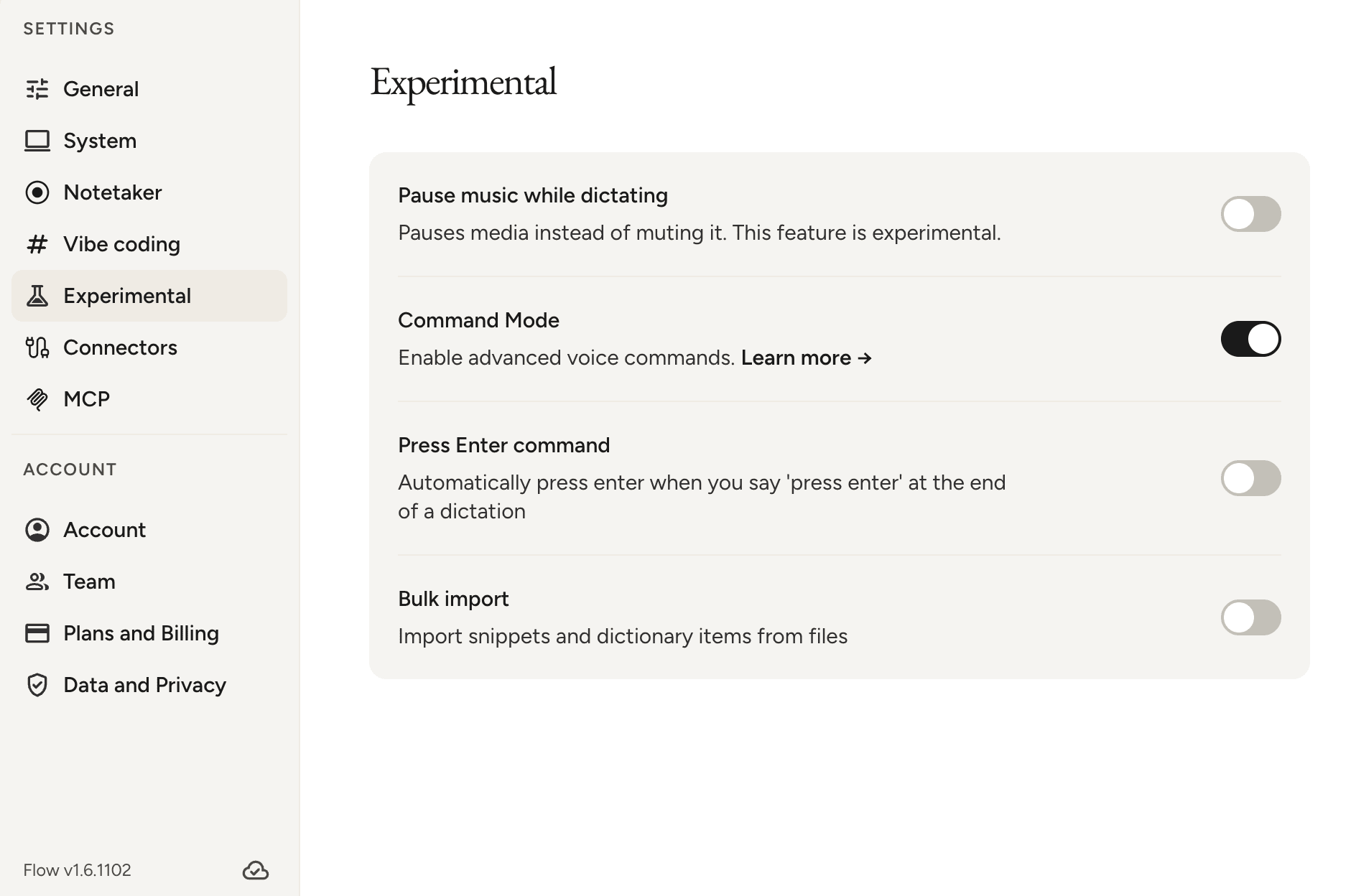
It’s switched off by default, so the first step is turning it on under Settings, then Experimental. It needs a paid plan or an active trial.
Here’s how it works: highlight some text, hold the Command Mode shortcut (Fn + Ctrl on a Mac), and say “make this more formal” or “translate this to Spanish” or “turn this into a bullet list.” Flow rewrites the selection. In apps where it can’t write back directly, such as Google Docs, it shows the new version in a popup for you to copy.
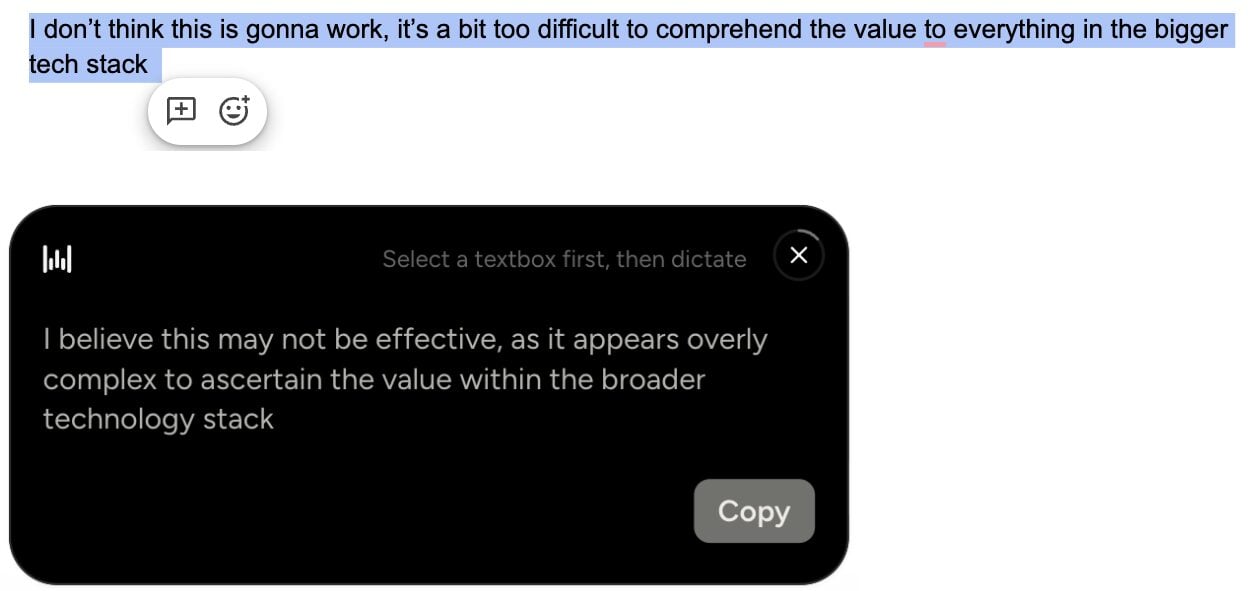
You can also use it to search. Ask a question in Command Mode on desktop and it opens Perplexity with your selected text added to the query.
Für alle, die viel schreiben und zudem KI-Tools wie ChatGPT oder Perplexity nutzt, ist die Möglichkeit, Eingabeaufforderungen direkt per Spracheingabe zu übermitteln, wirklich nützlich. Ein Creator, der Wispr Flow getestet hat, beschrieb die Nutzung der App, um „ChatGPT- und Perplexity-KI-Eingabeaufforderungen direkt per Spracheingabe zu übermitteln“, als einen seiner am häufigsten genutzten täglichen Arbeitsabläufe. Ich kann verstehen, warum.
Watch this Command Mode demo if you want to see it in action before downloading.
Benutzerdefiniertes Wörterbuch und Textbausteine
Das ist eine unauffällige, aber sehr praktische Funktion.
Custom dictionary lets you teach Flow unusual words, names, or jargon it would otherwise mangle. If your company name is something like “Morepalooza” or you work in a field with technical terminology, you register it once and Flow spells it your way from then on. You can also use it to correct a word Flow keeps getting wrong.
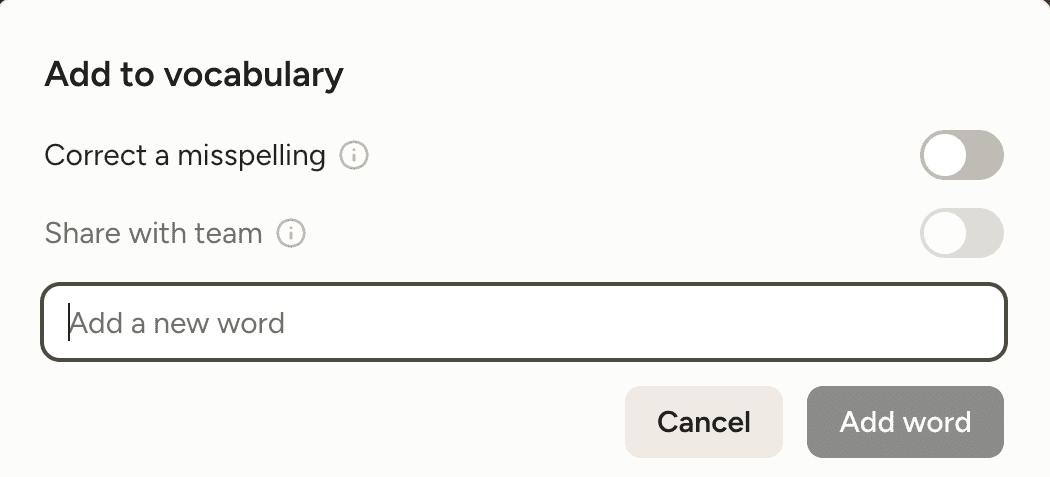
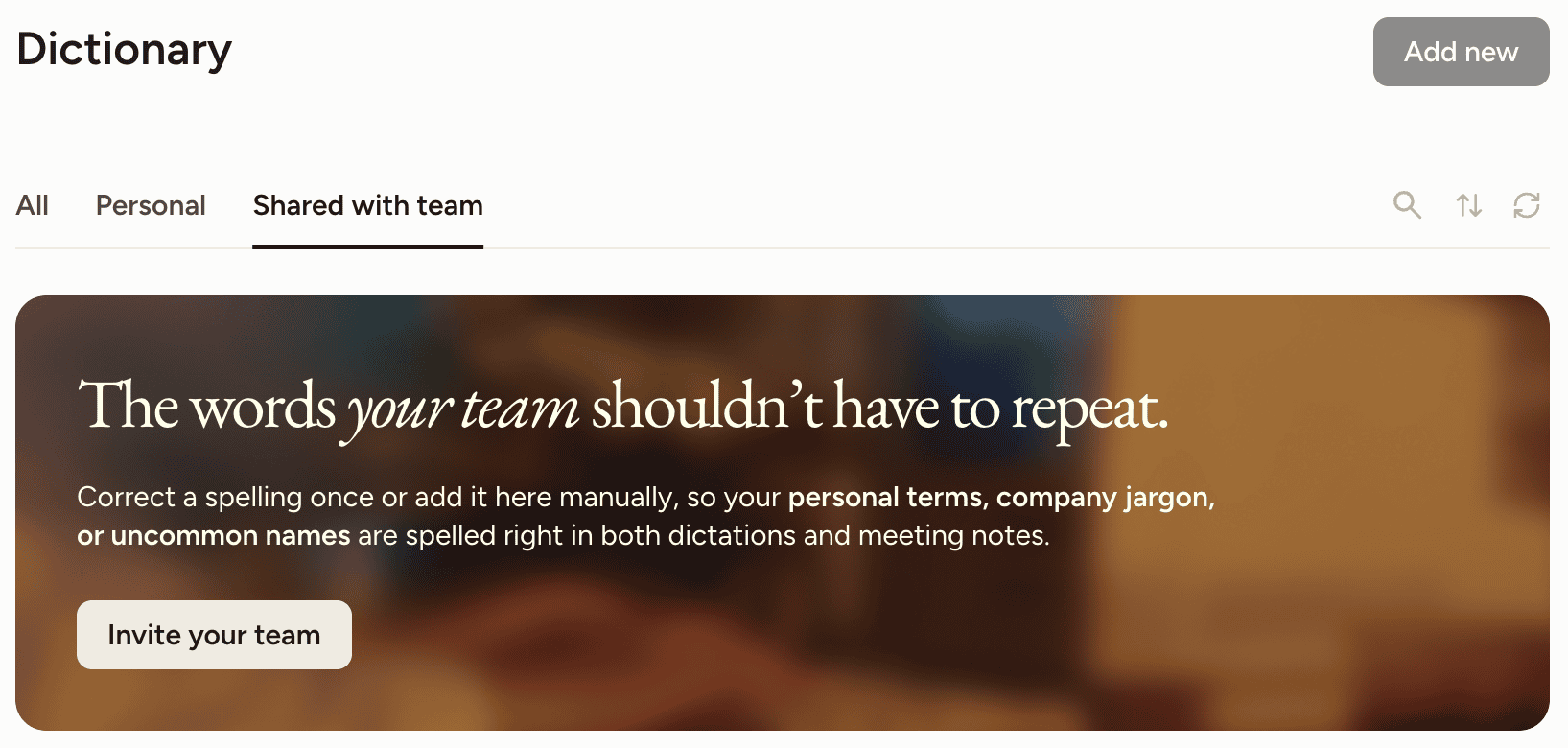
On a team, you can share dictionary words with everyone, so product names and client names are spelled the same way across the company, in both dictation and meeting notes.
Mit Snippets können Sie Kurzbefehle definieren. Sprechen Sie einen kurzen Satz, und dieser wird zu einem längeren Textblock erweitert, den Sie häufig verwenden, beispielsweise eine Standard-E-Mail-Abschlussformel, eine Vorlage für eine Besprechungseinladung oder eine Support-Antwort.
Beide werden auf all deinen Geräten synchronisiert, was uns zum nächsten Punkt bringt.
Plattformübergreifende Synchronisierung: Der größte praktische Vorteil von Wispr Flow
Das ist wirklich das Merkmal, durch das sich Wispr Flow von den meisten Mitbewerbern abhebt.
Dein benutzerdefiniertes Wörterbuch, deine Textbausteine, Einstellungen und Nutzungsstatistiken werden zwischen Mac, Windows, iPhone und Android synchronisiert. Beginne einen Arbeitsablauf auf deinem Mac, setze ihn auf deinem iPhone fort und wechsle im Büro zu Windows. Alles ist einheitlich und auf dem neuesten Stand.
SuperWhisper funktioniert nur auf Mac und iOS. Wenn du Windows nutzt, kommt es einfach nicht in Frage. Das Gleiche gilt, wenn du ein Android-Smartphone hast.
Für Teams und Einzelpersonen, die zwischen verschiedenen Geräten und Betriebssystemen wechseln, ist diese plattformübergreifende Funktion der deutlichste Wettbewerbsvorteil von Wispr Flow.
| Plattform | Wispr Flow | SuperWhisper | Apple-Diktat |
|---|---|---|---|
|
Mac |
Ja |
Ja |
Ja |
|
Windows |
Ja |
Nein |
Nein |
|
iPhone / iOS |
Ja |
Ja |
Ja |
|
Android |
Ja |
Nein |
Nein |
|
Funktioniert in allen Apps |
Ja |
Ja |
Meistens |
|
KI-Formatierung |
Ja |
Ja |
Nein |
|
Offline-Verarbeitung |
Nein |
Ja |
Nein |
Unterstützung für über 100 Sprachen
Wispr Flow dictates in over 100 languages. With auto-detect switched on, it works out which language you’re speaking on Mac, Windows and iOS, choosing one language per dictation. Android doesn’t have auto-detect, so you pick the language yourself.
For multilingual teams or individuals who work across languages, this is a real feature rather than a checkbox. You can move between languages from one dictation to the next without changing settings, and Flow follows some local writing rules, such as French spacing before punctuation and Swiss German spelling. Two limits are worth knowing. You can’t mix languages inside a single dictation, and Flow’s Style settings, which control how formal or casual your text sounds, only work in English for now.
Wispr Flow Notetaker: What You Need to Know
Everything above is dictation. On August 5, 2026, Wispr shipped its first product beyond it. Wispr Flow Notetaker is a meeting recorder that captures audio on your computer with no bot joining the call. It launched on Mac, came to Windows on September 15, and now transcribes 21 languages. It’s included on the free plan, with a weekly meeting limit, and recordings under five minutes don’t count toward it.
The one thing it does that rivals can’t copy: your personal dictionary carries over from dictation. Every acronym and product name you’ve taught Flow over months of dictating gets applied to your meeting transcripts. You also get a live transcript, a cleaner second pass afterwards, summaries grouped by topic, a “What did I miss?” button, and MCP access to Claude, ChatGPT and Gemini on the free plan.
Consent is on you. No bot means no automatic notification that transcription is happening. Wispr says so in its own FAQ and puts the responsibility on the user. Twelve US states require all-party consent, and GDPR requires informed consent regardless. We covered this in bot-free recording legality.
We’ve since tested it hands-on, including speaker identification, memory use and what its MCP can actually reach. Read the full Wispr Flow Notetaker review.
Preise für Wispr Flow: Lohnt sich der Pro-Tarif für 12 Dollar im Monat?
Wispr Flow has four plans (checked October 2026):
Flow Free
- 2.000 Wörter pro Woche auf Mac oder Windows
- 1,000 words per week on mobile
- Benutzerdefiniertes Wörterbuch und Textbausteine
- Unterstützung für über 100 Sprachen
- The option to switch off model training
- Notetaker included (Mac and Windows) with speaker identification, ask-anything, and MCP access, subject to a weekly meeting limit (recordings under five minutes don’t count)
Flow Pro ($12 per user a month billed annually, or $15 on the monthly plan)
- Unbegrenzte Wortanzahl auf allen Plattformen
- Befehlsmodus für die Sprachbearbeitung
- Prioritized support and early access to new features
- Shared dictionary and snippets, a team workspace and centralized billing
- Free trial, no credit card required
- Higher Notetaker meeting limits and longer history
Flow Growth (contact Wispr for pricing)
- Everything in Pro plus SSO with SAML
- Organization-wide HIPAA enforcement with a signed BAA
- Admin control over model training and individual usage reporting
Flow Enterprise (Preise auf Anfrage)
- Everything in Growth plus SCIM, audit logs, MDM, domain capture and admin controls
- Notetaker, with admin controls including required consent confirmation, and model training locked off for the whole organization
Ein paar Anmerkungen zur Preisgestaltung. Erstens: Die 2.000 Wörter pro Woche im kostenlosen Tarif reichen für den gelegentlichen privaten Gebrauch durchaus aus, aber wenn man das Tool beruflich nutzt, stößt man schnell an die Obergrenze. Bei meinem Testvolumen (E-Mails, Notizen, Dokumente) hatte ich das kostenlose Limit innerhalb von zwei bis drei Tagen ausgeschöpft.
Second, the 20% saving on the annual plan is real. $12/month versus $15/month adds up to $36 in savings per year. Not life-changing but worth taking if you know you’re going to use the tool regularly. UK subscribers pay the same figure in pounds: £15 a month, with annual billing saving £36 a year.
Third, and this is worth flagging: you can switch off model training on any plan, including free, so you don’t have to upgrade to stop your dictation being used to train Wispr’s models. If you need HIPAA-ready dictation, individuals can sign a Business Associate Agreement in the desktop app, and Growth and Enterprise admins can sign one for the whole organization. One catch: according to Wispr’s docs, signing the HIPAA agreement blocks Notetaker from recording, so you can’t have both.
For a more detailed breakdown of what each tier includes, Eesel AI has a good explainer on Wispr Flow’s pricing structure if you want a third-party take on it.
Ist Wispr Flow zuverlässig? Was langjährige Nutzer berichten
Die Frage, die man sich bei jedem Abonnement-Tool stellen sollte, lautet nicht, wie es sich in der ersten Woche anfühlt, sondern wie es sich im zwölften Monat anfühlt. Wispr Flow hat mittlerweile genügend Langzeitnutzer, um diese Frage zu beantworten, und die Antwort fällt gemischt aus.
Häufig wird beklagt, dass die Diktatqualität mit der Zeit nachlässt. Ein Nutzer, der seit Anfang 2026 mehr als 350.000 Wörter diktiert hat, sagt, die Qualität habe „spürbar nachgelassen“, und schloss die naheliegende Erklärung aus: Er verwendet an seinem Schreibtisch ein Elgato Wave 3 und keine AirPods. Er wechselte mit seinem Abonnement zu einem Mitbewerber. Ein anderer langjähriger zahlender Nutzer berichtet, dass er nach dem Sprechen spürbar länger auf die Umwandlung in Text warten muss, und vermutet, dass neuere Funktionen wie die automatische Textbereinigung die Latenz erhöhen.
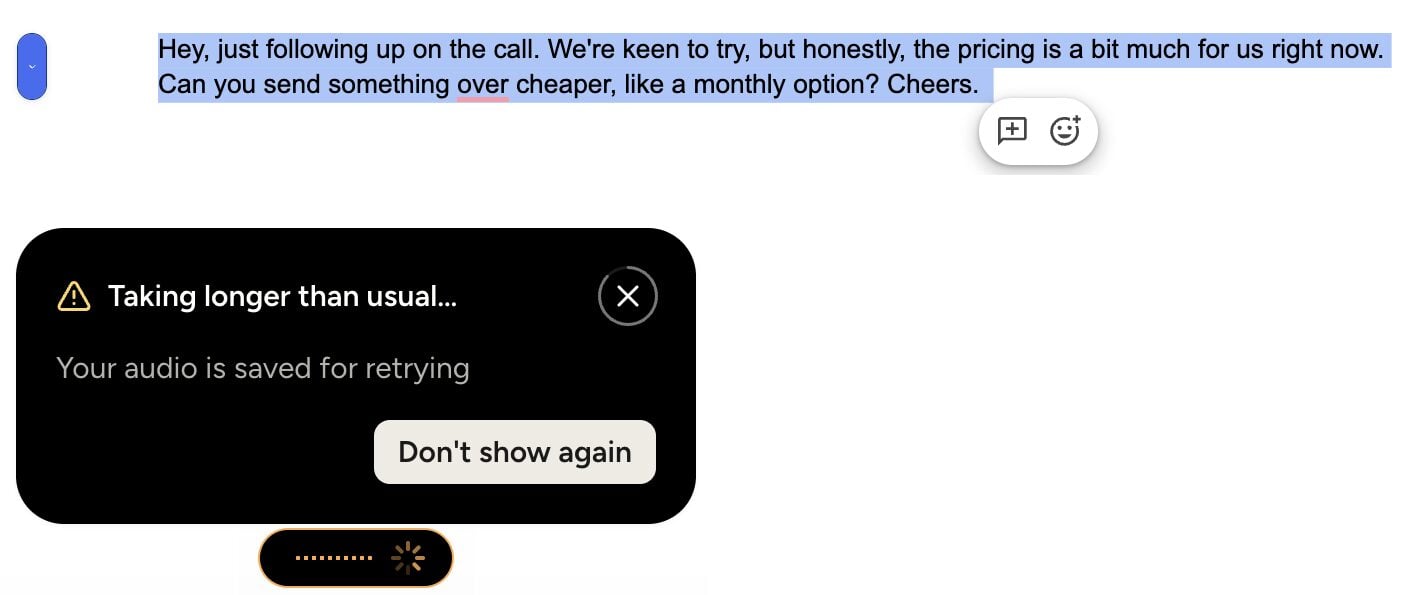
That complaint got louder in early October 2026, when a developer’s post on X saying Flow’s speech-to-text had become unusable drew hundreds of replies. Some paying users said they’d noticed the same drop. Others said they’d had no problems, and many recommended free, local alternatives instead. None of it is measured evidence, but it’s a pattern worth knowing about.
Dem steht jedoch entgegen, dass dies nicht allgemeingültig ist. Ein intensiver Nutzer seit November 2025 berichtet von keinem solchen Rückgang. Diese unterschiedliche Entwicklung ist von Bedeutung, da sie auf bedingte Faktoren (Netzwerk, Sprache, Auslastung, Funktionsumfang) hindeutet und nicht auf einen pauschalen Leistungsabfall, den alle Nutzer erleben.
My read: the core product is strong and the complaints cluster around consistency at scale rather than capability. Wispr has grown fast, and latency creep is what fast growth tends to look like from the outside. Worth knowing before you commit to an annual plan, not a reason to avoid the tool.
Datenschutz und Sicherheit: Ist Wispr Flow für den professionellen Einsatz geeignet?
Das ist die Frage, die am häufigsten zu Wispr Flow gestellt wird, und sie verdient eine klare Antwort.
Is Wispr Flow Secure? HIPAA and Wispr’s Data Settings
Kurz gesagt: Ja, allerdings gibt es dabei einen wichtigen Vorbehalt, den Sie beachten müssen.
Wispr Flow processes your audio in the cloud, and its security FAQ says it processes and stores customer data in the United States. That is not going to change. The company’s position is that cloud-based processing is what enables the fast, accurate, context-aware transcription that makes the product good. Local processing of the quality Wispr delivers is not yet practical at consumer scale.
Was Sie beeinflussen können, ist, was nach der Verarbeitung mit diesen Daten geschieht.
What used to be called Privacy Mode is now two separate settings in Settings under Data and Privacy. “Improve the model for everyone” controls whether your audio, transcripts, and edits are used for model training. “Dictation cloud storage” controls whether your dictation data is stored on Wispr’s servers. Turning off one doesn’t turn off the other, so switch both off and you get zero data retention for dictation. Usage statistics (like word count) are still collected, but the actual content of what you said is not retained.
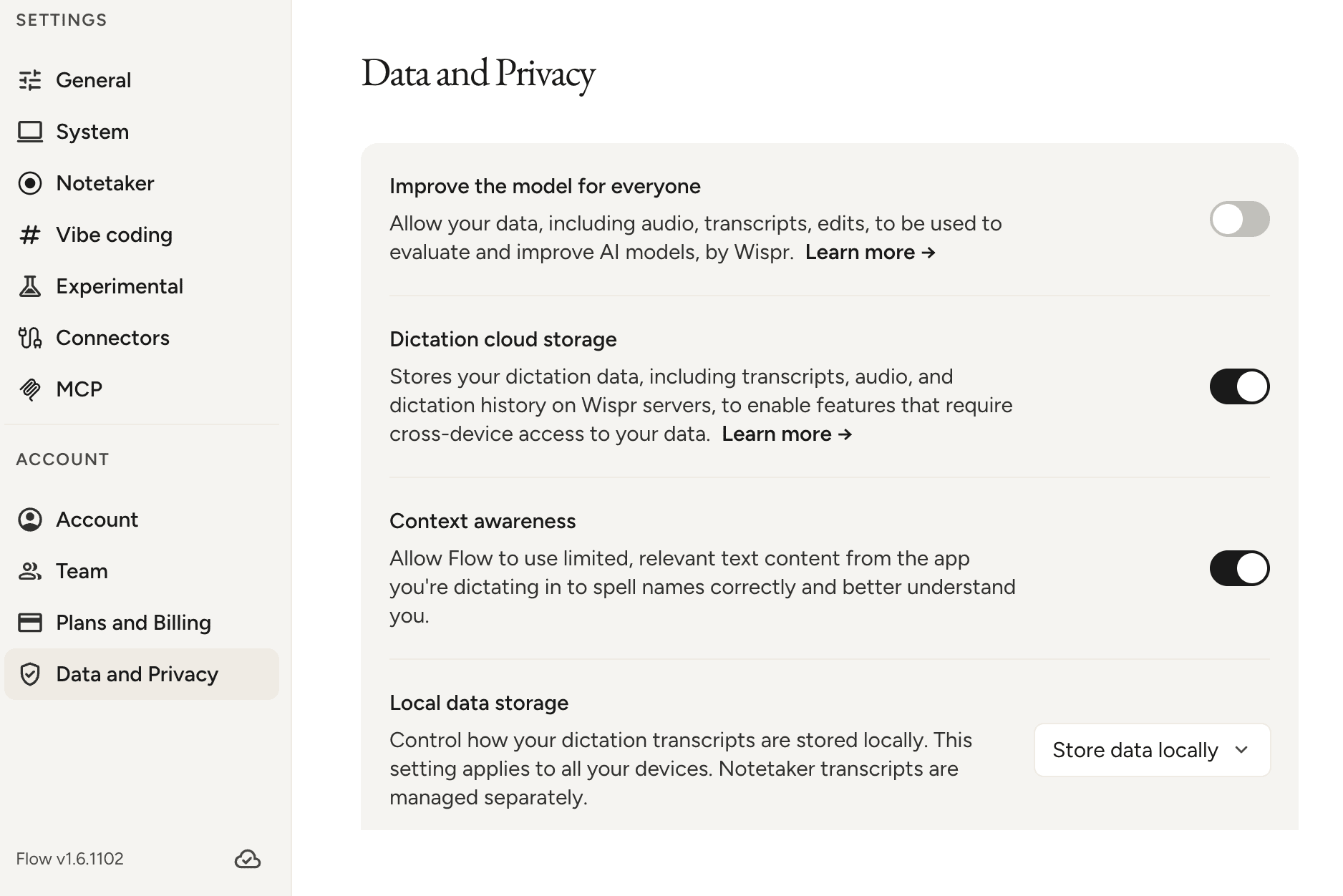
A newer setting, Local data storage, controls how your dictation transcripts are kept on your own devices, and applies across all of them. Notetaker transcripts are managed separately.
Watch the defaults. On the Free and Pro plans, “Improve the model for everyone” is on until you switch it off, so your dictation data can be used to improve Wispr’s models. On Enterprise, it’s off and locked.
Ein paar weitere wissenswerte Fakten zum Thema Sicherheit:
- HIPAA-ready dictation requires a signed Business Associate Agreement (BAA). Individuals can sign one in the desktop app, and Growth and Enterprise admins can sign one for the whole organization. Signing permanently switches off model training and dictation cloud storage for the account. According to Wispr’s docs, it also blocks Notetaker from recording.
- Wispr verkauft Ihre Daten niemals. Das Geschäftsmodell des Unternehmens basiert auf Software-Abonnements.
- Der Zertifizierungsstatus hat sich im März 2026 erheblich geändert. Siehe den folgenden Abschnitt.
Der Zertifizierungsstatus von Wispr hat sich im März 2026 geändert
Im März 2026 kam im Rahmen einer Untersuchung durch einen Whistleblower der Vorwurf auf, dass Delve, ein von Y Combinator unterstütztes Start-up im Bereich Compliance-Automatisierung, in großem Umfang vorgefertigte SOC-2-Berichte erstellt habe. Eine durchgesickerte Tabelle zeigte Berichten zufolge, dass 493 von 494 Prüfungsberichten nahezu identisch waren – sie enthielten dieselben Absätze und dieselben grammatikalischen Fehler, wobei lediglich der Firmenname geändert worden war. Y Combinator entfernte Delve Anfang April 2026 aus seinem Verzeichnis.
Wispr geriet in den Explosionsradius. Zu seiner Ehre muss man sagen, dass die Reaktion richtig war. Laut den eigenen Sicherheits-FAQ von Wispr hat das Unternehmen im März 2026 seine bestehenden Zertifizierungen nach SOC 2 Typ II (Accorp Partners) und ISO 27001 (Gradient) „aufgrund von Bedenken hinsichtlich der Plattformintegrität beim ursprünglichen Prüfer“ proaktiv für ungültig erklärt und anschließend mit A-LIGN als Prüfer und Drata als Compliance-Plattform von Grund auf neu aufgebaut.
Where things stand as of October 2026:
- SOC 2 Typ I: im April 2026 von A-LIGN abgeschlossen, uneingeschränkter Bestätigungsvermerk
- SOC 2 Type II and ISO 27001:2022: Wispr’s security FAQ now says both are available through its Trust Center. It doesn’t publish the issue dates or audit periods, so ask for them
- Scope: the audits cover Flow dictation. Wispr says Meeting Notetaker was not assessed
- HIPAA: BAA available for individuals and organizations. Signing it permanently switches off model training and dictation cloud storage, and blocks Notetaker from recording
- Penetrationstests: zuletzt im November 2025 durch BSK Security LLC, OWASP-basierte Methodik
Throwing out a certification you already hold because you don’t trust the auditor is the expensive, correct call, and most companies wouldn’t make it. One loose end: Wispr’s separate compliance help page still lists the old ACCORP Type II report and a Gradient ISO 27001 certificate that expired on September 7, 2026. If your procurement process needs a current SOC 2 Type II, request the new reports from Wispr’s Trust Center rather than relying on the help pages, and check whether Notetaker is in scope if you plan to use it.
Macht Wispr Flow Screenshots von Ihrem Bildschirm?
This claim circulates widely, usually in the form “Wispr screenshots your active window every few seconds.” Wispr’s current documentation says otherwise.
Per Wispr’s Context Awareness help page (checked October 2026), the feature “works from text and does not take screenshots.” When it’s on, which it is by default, Flow reads text from the app you’re dictating in to improve formatting and proper-noun accuracy: the text around your cursor, on-screen text, file and variable names in coding apps, and conversation history. On a Mac it needs accessibility permissions.
Password field contents are never read, though Wispr notes that custom or web-based password fields may be treated as normal text. With model training and dictation cloud storage both switched off, any captured context is stripped server-side and not persisted.
So the accurate version: Wispr reads on-screen text by default and doesn’t take screenshots. That is still a meaningful amount of context leaving your machine, and if you work under NDA or handle privileged material you should turn Context Awareness off entirely in Settings under Data and Privacy. But “it silently screenshots you every few seconds” is not what the documentation describes, and several sites repeating that claim sell competing dictation tools.
One legitimate concern that third-party reviewers like Letterly have raised is that Wispr Flow’s early privacy policy was vague and created distrust, particularly around what “context collection” meant and which third-party providers were handling audio. Wispr has since made this much clearer, but if you’re in a regulated industry, it’s still worth reading the Privacy and Security docs before committing to a paid plan.
Wer bürgt für die Sicherheitsarchitektur?
Auf der anderen Seite steht: Die ehemalige CISO Rinki Sethi, die zuvor bei Bill.com, Twitter und Rubrik tätig war, hat sich öffentlich für die Architektur von Wispr ausgesprochen und erklärt, dass sie Flow bei Upwind Security unternehmensweit eingeführt habe. Als Grund nannte sie, dass die Fragen „Wo befinden sich die Daten?“, „Wie werden sie übertragen?“ und „Wer hat Zugriff darauf?“ alle eindeutig beantwortet werden könnten – was bei KI-Tools nicht die Regel ist. Das ist eine aussagekräftige Empfehlung von jemandem, dessen Aufgabe es war, Anbietern Absagen zu erteilen.
The honest summary for professionals: if you work in healthcare, law, or finance, switch off “Improve the model for everyone” and dictation cloud storage, sign the BAA (knowing it disables Notetaker), and turn off Context Awareness. If you’re a writer, marketer, or knowledge worker handling non-sensitive content, switching off model training on any plan is more than adequate.
Wispr Flow im Vergleich zur Konkurrenz
Wispr Flow vs. SuperWhisper
Already covered in some depth above, but to give you the quick version for people skimming. For a full hands-on take, see our SuperWhisper review.
Choose Wispr Flow if: you use multiple devices or platforms, you want a tool that works out of the box, you need cross-platform sync, or you need HIPAA-ready dictation.
Entscheiden Sie sich für SuperWhisper, wenn: Sie ausschließlich Mac und iOS nutzen, strenge Anforderungen an die Datenhoheit haben, KI-Modelle selbst konfigurieren möchten oder wirklich keinerlei Cloud-Beteiligung wünschen.
Sie können sich auch dieses 20-minütige Video ansehen, in dem drei wichtige Tools , um deren praktische Anwendung im direkten Vergleich zu sehen.
Wispr Flow vs. Apple Dictation
2026 ist das zwar kein wirklich fairer Vergleich, aber es lohnt sich, darauf einzugehen, da viele Nutzer zunächst mit der Apple-Diktatfunktion beginnen und sich fragen, was ihnen sonst noch entgeht.
„Apple Dictation“ liefert Ihnen eine reine Transkription. Es passt den Text nicht an den Kontext an, entfernt keine Füllwörter und erkennt nicht, ob Sie sich in einer E-Mail oder in einem Code-Editor befinden. Was Sie sagen, ist im Großen und Ganzen das, was Sie erhalten.
Wispr Flow formatiert die Ausgabe kontextbezogen, bereinigt Sprachmuster und verbessert den Text aktiv, während Sie sprechen. Es handelt sich um eine völlig andere Produktkategorie. Der einzige Grund, bei Apple Dictation zu bleiben, ist, wenn Sie ausschließlich Apple-Geräte verwenden, nur sehr kurze Texte diktieren und nichts bezahlen möchten.
Wispr Flow vs. Otter.ai
Otter has been recording, transcribing and summarizing meetings for years, and Wispr Flow Notetaker is now doing that same job. The real difference is how each one gets into the room. Otter joins as a bot, which is clunkier but means everyone can see a recorder is present. Wispr Flow Notetaker captures locally and says nothing.
Was das Diktieren angeht, gibt es keinen Wettbewerb, denn „ Otter “ war nie dazu gedacht, Ihre Tastatur zu ersetzen. Und wenn Sie bei Ihrer Arbeit vor allem Besprechungen abhalten müssen, sind die plattformübergreifende Verfügbarkeit und die jahrelange Weiterentwicklung von „ Otter“ nach wie vor von großem Wert.
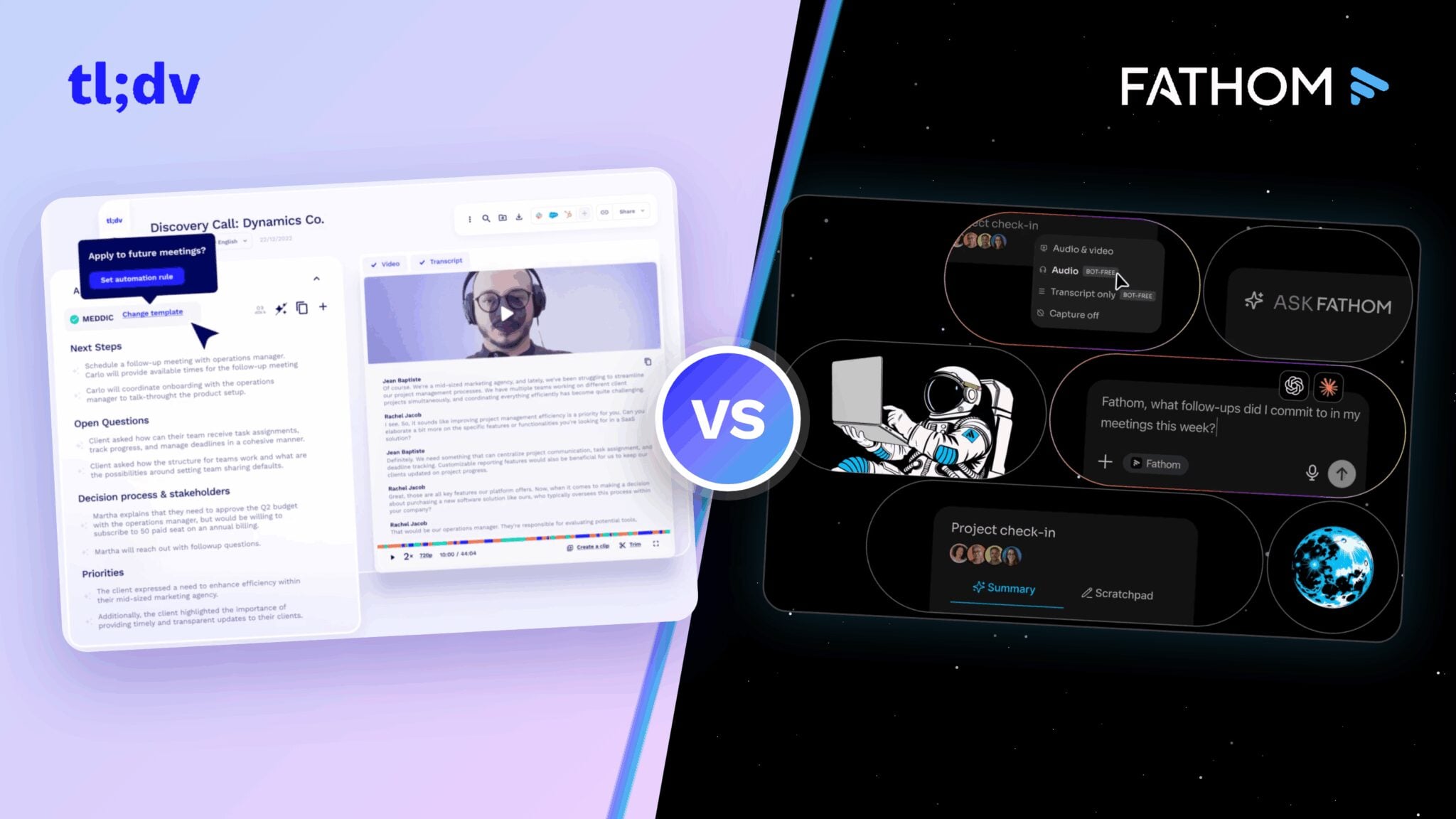
Wispr Flow vs. tl;dv: How They Compare in 2026
Wispr Flow Notetaker is a personal meeting recorder. It runs on your Mac or Windows PC, captures whatever audio is playing, and turns it into a transcript, a summary, and answers you can query later or pipe into Claude, ChatGPT and Gemini over MCP. It’s built for the person holding the laptop. For our hands-on test, including memory use and speaker identification, see the full Wispr Flow Notetaker review.
tl;dv meeting notetaker is built for the team around them. It records Zoom, Google Meet and Microsoft Teams in 30+ languages, as a bot or bot-free from the desktop app, and keeps the video and audio rather than the text alone. What it captures flows into HubSpot, Salesforce, Slack and 5,000+ other tools, and on the Business plan it scores calls against your sales playbook. It holds 4.7/5 on G2 from over 500 reviews and is used by more than 2 million users.
| Merkmal | Wispr Flow Notizblock | tl;dv |
|---|---|---|
|
Plattform |
Mac and Windows. No mobile app for meetings |
Mac, Windows, iOS and Android |
|
Bot-freie Erfassung |
Ja |
Ja |
|
Sprachen |
21 |
30+ mit automatischer Erkennung |
|
Übertragung von Vokabeln |
Übernimmt Ihr Diktatwörterbuch |
Benutzerdefiniertes Vokabular, separat eingerichtet |
|
Aufzeichnung aufbewahrt |
Transkript und Zusammenfassung |
Video- und Audio-Bibliothek mit Suchfunktion |
|
Clips mit Zeitstempel und Highlight-Zusammenfassungen |
Nein |
Ja |
|
Informationen vor der Sitzung |
Ja, externe Besprechungen |
Nein |
|
Analyse der Gesprächsdauer |
Nein |
Ja |
|
CRM |
Über MCP selbst erstellen |
Native HubSpot, Salesforce, Pipedrive |
|
Coaching und „ playbook “-Bewertung |
Nein |
Ja, Geschäftsplan |
|
Teamweite Suche |
Nein |
Ja |
|
Unternehmensplan |
Ja |
Ja |
|
Datenspeicherort |
USA |
EU |
|
Freier Plan |
Wöchentliches Besprechungslimit, einschließlich MCP |
Unlimited recording, AI notes on 10 meetings |
Der Wispr Flow Notetaker ist die bessere Wahl, wenn Sie:
- Work on Mac or Windows and mostly take notes for yourself
- Sie zahlen bereits für Flow und möchten, dass Besprechungsnotizen ohne zusätzliche Kosten im Paket enthalten sind
- Run your meetings in one of its 21 languages
- Ich möchte vor Besprechungen eine Zusammenfassung zu externen Anrufen erhalten
- Ich ziehe es vor, Notizen über Piping in Claude oder ChatGPT einzufügen, anstatt den integrierten Workflow zu nutzen
tl;dv die bessere Wahl, wenn du:
- Need meetings covered on mobile as well as desktop
- Run calls in languages outside Wispr’s 21
- Ich brauche die Aufzeichnung selbst, nicht nur ein Transkript.
- Ich möchte, dass CRM-Felder automatisch ausgefüllt werden, anstatt sie über MCP zu exportieren
- Benötigen Sie Coaching, eine „ playbook “-Bewertung oder die Nachverfolgung von Einwänden über eine gesamte Anrufbibliothek hinweg?
- Need your data stored in the EU
Das Fazit: Für wen ist Wispr Flow geeignet?
Nach zwei Wochen Testphase bin ich zu folgendem Ergebnis gekommen.
Wispr Flow started as a dictation tool, and on that job it’s good. The AI formatting works, the cross-platform sync works, and Command Mode is useful once you get the hang of it. If you want to stop typing emails and Slack messages, the free plan is enough to find out whether it suits you.
But with Notetaker, Wispr is no longer just a dictation tool. It now wants to record your meetings too, and that’s a different job with a much higher bar. Notetaker is built for one person taking their own notes. It keeps the transcript, not the recording. There’s no mobile app for meetings, no native CRM sync, and your data is processed and stored in the US. In our hands-on Notetaker review, it also slowed calls on an 8 GB Mac.
If your meetings matter to more people than the person who took the notes, you need the recording, a library your team can search, and your CRM updated without anyone remembering to do it. That’s the job tl;dv was built for. It records Zoom, Google Meet and Microsoft Teams in 30+ languages, with a bot or bot-free from the desktop app. It keeps the video from bot recordings, fills in HubSpot, Salesforce and Pipedrive automatically, and stores your data in the EU.
Use Wispr Flow to dictate. Use tl;dv to record and share your meetings. The free plan gives you unlimited recordings, so you can try it on your next call. Try tl;dv free.
FAQs About Wispr Flow
Ist Wispr Flow kostenlos?
Yes. Wispr Flow’s free plan includes 2,000 words a week on Mac or Windows and 1,000 words a week on mobile, plus the custom dictionary, snippets and Notetaker with a weekly meeting limit. You can switch off model training on the free plan. Pro removes the word limit for $12 a month billed annually, or $15 monthly.
Funktioniert Wispr Flow unter Windows?
Yes. Wispr Flow runs on Windows as well as Mac, iPhone and Android, and your dictionary, snippets and settings sync across all of them. That cross-platform support is one of its biggest advantages over SuperWhisper, which only runs on Mac and iOS. Like the Mac app, it works inside any app where you can type.
Was ist Wispr Flow Pro und lohnt sich die Anschaffung?
Flow Pro costs $12 a month billed annually, or $15 monthly. It removes the weekly word limits, adds Command Mode for editing text by voice, raises Notetaker’s meeting limits and adds shared team dictionaries. If you dictate daily for work, you’ll hit the free limit within days, so Pro is worth it for regular users.
Ist Wispr Flow sicher und vertraulich?
Wispr Flow processes audio in the cloud and stores data in the US, with no offline mode. You can switch off model training and dictation cloud storage in Data and Privacy settings. Model training is on by default on Free and Pro. Wispr’s security FAQ says its new SOC 2 Type II and ISO 27001 reports are available through its Trust Center.
Wie funktioniert der Befehlsmodus in Wispr Flow?
Command Mode lets you edit text by voice. Switch it on under Settings, then Experimental, highlight some text, hold Fn + Ctrl on a Mac and say an instruction such as “make this more formal”. Flow rewrites the selection, or shows it to copy in apps like Google Docs. It needs a paid plan or an active trial.
Welche Sprachen unterstützt Wispr Flow?
Wispr Flow dictates in over 100 languages. With auto-detect switched on, it identifies the language you’re speaking on Mac, Windows and iOS, choosing one language per dictation. Android needs you to pick the language yourself. Flow’s Style settings, which control how formal or casual your text sounds, currently only work in English.
Funktioniert die Notiz-App „Wispr Flow“ unter Windows?
Yes. Wispr Flow Notetaker launched on Mac on August 5, 2026, and came to Windows on September 15, 2026. It records meetings without a bot joining the call and transcribes 21 languages. There’s no mobile app for meetings. Notetaker is included on the free plan with a weekly meeting limit, and recordings under five minutes don’t count.