Passer au contenu






TL;DR: How to Convert MP4 to Text in 2026
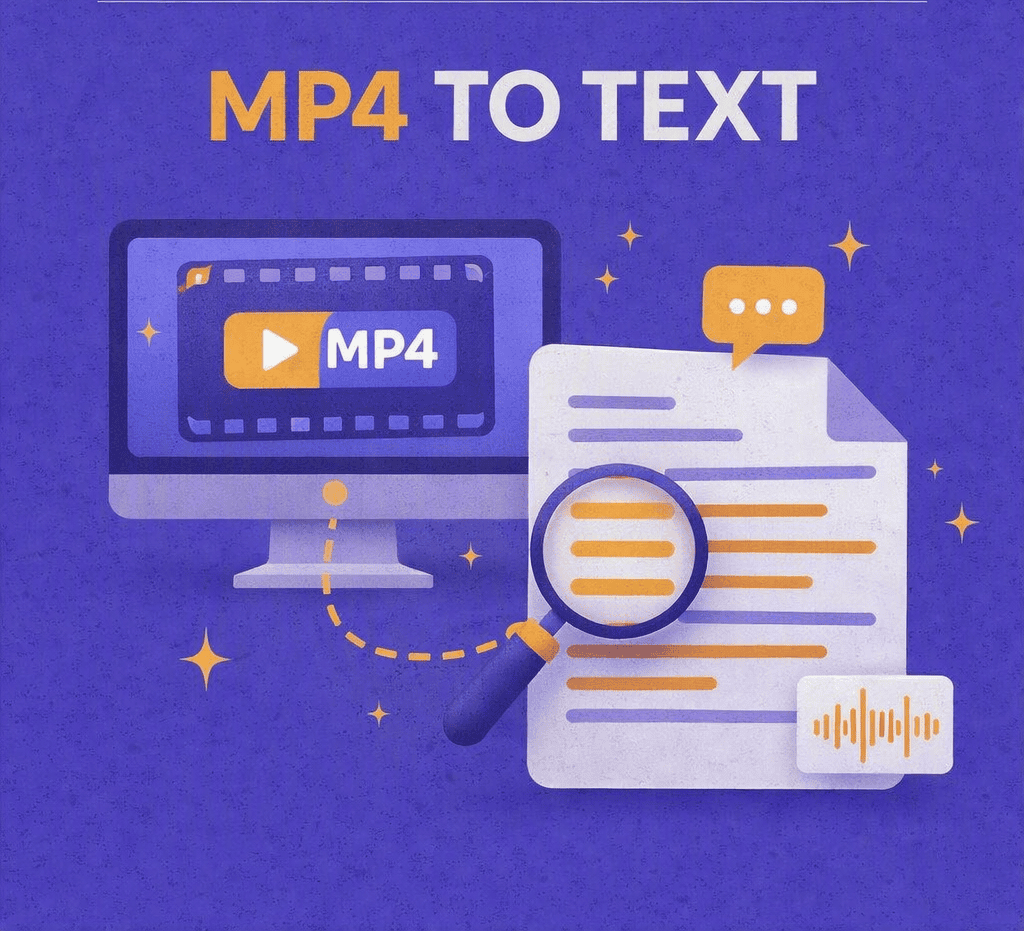
To convert an MP4 to text, upload the video to an AI transcription tool like tl;dv and it will turn the spoken audio into a written transcript. It’ll take a few minutes tops. Free tools handle this well, but choosing which one will depend on whether you just want a basic transcript or a searchable, timestamped transcript with more detailed AI notes built in.
This guide covers the fastest free method, as well as accuracy, languages, exports, privacy, and the difference between a basic transcript and AI notes you can act on.
If you’d rather get started straight away, just hit the button below and sign up for 5 free uploads.
To convert an MP4 to text, you upload the video file to a video transcript generator and let its AI turn the spoken audio into a written transcript. Gone are the days where you needed to manually type everything up, rewinding the same ten seconds fourteen times to make sure you’ve got every word right. The fastest free route is to drop the file into an AI notetaker like tl;dv, which handles video-to-text transcription and gives you back a searchable transcript in minutes.
But “MP4 to text” could mean three completely different things. Picking the wrong tool is just a waste of an afternoon. This guide sorts out what you actually mean, walks through the free method step by step, and covers the questions that decide whether a transcript is useful or just a wall of words.
What “MP4 to Text” Really Means
“MP4 to text” almost always means transcription. You want to convert the spoken audio inside an MP4 into a written transcript. An MP4 is a container: it holds video and audio tracks, but not a single line of searchable text describing what anyone said. To get text, the audio must be transcribed.
There are three distinct things people mean, and they need different tools:
- Pure Transcription: turning speech into a written transcript. This is what 90% of people want, and what the rest of this guide covers.
- Captions or subtitles: a timestamped, synchronized text version that displays over the video. Per the W3C’s accessibility guidance, captions carry the spoken words and non-speech audio (music, laughter), while subtitles usually carry only the dialogue, often translated.
- On-screen text (OCR): pulling words that appear visually in the frame, like slides or screen recordings. That’s optical character recognition, not speech-to-text. There’s more on that below.
The good news: the process is identical whether your file is an MP4 or something else. The same upload-and-transcribe steps work for MOV, MKV, WAV, and MPEG files. If you just want the general version, here’s the full guide to converting video to text.
How to Convert MP4 to Text (Fast and Free)
The fastest way to convert an MP4 to text is to upload it to an AI transcription tool like tl;dv. This will extract the audio automatically and return a transcript in minutes. No faffing about. In, out, done.
Below is the free method, plus the DIY routes if you’d rather not upload anything.
The Fastest Way to Convert an MP4 (Step by Step)
tl;dv is primarily a meeting recorder and notetaker, but it also transcribes pre-recorded files you upload. The core features are free. Here’s the whole process:
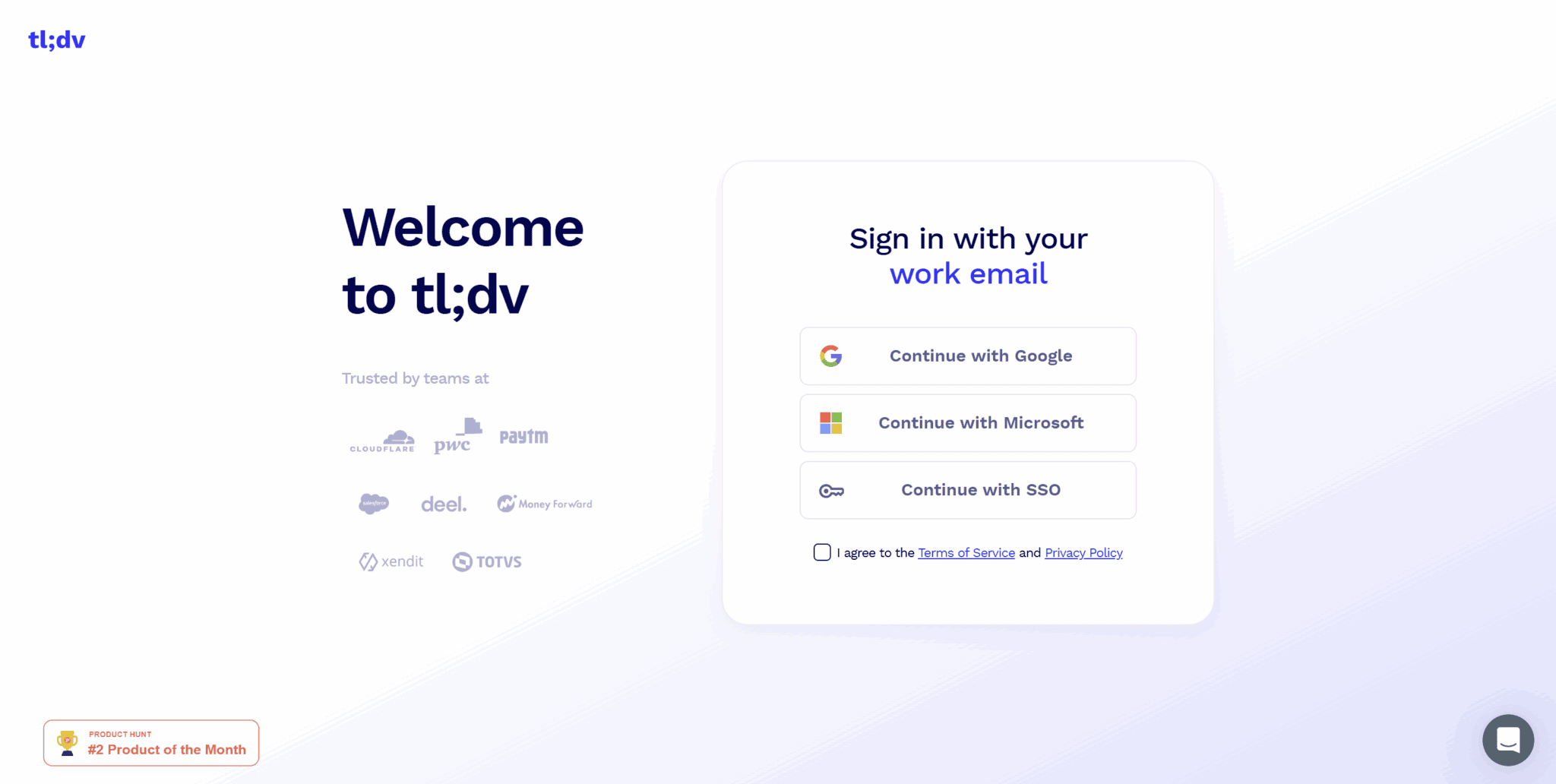
1. Create a free account. Head to tldv.io and sign up. It takes about a minute, no credit card required.
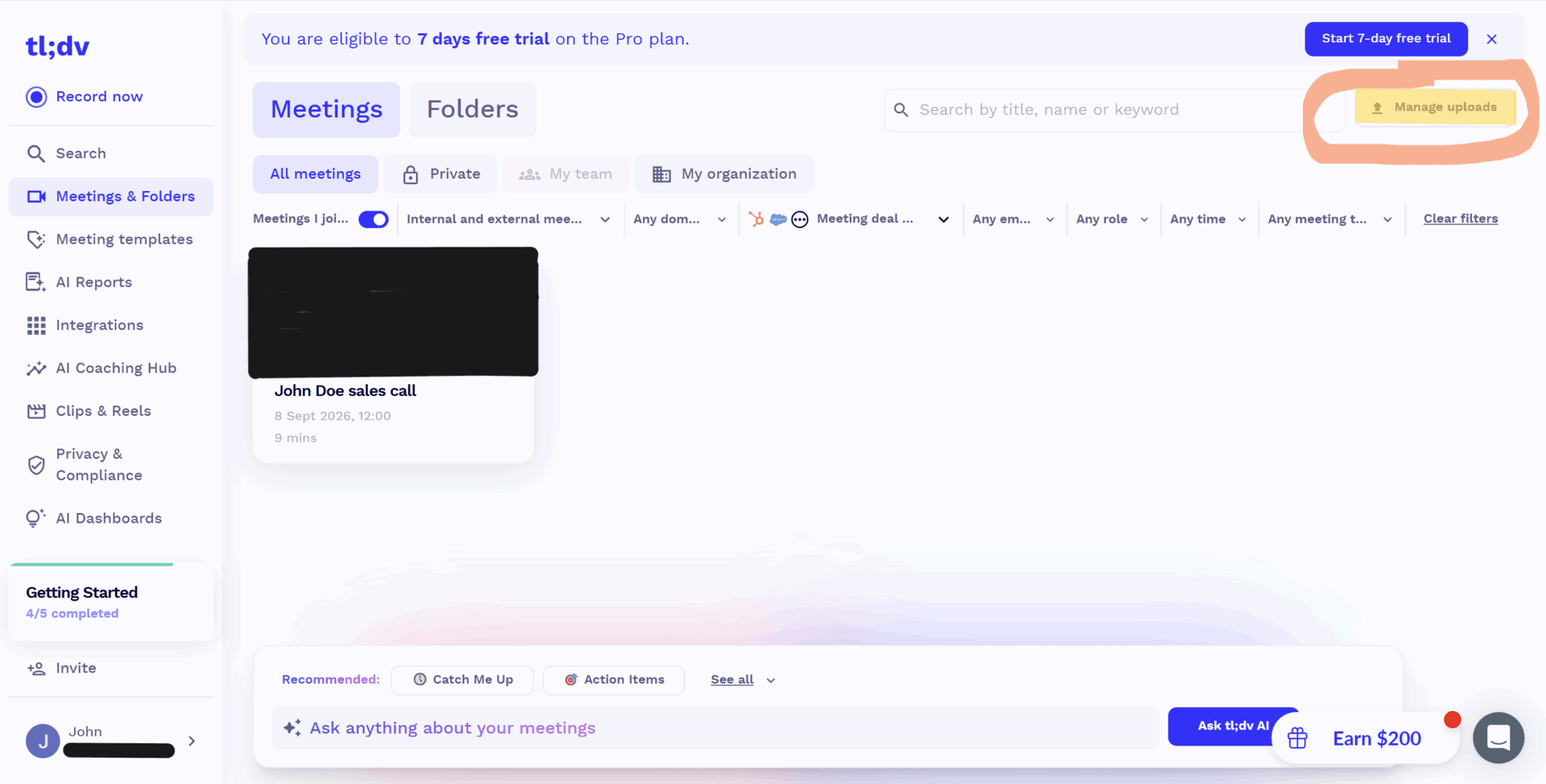
2. Click on “Manage uploads”. From your library, click the “Manage uploads” button in the top right corner.
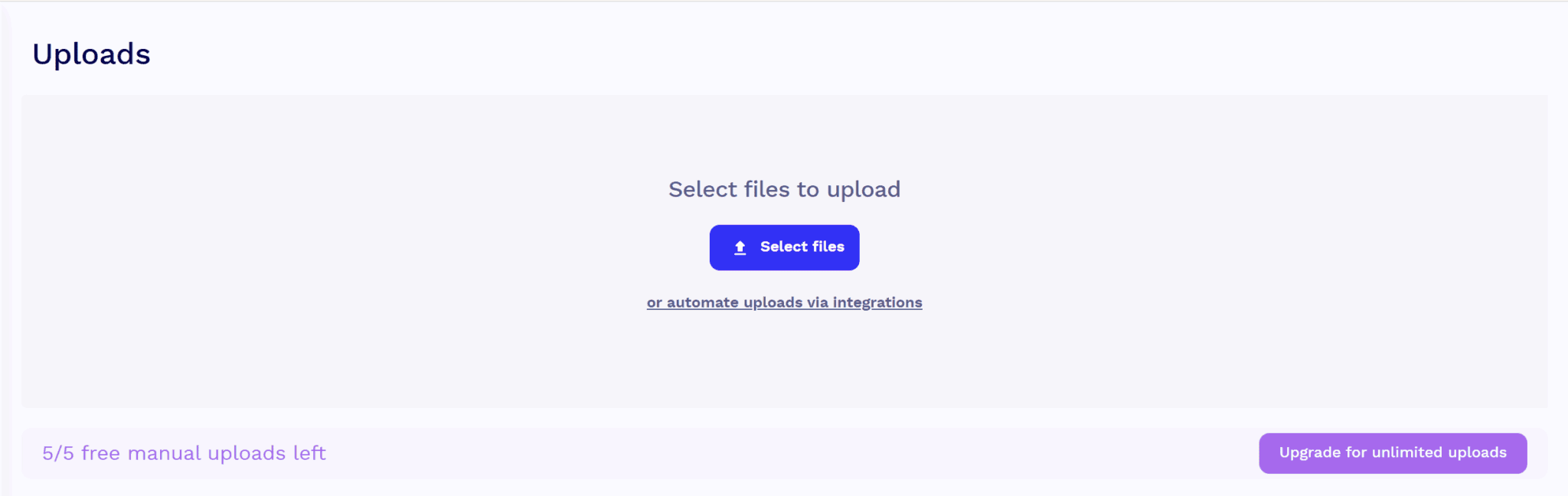
3. Select your MP4. On the Uploads page, click the central blue button that says “Select files”. Browse your files to and select the one you want to convert from MP4 to text.
Note: you can upload a number of file types, not just MP4s.
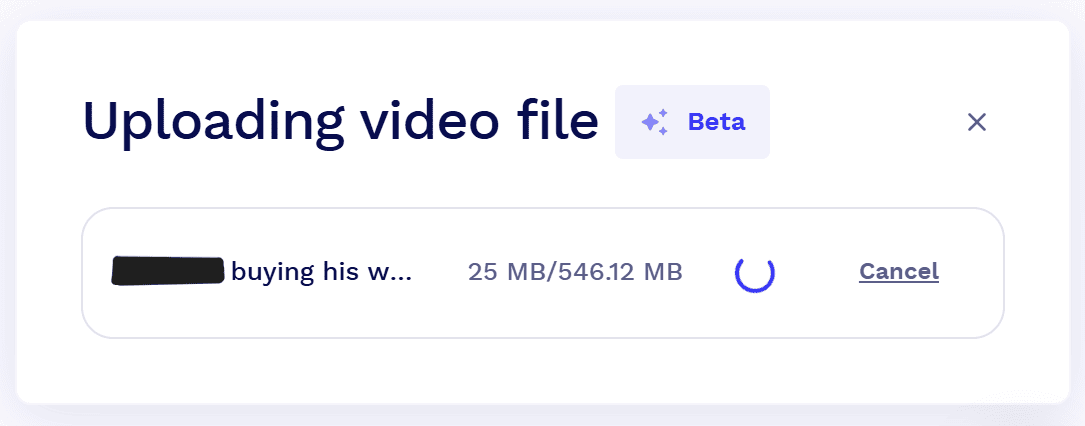
4. Wait for processing. Depending on file size this is usually a few minutes. The AI transcribes the speech and detects who’s speaking.
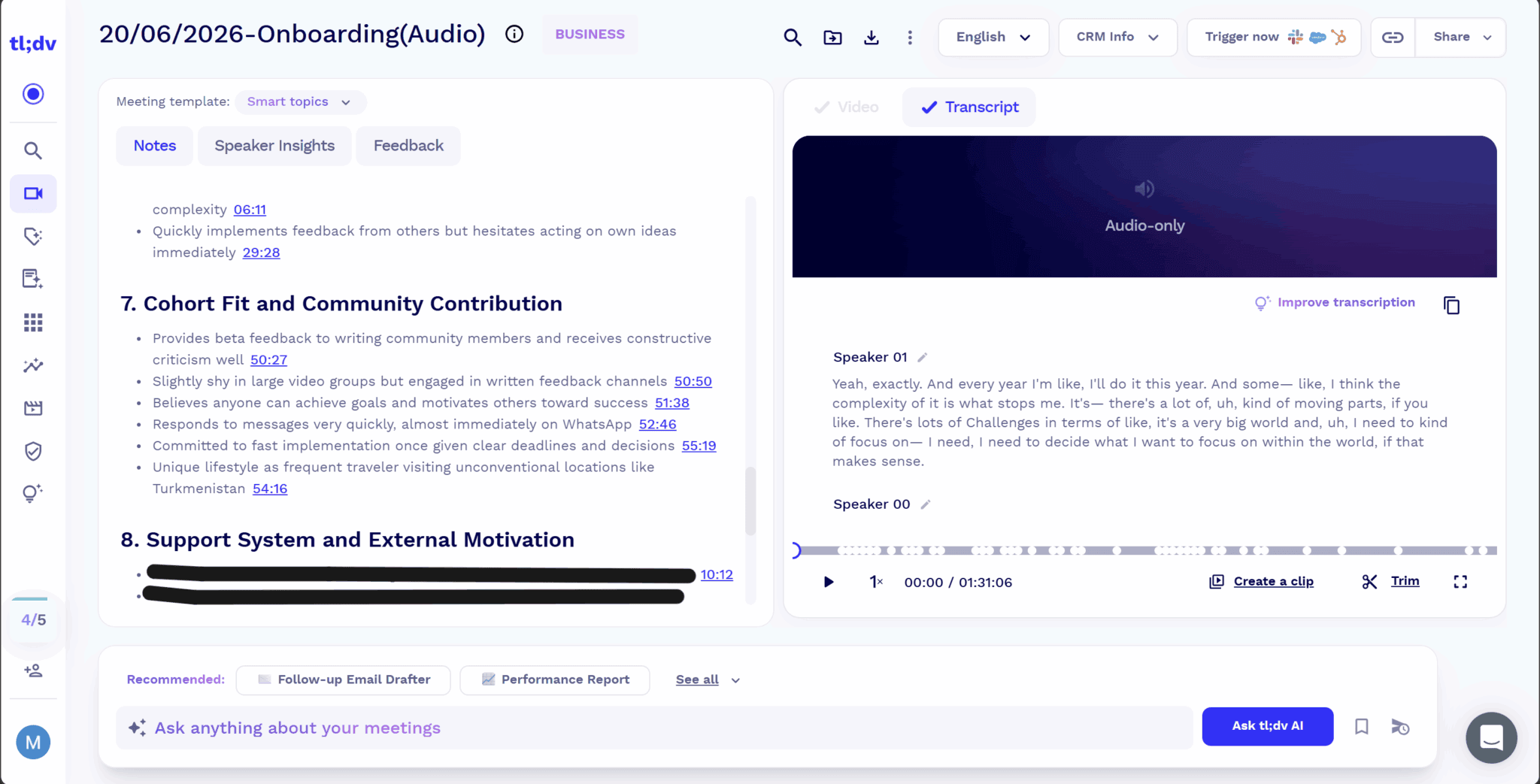
5. Get your transcript — plus a summary. You’ll receive the full transcript alongside AI notes and an automated summary of the video.
These notes will feature timestamps so you can jump to specific moments, or even use Ask tl;dv at the bottom to get quick answers about your uploaded file.
tl;dv works best for organised conversations, discussions, or meeting files. It may not be successful if the audio is purely small talk.
Steps 1 and 2 are one-time setup. Every file after that is just upload and wait.
How to Convert MP4 to Text for Free
You can convert MP4 to text for free using most AI tools. tl;dv’s in particular is unusually generous, giving you AI transcripts and notes without a paywall. It does, however, have a limit of 5 uploads on Free.
If you’re transcribing the odd file, free is usually enough. If you’re processing a library every week, you’ll eventually want a paid plan or a self-hosted route. tl;dv leans further into freemium than most — here’s how its free plan stacks up against other free AI notetakers.
Whisper, Word, and Other DIY Methods
If you’d rather not upload your file anywhere, you have options. But of course, these options come with trade-offs. OpenAI’s Whisper is a free, open-source speech recognition model you can run locally on your own machine. It’s MIT-licensed, but it’s a developer tool: it needs Python, PyTorch, and FFmpeg installed, it has no built-in speaker labels, and it runs slowly without a decent GPU. That makes it a great option for the privacy conscious, or those who want to do bulk jobs, but it’s not great for those that just want to click upload and be done with it.
Built-in tools like Microsoft Word’s Dictate or Google Docs Voice Typing get suggested a lot, but they transcribe live microphone input, not uploaded files. You’d have to play the MP4 out loud and let it listen, which is slow and often inaccurate. YouTube auto-captions work if you’re willing to upload publicly, though they’re often notoriously bad.
Here’s how the different routes compare:
| Méthode | Vitesse | Accuracy | Étiquettes pour haut-parleurs | Coût | Meilleur pour |
|---|---|---|---|---|---|
| AI notetaker (upload, e.g. tl;dv) | Fast — minutes | Élevé | Automatique | Free to start | Meetings, calls, interviews — anyone who wants notes, not just a transcript |
| Whisper (local, open-source) | Moderate — hardware-dependent | High (varies by language) | Add-on needed | Free (self-hosted) | Privacy-first, technical, offline or bulk jobs |
| Built-in OS / office tools | Slow — plays in real time | Low to moderate | Non | Gratuit | Quick, rough notes from short clips — no true file upload |
| Human transcription service | Very slow — hours | Le plus élevé | Manual | Paid per minute | Legal, medical, or verbatim-critical work |
Beyond the Transcript: AI Notes, Summaries, and Action Items
The biggest difference between MP4-to-text tools isn’t the transcript itself, but what you can do with it afterwards. A standalone converter hands you a text file and forgets you exist; a meeting-intelligence tool turns that transcript into AI meeting notes, a summary, and a list of action items you can actually act on.
If you have a 60-minute recording, for instance, a transcript will produce thousands of words of text, which is only marginally more useful than the video itself. You’ll still have to read all of it, sift through and make sense of what’s what.
An AI video summarizer surfaces the key points, captures decisions and next steps, and provides you with the ability to ask questions across your whole library of transcripts instead of scrubbing through one file at a time. For a recorded sales call or interview, that’s the difference between “I have a transcript” and “I know what to do next.” The transcript is the raw material; the notes make it easy to use.
How Accurate Is MP4-to-Text Transcription?
Modern AI transcription is accurate enough for most work. A lot of tools offer 90%+ accuracy on clean audio, but that swings hard with recording quality and language. Any tool that promises a flat “99% accurate” is selling you the best-case scenario.
When Dani tested transcription accuracy across four AI tools on Russian meetings, scores ranged from 14 to 52 out of 65 on the same audio. A similar thing happened when I tested Spanish meeting transcription tools. It varies from tool to tool and language to language.
What Affects Transcription Accuracy?
The audio does most of the work. Background noise, echo, music, a mic across the room, people talking over each other, heavy accents, and niche jargon all drag accuracy down. Clean, close-mic’d, one-speaker-at-a-time audio gets you the best results.
You can help the tool along with a custom vocabulary: a glossary of names, acronyms, and product terms so it stops writing “sequel” when you said “SQL.” Whichever tool you use, expect to skim and fix a few words; even the W3C notes that auto-generated captions usually need editing.
Can AI Identify Different Speakers?
Yes, most quality tools do speaker diarization, automatically splitting the transcript by speaker and labeling them (“Speaker 1,” “Speaker 2”), which you can rename. Accuracy dips when voices are similar or people talk over each other, so expect to correct the odd mislabel. It’s one of the clearest dividing lines between tools: dedicated notetakers handle it automatically, while raw Whisper needs an add-on to do it at all.
Which Languages Are Supported?
tl;dv transcribes in 40+ languages and can auto-detect the spoken language, so a French or Japanese MP4 works the same as an English one. Coverage varies by tool: Whisper claims 99 languages, but performs unevenly across them. You can usually translate a transcript later on anyway.
If you regularly work across languages, check real-world results in your specific language rather than trusting the headline count.
Output Formats: TXT, DOCX, SRT, and Timestamps
Most MP4-to-text tools export the transcript as plain text (TXT) or a Word document (DOCX), and many also produce timestamped subtitle files (SRT or VTT). The format you want depends on the job: TXT and DOCX for reading, editing, or repurposing; SRT and VTT for captions that display over the video.
Quick translation of the acronym soup: TXT is plain text, DOCX opens in Word, PDF is for sharing a fixed layout, and SRT and VTT are timestamped caption files — SRT is the near-universal subtitle format, while VTT is built for web video.
A transcript can also carry timestamps and speaker names inline, which is what lets you jump from a line of text straight to that moment in the video. With tl;dv, you get a searchable, timestamped transcript you can copy with a single click, plus clip-and-share tools built on top so you can send highlight reels directly to Slack, or send it straight to a colleague’s email.
As per the W3C, transcripts and caption files are indexable by search engines in a way video isn’t. If you want MP4 to text for SEO purposes, this is a great way of getting video content seen and understood by Google.
Is It Safe to Upload MP4 Files?
It depends entirely on the tool’s data policy. A reputable transcription service will encrypt uploads and let you control data retention, but the two questions that really matter are whether they store your file and whether they train AI on it. For a confidential client call or internal meeting, these are important things to find out first.
Before uploading anything sensitive, check three things:
- Encryption in transit and at rest,
- Data retention controls (can you delete the file and transcript?),
- An explicit statement on model training.
tl;dv, for example, states plainly that recordings and transcripts belong to the user and are never used to train AI. It processes meetings through a partnership with Anthropic, anonymizing metadata and storing data in ISO 27001-certified data centers with AES-256 encryption. If a free tool won’t tell you what it does with your video, that silence is generally your answer.
There’s also a legal layer if the recording involves other people: in many regions you need consent to record and transcribe a conversation, so if you’re transcribing a call you didn’t set up, make sure everyone knew it was being recorded. And if privacy is non-negotiable, a local Whisper setup keeps the file on your own machine entirely.
MP4 to Text for Meetings, Interviews, and Webinars
MP4-to-text is most valuable for recorded conversations like meetings, sales calls, interviews, webinars, and lectures where the transcript becomes a searchable record you can quote, summarize, and act on. This is exactly where an AI notetaker is a much stronger pick than a plain converter.
A few common jobs: turning a Zoom, Google Meet, or Teams recording saved as an MP4 into notes (though if you record with a tool that handles meeting transcription natively, you skip the upload step entirely); transcribing user interviews so researchers can tag insights instead of rewatching hours of footage; and repurposing a webinar into a blog post, show notes, and social clips.
Can You Extract Text Shown On-Screen?
Sometimes “MP4 to text” means pulling text that appears visually in the video, like slides or screen recordings, rather than transcribing speech. That’s optical character recognition (OCR), and it’s a different job from speech-to-text. A transcription tool reads the audio; an OCR tool reads the pixels.
If you need the words on a slide deck inside a recorded presentation, a speech-to-text tool won’t capture them unless someone read them aloud. For that you’d use a video OCR tool that samples frames and extracts on-screen text. Most people searching “MP4 to text” want the spoken transcript, so if that’s you, ignore OCR entirely. It is worth distinguishing between the two, however, because feeding a slide-heavy webinar to the wrong tool is a massive waste of time.
Convert Your MP4 to Text Today
In 2026, converting an MP4 to text is a two-minute job. Simply upload, wait, done. The question to ask yourself is what do you actually want to do with the text afterwards? If you just want words on a page, almost any free tool will do. If you want a transcript that turns into notes, summaries, and action items, pick a tool built for that.
Either way, the MP4 in your downloads folder has no excuse to stay unsearchable now.
FAQs About Converting MP4 to Text
Can I convert MP4 to text for free?
Yes. Most AI transcription tools have a free tier, and tools like tl;dv include AI transcripts and notes on their free plan. Free plans usually cap uploads, minutes, or AI features, so heavy users may need a paid tier.
Can I convert MP4 to text without uploading the video?
Yes. Run an open-source model like OpenAI’s Whisper locally on your own machine. It’s free and keeps the file private, but it requires some technical setup and has no built-in speaker labels.
Can AI identify different speakers in an MP4?
Yes, through speaker diarization, which splits and labels the transcript by speaker. Accuracy drops with similar voices or crosstalk, so expect to correct the occasional mislabel.
How accurate is automatic MP4 transcription?
Often 90%+ on clean audio, but accuracy varies with background noise, accents, crosstalk, and language. Clear, close-mic’d, single-speaker audio gets the best results.
Which languages can be transcribed from an MP4?
Tools vary widely. tl;dv supports 40+ languages with automatic language detection. Real-world accuracy differs by language, so test your specific one.
Can I turn an MP4 transcript into subtitles?
Yes. Many tools export timestamped SRT or VTT caption files, which display as synchronized subtitles over the video. Double check with your tool of choice.
What should I do if my MP4 is too large to upload?
Compress the file, split it into shorter segments, or extract just the audio track first (FFmpeg does this free). Cloud-based tools handle large files better than browser-only ones.
Is it safe to upload confidential MP4 recordings?
Only to a tool with clear encryption, retention controls, and a no-training policy. For highly sensitive files, transcribe locally so the video never leaves your machine.