Skip to content



When choosing to uproot ourselves from our work desks and become payroll pariahs, a lot can change. Even when we feel we have grown enough to jump comfortably into the next phase of our careers, working from home brings an entire nursery of new hurdles.
We are living in an age of distraction. Where smart devices are never usually more than a few feet away from us for most of our waking (and sleeping) lives. Where the data cookies we willingly leave behind like breadcrumbs are chased by alluring ads that pop up when we least expect it. Where social media is ingrained into our very psyches and has become the norm for the majority of the planet since the pandemic began.
Each remote worker has their own outlook and set of tips to work from home. But from someone who has been a remote working freelancer for 2 years, I believe there to be one change that anyone working from home can start implementing today that will radically enhance the way they work, play, and see the ever-expanding digital world we live in.
The effects of digital overload

The desire to compensate for the lack of physical interaction when working from home is compounding digital overload.
We believe we need to adhere to a certain level of productivity by doing “x amount” of work hours, utilizing “x amount” of apps and online tools to be “ahead of the curve.”
This is the mindset that can lead us to digital overwhelm, along with many knock-on effects on our mental health.
- Finding ourselves starting work before breakfast and finishing just before bedtime. Working from home can blur the once clear boundaries between work and leisure and cause us to neglect routine responsibilities and even personal self-care.
- Overexerting ourselves to make up for not being physically present at work. This can lead to physical burnout, stress, and anxiety.
- Stresses from newly adapted communication methods used for work. There are reasons why Zoom meetings can be so exhausting.
- Developing a serious behavioral addiction to social media, which presents the same symptoms as any other substance use disorder, like gambling and drug use.
- In the UK alone, the number of self-employed people facing mental health issues rose by a shocking 300% since the start of the pandemic. 48% of them were feeling depressed or anxious due to stress and had also become less productive as a result.
We want to look for brief escapes whilst still being productive working from home. Cyberloafing is among the most deliciously accessible answers. We can let our minds wander around the internet for a few minutes but if solely relied upon, it would only add to the digital stimulus that overwhelms us.
Productivity levels are defined differently depending on who you ask, and they often can’t be controlled by rigid schedules we try and put on ourselves.
We all have a responsibility to look after our health. And sometimes that involves forgetting about wanting to be “ahead of the curve” and instead determining how best to make our working lives work best for us.
To do this, we must first pay attention to the amount of time we are wasting in pursuit of digital distractions.
In life, time is currency. And in beginning to reduce our spending can lessen the negative effects of digital overload and get us back to enjoying the benefits of remote working that we each looked forward to before taking the plunge.
What we can learn from men like Cal Newport and Matt D’Avella

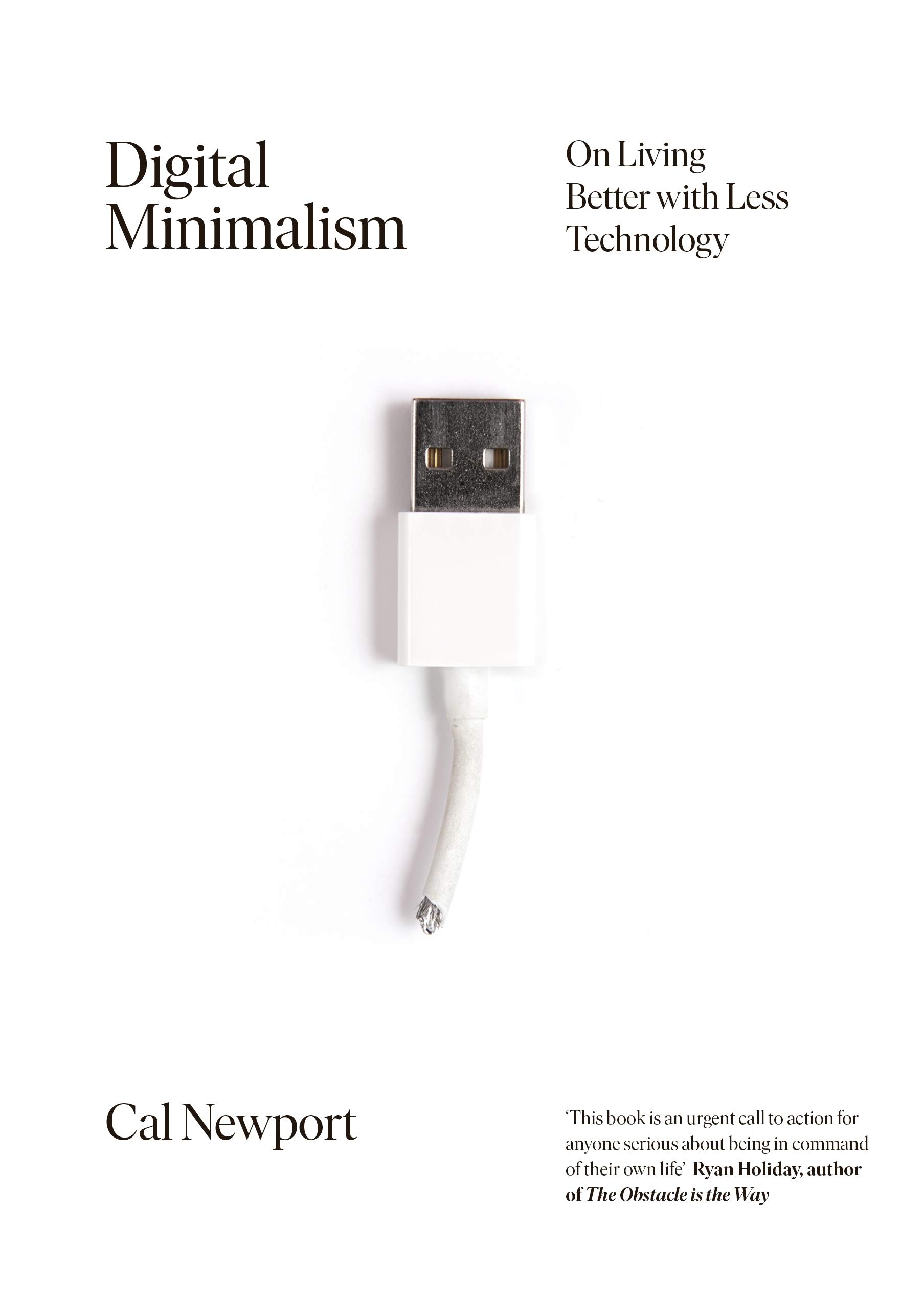
Cal Newport is an American Author and associate professor of computer science at Georgetown University. He’s also the founder of digital minimalism and coined the term in his 2019 book ‘Digital Minimalism: Choosing A Focused Life in a Noisy World’.
He’s cemented within the public eye for his pioneering work spanning the intersection of digital technology and culture and continues to challenge mainstream societal beliefs about what is deemed “necessary” when it comes to technological services. He’s even gone as far as to employ his radical maneuvers on social media… to convince people to quit social media!
Within the book, Newport shares three main principles that underpin the entire philosophy.
Principle #1: Clutter is costly
“Digital minimalists recognise that cluttering their time and attention with too many devices, apps, and services creates an overall negative cost that can swamp the small benefits that each individual item provides in isolation.”
Principle #2: Optimisation is important
“Digital minimalists believe that deciding a particular technology supports something they value is only the first step. To truly extract its full potential benefit, it’s necessary to think carefully about how they’ll use the technology.”
Principle #3: Intentionality is satisfying
“Digital minimalists derive significant satisfaction from their general commitment to being more intentional about how they engage with new technologies. This is independent of the specific decisions they make and is one of the biggest reasons that minimalism tends to be immensely meaningful to its practitioners.”
Learning about digital minimalism via social media platforms and Google search results is always going to be a double-edged sword. But let’s put it this way: without having the means of noticing a problem, there won’t be means of finding a solution.
We can use such an epiphany to change how we approach our digital consumption.
One benefit of more of us working from home is the expedited digital economy, wherein more of us are better placed to connect with and learn from others online.
During the lockdown, YouTube might as well have been a nonprofit distance learning provider for those of us navigating through life’s current trials and tribulations.
In fact, in 2020, phenomenal stats showed that 82% of YouTube users turned to the platform to learn to do things themselves. And videos with variations of the word “beginner” in the title grossed more than 9 billion views.
So… who is Matt D’Avella?

He’s a renowned YouTuber, filmmaker, and entrepreneur and one of the modern-day instigators of digital minimalism.
Digital Minimalism is a philosophy that’s based on an understanding that our relationship with technology (our apps, tools, smart devices, etc.) is overall burdensome and shouldn’t take up as much attention as we usually give it.
To mark 2021 as Matt D’Avella’s tenth year living as a digital minimalist, he made a video explaining the lessons he learned, in hopes of further demystifying the lifestyle.
Lesson 1
“The excitement fades but the value remains.”
When initially learning about minimalism, D’Avella admits he was excited by the changes it made to his values and how he saw the world. But that faded over time as it became the new normal. It’s expected but it didn’t detract from him seeing the value and benefits of minimalism.
Lesson 2
“You don’t have to marry a minimalist.”
At the start of his journey, D’Avella was worried that he would only be able to date a fellow minimalist. But it turned out he just needed to find someone open-minded enough to understand the fundamentals. To him, minimalism isn’t the main thing he can offer in a relationship.
Lesson 3
“Minimalism is not a religion.”
D’Avella explains that minimalists can harbor ill judgment toward others who remain unintentional with their consumption and purchases. He says there needs to be a greater acceptance of those on different paths and at different stages of their lives and not force minimalism on others. Rather opt to offer them support while making decisions that are going to make us (he and other minimalists) happy.
Lesson 4
“You spend less time cleaning.”
Simply put, the fewer things you own, the less time will be spent tidying up. It wowed me to learn that it takes himself and his partner a total of 20–30 minutes each week to clean their entire apartment. Having been remote working for the past decade, having a clean home is vital to his peace of mind.
Lesson 5
“We upgrade too often.”
D’Avella admits that as a professional filmmaker, the biggest struggle he has had to grapple with over the years is the constant technology upgrades. He’s had to filter out counter-intuitive spending and learn only to purchase tech that fulfills a sense of purpose in his life, as opposed to something wasteful like mobile phones.
Lesson 6
“It won’t solve all your problems.”
Despite it not being a solution to life’s inevitable problems, for D’Avella, minimalism helped him to slow down during periods of anxiety and focus on his mental health over pursuing other immediate goals.
Lesson 7
“People overthink it.”
When it comes to deciding what physical objects to keep and clear from their lives, D’Avella suggests not overthinking it and taking the stance of knowing what can easily be replaced if ever needed in the future.
Lesson 8
“Minimalism makes gifting easier.”
Having a more intentional mindset, D’Avella finds it a lot easier to segway certain occasions where it would have once been mandatory to buy excessive amounts of gifts for others. He and his family started doing secret Santa each Christmas. Also, once people know that you’re a minimalist, he explains, and they take an understanding approach to what your life is about, you become easier to buy for as physical things that make up your life become more prominent.
Lesson 9
“Detaching yourself from stuff makes you less of a tightass.”
The emotional weight he once tethered to physical objects is now nonexistent. Where he would have once been physically affected (and even hurt) by breaking an object he couldn’t afford to replace in college, minimalism has allowed him to hold less value to them. He also admits that this is due to being far more financially stable enough to actually be able to replace things he breaks now. Fundamentally, he values people over things.
Lesson 10
“Minimalism is a practice.”
D’Avella says minimalism won’t always be the same. As time changes, so do we and the number of worldly possessions we need. Accepting this can keep those practicing minimalism along the path of an intentional life.
In an evolving digital age where information sharing is encouraged and social media platforms might as well be classrooms, it’s people like Matt D’Avella that can make a substantial impact on the everyday lives of others.
They make alternate ways of living with the aim of improving our health and wellbeing widely accessible so that we might take back control over our lives where so much has otherwise been removed.
Digital detoxing in practice

Cal Newport suggests taking a break from optional technologies in your life for a period of 30 days. However, for those of us still holding full-time positions, or have obligations to their digital devices, having a total digital detox like this will be near impossible to accomplish.
I am a firm believer in long-term small changes amounting to greater eventual change. By putting certain actions into practice, anyone can gradually phase out their own digital addictions, and ultimately decide what tools to use, for what purposes, and under what conditions.
The alternative 2-week digital detox helped me to minimize mental clutter and maximize being productive working from home.
And yes, during the time all remaining apps were void of notifications — and still are, for the most part.
Set a clear work schedule
This greatly helped me as it provided a central locus to base all other habits around. I set myself a start time of 10 am and an end time of 6 pm. Working to this structure grounded me when there was so much going on in the surrounding world that I couldn’t control.
Having the option to be flexible with times if need be allowed me to become all the more intentional with prioritizing tasks.
What about those mandatory Google Meet calls?

When it comes to building a bank of tips to work from home, I would recommend adopting a minimalistic approach to online meetings to the list.
The pandemic has thrown a great number of obstacles our way, and for remote workers like myself, I found that one of the biggest has been maintaining essential communication with clients and teammates in a way that doesn’t eat into my work schedule.
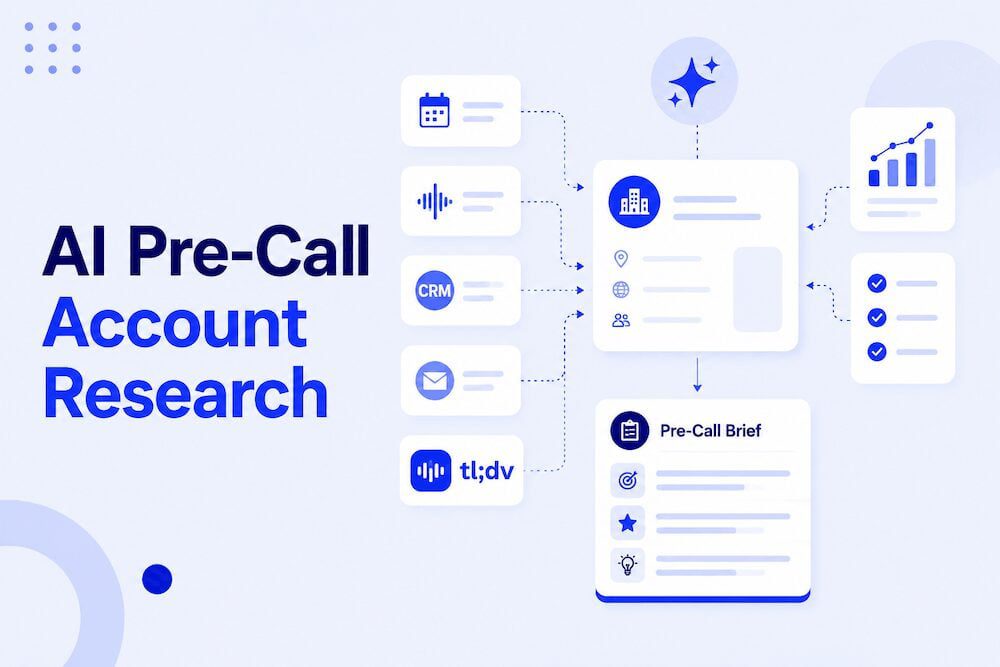
tl;dv is a remote-first startup that values the freedom of asynchronous communication as much as the emotional cohesion within the remote workplace.
Its integrated platform can easily record your meetings, and tag the parts that matter most in real-time. This minimizes the time spent in meetings, by being to catch up on only the relevant parts, also backed up with their speedreading transcript feature. Regardless of where teams choose to collaborate, all can streamline the process of keeping in the loop with important meetings.
I’d say that simplification and remote working should go hand in hand. And tl;dv ensures that the online meetings we do have are fewer and more focused, so that we may all be empowered to work smarter wherever we are.
Bye-bye social media!
Cal Newport’s ‘Deep Work’ is an indispensable guide to anyone seeking focused success in a distracted world. One of its essential rules is to fully remove social media — and the inevitable distractions that come with it.
This may not be fully doable for those whose day jobs rely on using it. It certainly wasn’t for me when initiating my digital detox back in March 2021.
Certain apps and software can help increase friction between yourself and the parts of them that spur your addictive tendencies.
Not having the option to deactivate social media completely actually helped me pinpoint the essential functions of my frequently used social media channels faster. This step was my pivotal catalyst to becoming more productive working from home.
Only consume high-quality media
Taking yourself away from social media feeds and perhaps some of the trashier and ‘fake news’ littered sites you might usually peruse frees you up to choose what sources you consume news from. Instead of relying on algorithms, you can selectively embed Facebook feeds from reputable sources to stay informed and curate your own news experience.
Certain tools/apps can be used to curate your own newsfeed and strip it of ads and clickbait, so you can read your chosen articles without being distracted. I personally don’t consume too much news anyway but Pocket is a good use case that sources stories from quality news sites.
Yes, using apps to cut down on consumption can benefit you during the process.
Consolidate responding to messages
It’s scientifically proven that checking emails less frequently reduces stress. Commit to responding to emails and essential messages in batches at designated times of the day. You may need to train certain people not to expect instantaneous responses from you but they — like you — will soon get used to this. ‘Do Not Disturb’ or ‘Airplane’ mode are your default friends now.
Embrace rich social interactions
You need to learn to prioritize real conversations with people, even if it’s uncomfortable and inconvenient.
Research proves that when faced with acute isolation, the brain learns to crave social interaction like it does food. It is both unhealthy and insulting to replace authentic conversations with trivial interactions such as text messages and likes.
Where you once might have clicked ‘like’ on a picture of your friend’s newborn baby, consider picking up the phone to call them or sending them a celebratory gift instead perhaps?
Designate some time for leisure
Allow yourself to rediscover and explore activities and behaviors you find satisfying and meaningful. Like taking up meditation, cooking a new dish, or learning an instrument.
It’s important to remember that we still need to relax and unwind from time to time. So there is no harm in allowing yourself the more meaningless leisure time to watch the next episode of your latest Netflix obsession or play that online game with a friend.
The idea of this entire process is to be able to delegate what actually provides value to your life in order to phase out what doesn’t.
You will soon be comfortable reintroducing optional technology back into your life and by then you would hopefully have a deeper understanding of the role it plays in the grander scheme of your life.
Final thoughts
I came out the other side of my 2-week digital detox feeling refreshed as if I had awoken from a long sleep, devout of any immediate desire to return to Facebook and Instagram scrolling. It easily made me more productive working from home.
The key to any long-term change is maintenance. Once we learn to action these mindset shifts, we too can start making their permanent lifestyle choices, rather than mere quick-fix tips to work from home.