Skip to content







Remote closing used to be my entire job.
Phone calls, emails, back-to-back conversations where the only goal was to move someone from “maybe” to “yes” without ever meeting them in person.
I don’t work in a pure sales role anymore, but remote closing doesn’t just disappear when you no longer have sales in your job title.
Closing, and remote closing, still shows up everywhere.
Product teams getting buy-in across time zones, support teams calming down angry customers, even internal decisions where someone has to convince someone else to move forward. It’s all the same skill, just dressed differently.
Still, when people talk about remote closing, they usually mean one thing, sales teams trying to close deals from behind a screen.
That’s the version I know inside out, and the one we’re getting into here.
Tl;dr on Remote Closing in 2026
- Remote closing is closing deals online through calls, video, or messages
- Closing happens throughout the conversation, not just at the end
- Most deals are lost earlier through vague answers, missed details, or rushed steps
- What works is asking better questions, spotting hesitation, and guiding to a clear next step
- In 2026, sales tools like tl;dv make it easier to review calls, track details, and improve
- The fundamentals stay the same, you just have better support around them
What Is Remote Closing?
Remote closing is the process of closing sales deals without meeting the client in person, usually through phone calls, video calls, email, or messaging.
It means taking someone from interest to a decision entirely online. No in-person meetings, just conversations that move things forward.
Remote closing sits within remote sales, but it is the point where a deal either happens or falls apart. You can generate leads, book calls, and send proposals, but none of it matters until someone commits.
And more often now, that commitment happens through a screen.
In practice, remote closing can look very different depending on what’s being sold.
- A SaaS company running a live demo over Zoom, then answering questions and securing a subscription
- A coach speaking to a potential client on a discovery call and enrolling them into a programme
- A B2B service provider walking through a proposal and agreeing terms on a call
- An agency sending a follow-up email that turns hesitation into a signed contract
The format changes, but the job stays the same. You are guiding a conversation towards a decision without being in the same room.
Remote Closing vs Traditional Sales (Key Differences)
Remote closing is the process of closing sales deals online through calls, video, or messaging, whereas traditional sales usually involve meeting in person and closing face-to-face.
The main difference comes down to how much of the interaction relies purely on conversation.
In remote closing, everything sits in what is said, how it is said, and how well you guide the discussion without being physically present.
In traditional sales, you have the added layer of in-person presence, body language, and environment influencing the outcome.
In practice, remote closing tends to move faster, with quicker calls, shorter sales cycles, and the ability to speak to people anywhere. Traditional sales often takes longer, with more back-and-forth and the need to coordinate meetings.
Communication also feels different. Remote closing forces you to be more precise and attentive, because you cannot rely on physical cues in the same way. Even on video calls, where you get some of that back, you are still missing context. You can’t fully see what’s around them, how engaged they really are, or what might be pulling their attention away.
It can sound easier at first, no travel, no rooms to manage, just a call. But in reality, you’re working with less information, which means you need to be far more focused on what you can see, hear, and guide in the moment.
Both rely on the same underlying skill, guiding someone towards a decision, but the way you do it changes depending on the setting.
How Remote Closing Works
At a high level, people think remote closing is the final moment, the point where someone says yes and the deal is done but in reality, closing is happening throughout the entire process.
Every step is a small decision. Stay on the call. Share more information. Book the next step. Review the proposal. Each one is a micro-commitment that moves the deal forward.
By the time you get to the final close, you’re not starting from zero. You’re building on a series of smaller yeses.
Here’s how that actually plays out.
- A lead comes in
The first close happens here. They choose to respond, to book a call, to give you their time. - The discovery conversation
You are closing them on opening up. Getting real answers instead of surface-level responses. - Qualification
This is where both sides are deciding if it makes sense to continue. You are closing on alignment, not forcing a fit. - The pitch or demo
You are closing on belief. Does this solve their problem in a way that feels worth it to them? - Handling questions and hesitation
You are closing on confidence. Removing doubt so they can actually move forward. - The final close
This is the obvious one. The decision, the agreement, the point where the deal is either done or dropped.
And this is where it gets slightly uncomfortable because you realise you’ve been closing all along. No excuses for “I can’t close deals”, because you’ve remote closed every single section up until this point.
Every time you’ve got someone to reply, agree, move forward, or stop sitting on the fence. That was a close. Just not the big dramatic one at the end.
What People Get Wrong About Remote Closing
Most people assume that if a deal doesn’t close, it’s because they got the final moment wrong. They focus on the wording, the timing, how to ask for the decision without making it awkward, as if there’s a perfect line that will suddenly make everything click.
In reality, the deal is usually decided long before you ever get to that point.
There’s a fine line between trying to close too early and leaving things too loose. Sales is a bit like dating. You don’t go from the first conversation straight to “right, should we get married?” It builds gradually, through small steps that make the next one feel natural.
Remote closing works in exactly the same way.
If those earlier steps aren’t properly handled, if things are rushed, skimmed over, or left unclear, you end up at the end of the call trying to land something that hasn’t been built properly. That’s when it starts to feel awkward, and that’s when you hear things like “I’ll think about it” or “let me check internally,” because from their side it doesn’t quite add up yet.
You can see it happening in real conversations all the time. Someone gives a vague answer about what they need and it sounds good enough in the moment, so you move on. Later, your pitch doesn’t quite land because it isn’t tied to anything specific. Or you avoid asking about timing or budget because it feels uncomfortable, and then right at the end that missing piece suddenly becomes a blocker.
There’s also that moment on a call where something shifts slightly. The energy drops, answers get shorter, and instead of addressing it, you keep talking, hoping it will correct itself. It rarely does.
None of these feel like big mistakes when they happen. They’re small, easy to miss, and very common. But they build up over the course of a conversation, and by the time you reach the end, the outcome is already heading in one direction.
How I Learned Remote Closing
My first remote sales role was selling adverts to builders. They were busy, straight to the point, and had no patience for fluff. You had to be clear, deal with objections quickly, and make it worth their time.
By the time I moved into software sales, the conversations felt easier, but the same rules applied. If anything, the stakes were just higher.
Early on, I made the usual mistakes. I talked too much, over-explained, and let conversations run longer than they needed to. It felt productive, but it wasn’t always effective.
What it did give me, though, was information. I picked up on details, what people cared about, what wasn’t working for them, what they had already tried. I started using those moments to guide the conversation, bringing things back later and tying everything to something they had actually said.
At the same time, there were plenty of calls where I thought I had done everything right and still got a no. That’s when it clicked that answering questions isn’t the same as showing value. You can handle every objection, but if the person on the other end doesn’t fully see why this matters to them, nothing moves.
Here’s what I learned that actually made a difference:
You are closing all the way through, not just at the end
Every step needs some form of agreement. If someone isn’t fully with you earlier on, the final close will feel forced. You are effectively wasting their time while they nod and smile, but their mind is made up.
Information is everything
The more specific you can get about their situation, the easier it is to guide the conversation. Vague answers lead to vague outcomes. This is why the CRM is SO key, people don’t fill it in but when you remember bits of information, even just asking how their cat is doing, they feel warmer and more engaged with you. One key thing here is that needs to be authentic.
What people say early on is what closes the deal later
If someone tells you where things aren’t working, that’s what you come back to. Not your features, not your pitch, their own words.
Answering objections isn’t enough
You can respond to every question perfectly and still not move the deal forward. It’s not about saying the right thing, it’s about whether it actually lands. You almost need them to reflect it back to you in some way, to acknowledge that yes, that solves the problem they had. If that doesn’t happen, you’re often just talking at them, not moving them any closer to a decision.
Hesitation shows up before the end
It’s in the pauses, shorter answers, or a shift in tone. The more experience you have, the easier it is to spot. Instead of pushing on, stop and deal with it. Acknowledge the concern, answer it, then check it’s actually resolved. You’re looking for a clear yes. If you don’t get that, it often comes back later as “I’ll think about it.”
You don’t always get the full truth
People soften things, avoid saying no directly, or give surface-level answers. You have to read between it and ask better questions.
There needs to be a reason to act now
If there’s no urgency or clear next step, things drift. Most deals don’t die, they just fade out. Moving forward needs to feel worthwhile now, not just at some vague point in the future. Even if they can’t start immediately, agreeing a clear date or next step gives the conversation something solid to move towards, rather than fizzling out.
You’re speaking to a person, not a deal
The moment you treat it like a real conversation instead of a target to hit, everything becomes easier to navigate.
The 4 Skills You Actually Need to Succeed in Remote Closing
You don’t need to be naturally persuasive or “good at sales” to get better at remote closing. What actually makes a difference are a few skills you can work on and improve over time.
1. Asking better questions
Most people ask surface-level questions and move on too quickly. The skill is staying with an answer a bit longer and going one layer deeper. If someone says “we just want more leads,” don’t leave it there. Ask what’s happening now, what’s not working, what they’ve already tried. The more specific the conversation gets, the easier everything else becomes.
2. Listening for what’s actually being said
It sounds obvious, but most people are listening to reply, not to understand. The real skill is picking up on what matters, small comments, frustrations, offhand remarks, and using those to guide the conversation. Active listening should be a key skill to cultivate.
3. Being willing to ask the uncomfortable questions
Hesitation rarely shows up at the end, it shows up throughout the call. The skill is spotting it early and being willing to lean into it, not avoid it. If something feels off, ask directly. What’s holding you back, what doesn’t feel right, why wouldn’t this work for you. It might feel uncomfortable, but that’s usually where the real conversation starts. Address it properly, then check it’s resolved so it doesn’t come back later and stall the deal.
4. Guiding the conversation to a clear next step
A lot of calls end vaguely, which is why deals drift. The skill here is being clear about what happens next. Whether that’s moving forward, booking another call, or agreeing a timeline, you’re making sure the conversation actually goes somewhere.
What Are The Biggest Challenges of Remote Closing?
On paper, remote closing looks straightforward.
You get on a call, have a conversation, and move someone towards a decision. No travel, no meeting rooms, no logistics to deal with. It sounds easier.
In reality, a few things make it harder than people expect.
The first is how little you actually have to work with. Even on video, you’re only seeing a small part of the picture. You don’t fully know what’s going on around them, how distracted they are, or what else has their attention. You’re relying much more on what’s said, and what isn’t.
Second, there’s also nowhere to hide in the conversation. In person, you can get away with a bit more. The setting carries some of the interaction. Remotely, if the conversation isn’t strong, it shows quickly.
Third is attention, or lack of. You are competing with everything else on their screen. Emails, messages, notifications, someone walking past in the background. Keeping someone engaged without that shared physical space takes more effort than people realise.
And then finally there’s how easy it is for deals to drift. When everything happens online, it’s very simple for a conversation to just… stop. No clear no, no clear yes, just silence. If you’re not actively guiding things forward, it tends to stall.
My Remote Closing Process (Based On Real Life Mistakes I’ve Corrected!)
A lot of sales training makes remote closing sound neat.
- Step one, build rapport.
- Step two, uncover the pain.
- Step three, present the solution.
- Step four, close.
And in theory, yes, that’s **technically** the process.
In reality, calls don’t unfold that cleanly.
People go off track, hold things back, get distracted, contradict themselves, and sometimes tell you one thing at the start and something completely different ten minutes later. So the job is not just following a structure, it’s knowing what you’re trying to get from each part of the conversation and being able to adjust in real time.
Here’s how that tends to look.
1. Opening the conversation
What sales training says: Build rapport first.
What actually works: You do need to make people feel comfortable, but forced rapport is painful and everyone can feel it. Nobody wants to spend five minutes chatting about the weather when they know you’re about to sell them something. What works better is sounding normal, being clear about why you’re there, and getting into the conversation without making it stiff.
As cheesy and retro as it is, Tony Robbins speaks about some simple ways to help build rapport in this video.
2. Discovery
What sales training says: Ask questions to uncover their pain points.
What actually works: Most people stop too early. They get one decent answer and move on. The real skill is staying there a bit longer. If someone says they want more leads, or better conversion, or improved team performance, that tells you almost nothing on its own. You need to keep going until the problem becomes specific enough that it actually means something.
3. Qualification
What sales training says: Check budget, authority, need, and timing.
What actually works: Yes, those things matter, but they rarely come out in a neat little checklist. You’re usually piecing them together through the conversation. Who else is involved, how quickly they want to fix this, whether this is a nice-to-have or something they actually need sorted. If you skip this, the call can feel great right up until the point it quietly dies afterwards.
4. Presenting the offer
What sales training says: Tailor your pitch to their needs.
What actually works: Most people hear “tailor the pitch” and then still explain far too much. What works is being selective. Pull out the parts that connect directly to what they told you earlier and stay there. The more tightly you can link the offer to their words, the more likely it is to land.
5. Handling hesitation
What sales training says: Overcome objections.
What actually works: This is where people get robotic very quickly. They hear an objection and go straight into answer mode. But sometimes what’s said first is not the real issue. You need to slow down enough to work out what’s actually behind it, answer that, and then check whether it’s landed. Otherwise you can end up “handling” something without actually moving anything forward.
6. Asking for the decision
What sales training says: Close confidently.
What actually works: By this point, the close should not feel like some dramatic final move. If the conversation has been handled properly the whole way through, asking for the decision is just confirming what already makes sense. If it suddenly feels awkward here, there is usually something earlier in the call that was rushed, missed, or left too loose.
The Tools I Use for Remote Closing in 2026
I don’t work in a traditional sales role anymore, but I still close for my work constantly. And the tool setup I use for that is much simpler than most people expect.
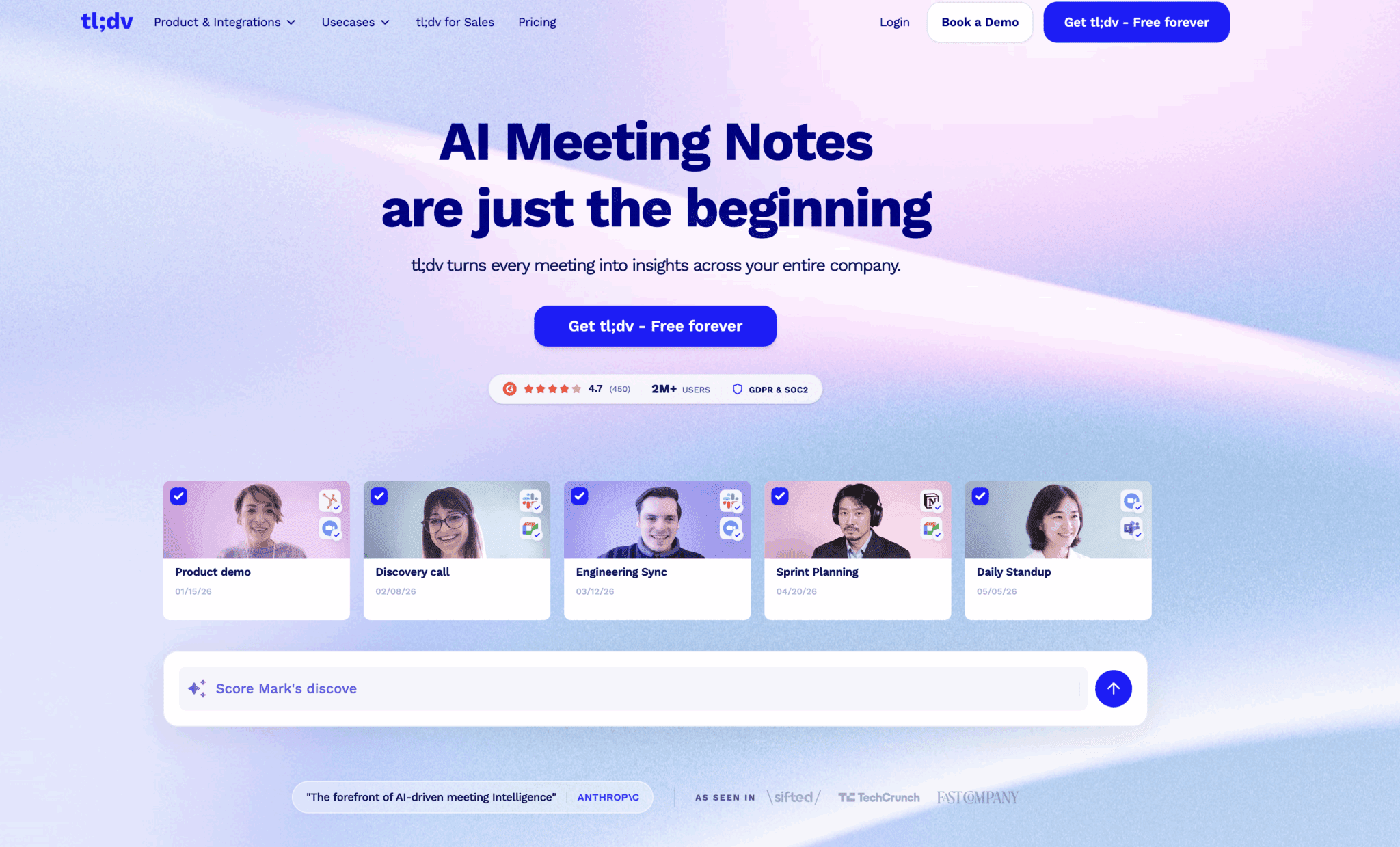
You don’t need loads of tools. Between tl;dv and a CRM that integrates with it, you’ve got everything covered.
tl;dv didn’t exist when I was in sales, but if it had, I would have closed far more deals… I bet I would have a yacht by now. 🙁
Running and capturing the conversation
Back then, a lot of my focus was split. I was trying to stay present on the call while also taking notes and making sure I didn’t miss anything important.
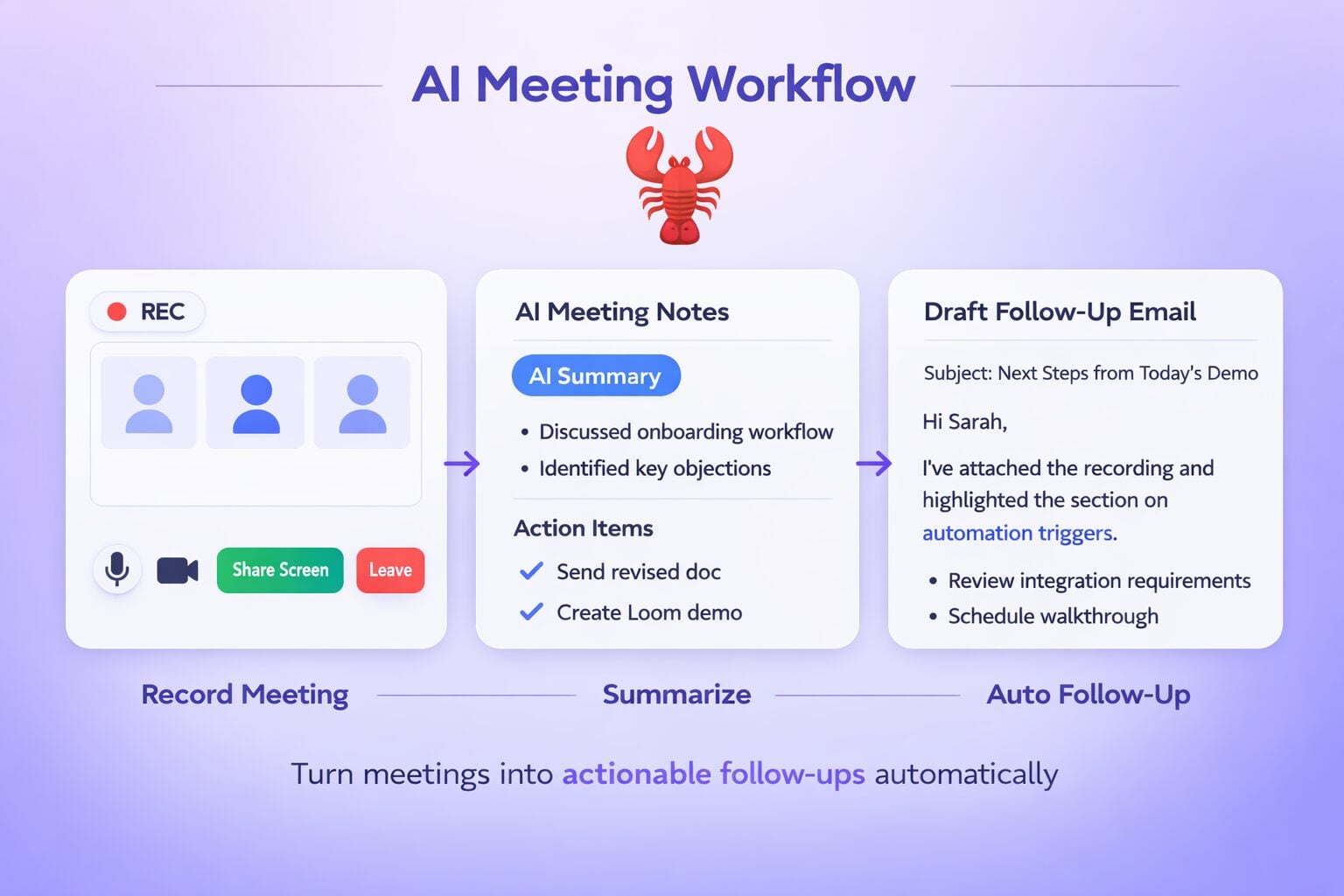
With tl;dv, that pressure disappears. The call is recorded, transcribed, and broken down for you, so you can focus on the conversation instead of juggling everything at once.
Reviewing what actually happened
When you’re in a call, you don’t always realise where things shifted. Being able to go back through recordings changes that. You can see exactly where someone hesitated, where something landed, or where the conversation dropped.
Features like Ask tl;dv make this even easier, letting you pull out specific moments without having to rewatch everything.
Keeping track of details and deals
One of the biggest time drains in sales is trying to piece everything together afterwards.
Having tl;dv feeding into your CRM means those details are already there. You’re not manually updating notes or trying to remember what was said. Everything is captured and organised in one place. No more being shouted at for not filling in the CRM either, yay!
Following up with context
A lot of deals move forward after the call. Being able to revisit key moments means your follow-ups are based on what was actually discussed, not a rough memory of it. That makes them far more relevant and easier to act on.
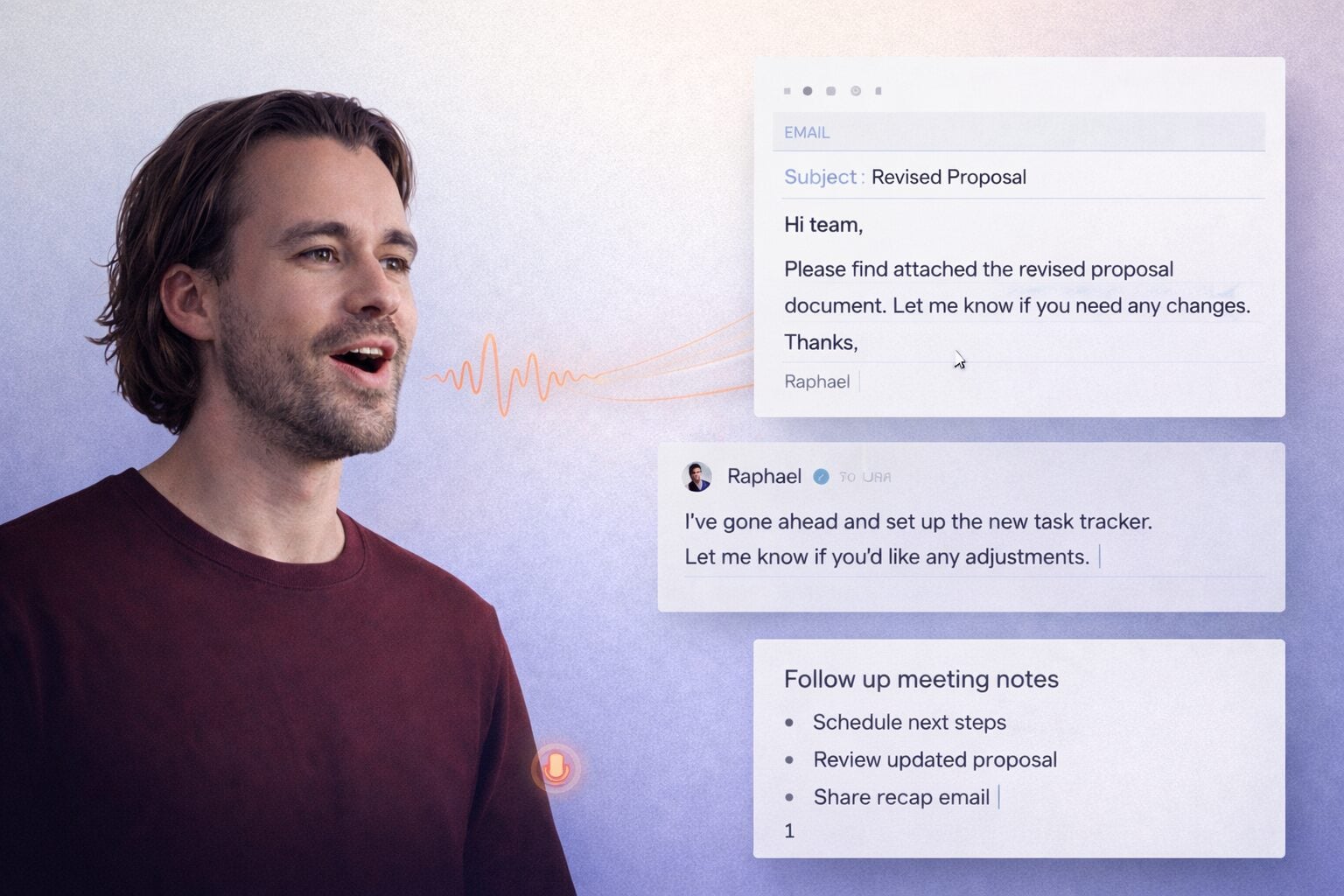
tl;dv can also send the call to your prospect, show you when other stakeholders have viewed it, and even generate a follow-up email based on the conversation itself. It removes a lot of the friction that usually slows things down.
Improving over time
This is where it really compounds. Every call becomes something you can learn from. You can go back, review how you handled certain moments, and work on the areas that need improvement.
It also makes things like objection handling much easier to develop, because you can see exactly where those moments happen and how they play out.
Between tl;dv capturing the conversation and your CRM keeping everything organised, you’ve got a full picture of what’s happening and how to get better at it, without relying on memory or guesswork.
Is Remote Closing Easier in 2026?
Yes, it is.
Not because people have suddenly become better at sales, and not because the conversations themselves are any simpler. If anything, attention spans are shorter and people are more distracted than ever.
What’s changed is how much support you have around the conversation.
Before, you were relying on memory, handwritten notes, and trying to piece everything together afterwards. If you missed something on a call, that was it. If you forgot a detail, it was gone. Improving meant guessing what you could have done better.
Now, tools like tl;dv take a lot of that pressure away.
You can focus on the conversation, knowing it’s being recorded, transcribed, and organised. You can go back, review what actually happened, and understand where things worked or didn’t. You can follow up with context instead of relying on memory, and you can see patterns across multiple conversations over time.
That doesn’t remove the need for skill. You still need to ask the right questions, handle hesitation, and guide the conversation properly.
But it does make it much easier to improve, stay consistent, and not lose track of the details that matter.
And when you remove those gaps, closing remotely becomes a lot more straightforward.
FAQs About Remote Closing in 2026
What is remote closing?
Remote closing is the process of finalising a sale without ever meeting face-to-face. It usually happens over phone calls, video calls, or messages.
A sales person that does remote closing has the task of moving someone from interest to a clear decision, guiding them through the process in a way that feels natural rather than forced.
Is remote closing easier in 2026?
Yes, but not because the conversations themselves are easier.
What’s changed is the support around the call. Tools like tl;dv mean you’re no longer relying on memory or rushed notes. You can review conversations, track what was said, and improve over time, which makes a big difference to how consistently you can close.
What’s the hardest part of remote closing?
Handling uncertainty. You can’t rely on body language in the same way, and it’s easier for people to disengage. You need to stay in control of the conversation, keep momentum, and know when to push and when to pause.
How do remote closers build trust without meeting in person?
It comes down to clarity and consistency. Being present in the conversation, understanding the person’s situation, and not rushing the process goes a long way. Video helps, but how you communicate matters more than the format.
How does tl;dv help with remote closing?
It gives you a second pass at every conversation. You can rewatch calls, pick up on things you missed, and tighten how you handle objections or key moments. It also helps you stay consistent, especially if you’re running multiple calls a day or working as part of a team.