Skip to content






tl;dr: Is Notion AI Meeting Notes Any Good?
I’ve been a heavy Notion user since 2020, so I was excited to try Notion AI Meeting Notes. I tested it when it first launched, then retested it in October 2026 because a lot has changed since. It’s a clever, lightweight way to keep transcripts, summaries and notes on the same Notion page, with no bot joining your calls. I use Notion every day, for work and as my own second brain, but I wouldn’t use AI Meeting Notes myself. I already have better meeting notes, and there wasn’t a single point in testing where I thought, “Oh, I’d use Notion for this.”
Notion has fixed a lot since my first review. It now has speaker labels on desktop, audio uploads, browser and mobile support, timestamps in the transcript and custom summary instructions. In my tests, though, the parts that matter most in meetings were still shaky. On a 1:1 Google Meet call, it labeled the other person “Others” and often split lines in the wrong place. On another call with the same setup, it missed the other speaker entirely and didn’t warn me. Honestly, I wasn’t that surprised. Uploaded recordings came back cleaner, but with no speaker labels at all.
For quick internal notes inside your workspace, it’s a nice bonus. For client calls, or anything you’ll feed into a CRM or an AI “company brain” later, you need a transcript that knows who said what, and I’d still reach for a dedicated tool like tl;dv.
Best if: you’re already on Notion’s Business plan, it’s included, and you only need rough notes from internal meetings.
Avoid if: you need to know who said what, or your meeting notes need to reach HubSpot without a third-party tool.
The verdict: Notion keeps your notes where you already work, but its transcript can’t reliably tell you who said what. If you need real conversation intelligence, look elsewhere.
Notion AI Meeting Notes launched in May 2025, with TechCrunch calling it Notion’s move to take on AI notetakers like Granola. Since then, Notion has added speaker labels, audio uploads, browser and mobile support, and custom summary instructions, so my first review was overdue for an update.
As someone who’s used Notion daily since 2020, I wanted to see what this feature actually delivers. I also write regularly about tools in the meeting productivity space (!), so when a platform like Notion releases its own transcription tool, I don’t ignore it. I test it thoroughly. For this update, I ran it on a recorded multi-speaker meeting, two live Google Meet calls and an uploaded recording, with tl;dv recording alongside on the same audio wherever I could.
The result? It’s still a clever, lightweight feature, and it’s better than it was. But let’s be clear: this is still not a serious meeting assistant. It’s a tidy way to record conversations inside your existing workspace. If you’re already using Notion to run projects, it’s a handy add-on. If you’re hoping to replace a dedicated tool like tl;dv, you’re going to be disappointed.
Want the full breakdown? Read on for how I tested it and what it’s actually like to use. Or jump straight to the Notion pricing calculator to estimate the cost for your team.
How I Tested Notion AI Meeting Notes
I first tested Notion AI Meeting Notes when it launched, then retested it on October 8 and 9, 2026, to see what had actually changed. Everything ran on my iMac in the Notion desktop app, which Notion says gives the best results, with microphone and screen and system audio permissions turned on. I was on Notion’s Limited Trial.

- A recorded team meeting with four speakers. I used a public seven-minute GitLab product marketing meeting from YouTube and played it out loud from my phone, so Notion and tl;dv both heard the same room audio through my iMac’s microphone. That’s harder than a direct feed, but it was fair to both. I then scored each transcript against the video’s YouTube captions. Those captions aren’t perfect either, so treat the error rates as a comparison, not an absolute score.
- The same meeting through system audio. I played the clip in Chrome on my iMac with headphones in, so Notion captured it directly rather than through the room.
- A live 1:1 Google Meet call with an AI voice agent. Desktop app, headphones in, permissions on.
- A live 1:1 Google Meet call with a colleague, with Notion and tl;dv both recording. It’s the setup Notion’s own docs say speaker labels work best in.
- An uploaded recording. I uploaded a three-minute M4A clip from the colleague call, so I could compare it against Notion’s live transcript and tl;dv’s version of the same section.
What Is Notion AI Meeting Notes and What Can It Do?
In plain English, Notion AI Meeting Notes is a block you can add to any Notion page. It transcribes whatever your device can hear, from Zoom or Google Meet calls to YouTube videos or your own voice notes, and no bot joins the call. Once you hit stop, Notion generates:- A full transcript with timestamps (this is generated live as you speak, but I found it laggy and a touch distracting to watch!)
- Speaker labels on desktop, based on whose mic is active (more on how that went below)
- A structured summary with headings, plus numbered citations that link back to the transcript
- A separate notes tab for manual input during the meeting
Setup & Workflow: Easy Start or Extra Friction?
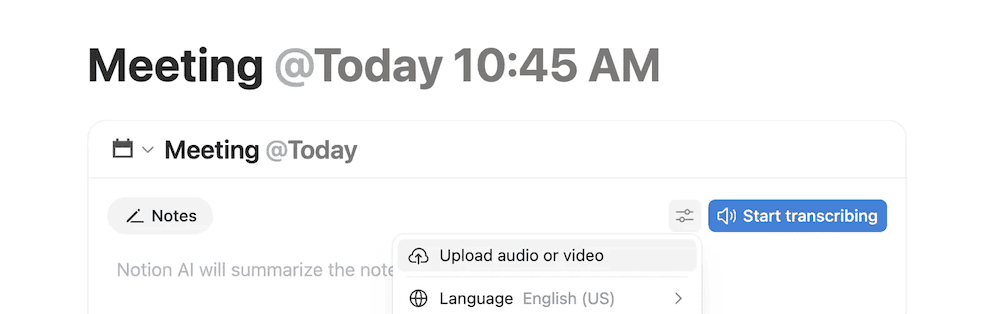
Getting set up with Notion AI Meeting Notes is relatively straightforward, but actually using it in a live workflow reveals a few cracks. To start, type /meet into any Notion page, or open a meeting from Upcoming events on your Home page, then hit “Start transcribing.” Notion is clear that by starting, you’re confirming everyone being transcribed has given consent.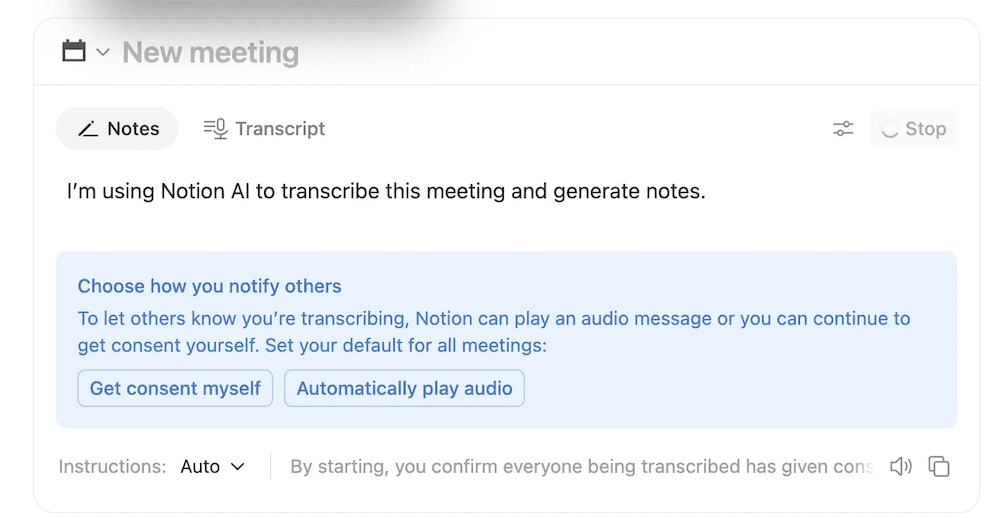
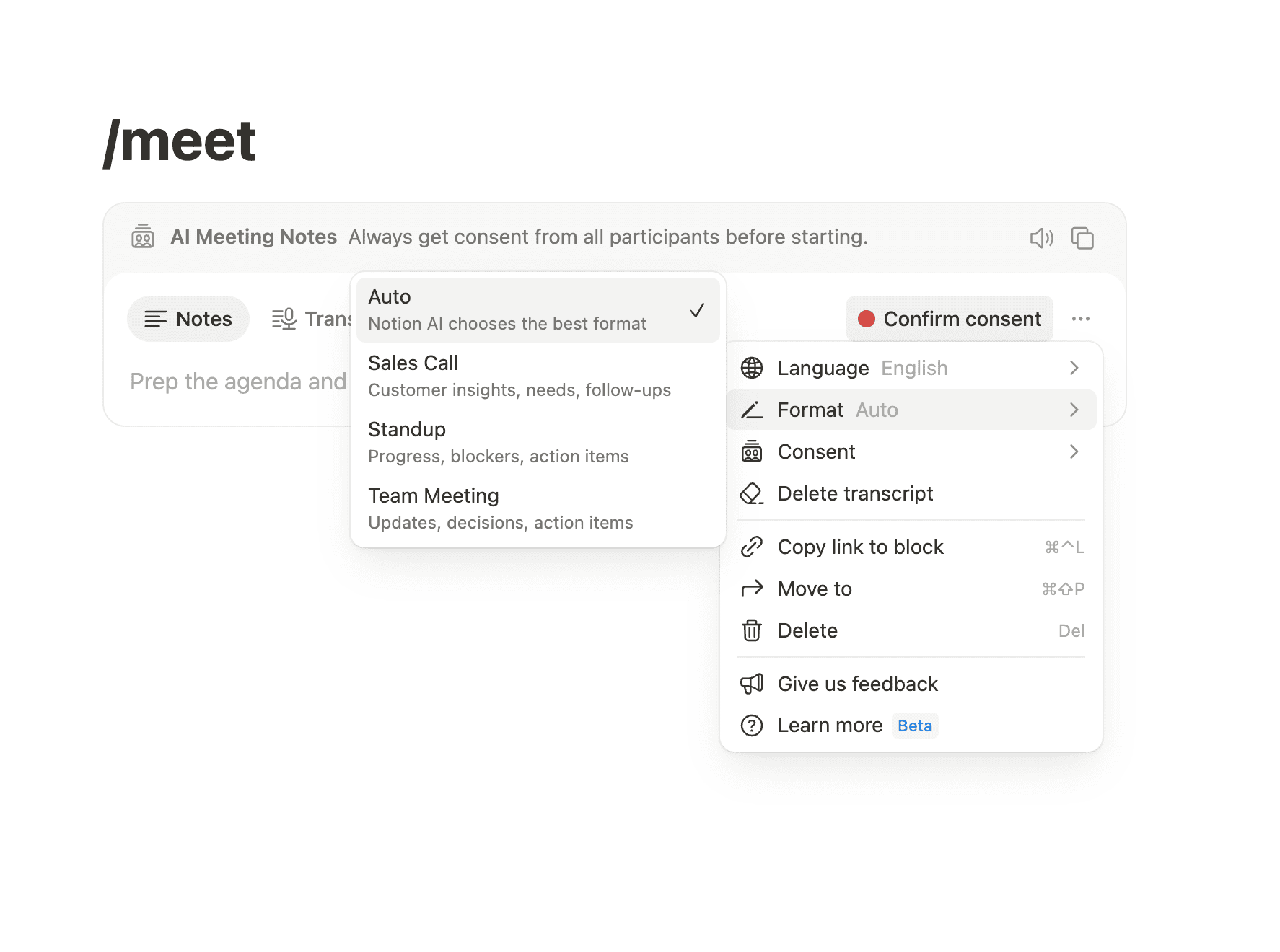
This is important: Notion AI Meeting Notes works with Zoom, Google Meet, Microsoft Teams, YouTube, and even phone calls, but only because it captures what your computer is already playing. There’s no bot joining your call, and for the most part, it doesn’t connect to your meeting platform at all. The exception is Google Meet, where Notion offers a separate Notion Meetings add-on for Chrome that it says improves speaker labels and posts a consent message in the Meet chat. Otherwise, it just records device audio (tl;dv now has a bot-free option too).
If you’re feeding meeting notes into language models and data privacy is a priority, it’s also worth looking at GDPR-focused enterprise AI platforms like Langdock.
If you’re using Notion Calendar, it feels more automated than it used to. From 15 minutes before a meeting, the event shows a “Join and transcribe” option that opens or creates the meeting note for you, and Notion says notes linked to a calendar event can label the other participant by name. You can also have notes shared automatically with colleagues on the invite. But you still have to start the transcription yourself.
The consent system is where it starts to feel awkward. Your options are to:
- Paste a consent message into the chat
- Play an audio clip at the start of your call (they did try to offer accents, but they all still sound like robots)
- Just ask out loud
You can now set the audio clip to play automatically, and workspace owners can make it mandatory for everyone. Both methods still feel a little clunky, and neither is foolproof. In my experience, it added friction to what should be a really simple process, especially when clients or stakeholders are involved. And because the clip plays on your speakers, Notion transcribes it as part of the meeting. On one of my test calls, it showed up in the transcript twice.
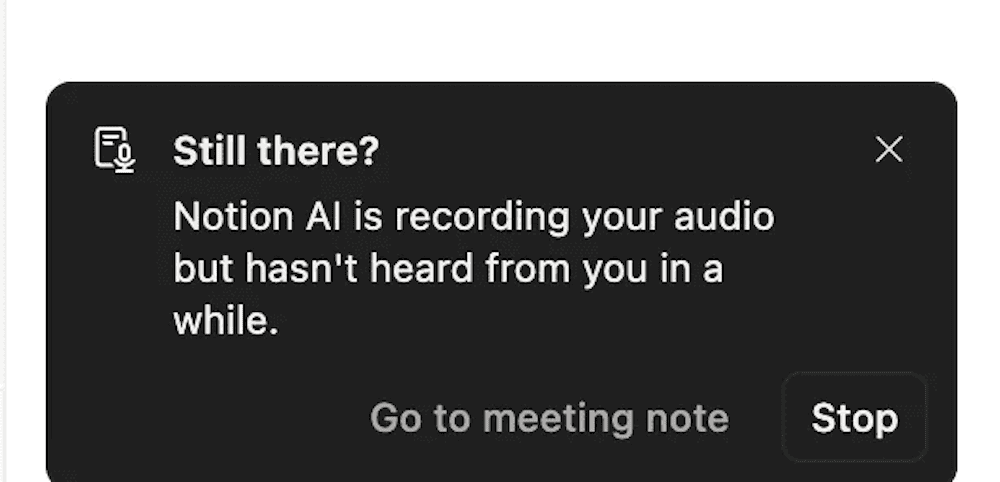
There’s also not much of a safety net. The desktop app will pop up a prompt when it notices you’ve joined a call, but if you ignore it or forget to start, nothing gets recorded. It won’t start on its own and it won’t backfill anything. It also won’t tell you when it’s only hearing half the conversation. On one of my live calls, it missed the other speaker entirely and gave no warning. That’s fine for solo work or async recordings, but for live calls, it makes the whole system feel brittle.
What Are The Main Benefits Of Notion AI Meeting Notes?
There’s plenty that Notion AI Meeting Notes gets right, especially if you already run most of your work inside Notion. Personally, I’ve used Notion since 2020 with multiple clients and use cases, and it’s a great system. For the AI Meeting Notes feature, the main benefits are:- No bot joins your call: It records from your own device, so there’s no extra “participant” for clients to question or for hosts to kick out. For a lot of people, that’s the main reason to use it.
- The transcript, summary and notes live on the same page: It’s a genuinely tidy setup. I don’t have to open another app or paste anything across. Typed notes, the AI summary and the transcript all sit in one place, and it feels like part of Notion rather than a bolt-on.
- Formatting, tagging and linking behave exactly like any Notion doc: I can @mention team members, link to project databases and create follow-up tasks the same way I do anywhere else in Notion. No learning curve, no extra tool logic.
- Citations link the summary back to the transcript: Each point in the summary has a small numbered citation you can click to jump to the line it came from. It’s a useful way to check what was actually said, but a citation doesn’t make a point correct (more on that below).
- It works with anything that plays audio: You’re not limited to Zoom or Google Meet. I tested it on a podcast and even used it to record a voice note. It works because it captures your system audio, not because it connects to those apps, but that flexibility is still a win. You can also upload an audio file now if you recorded somewhere else.
- It’s fast: It transcribes live, and as soon as you stop recording, Notion generates the summary in seconds. Uploads are slower. My three-minute file took about four minutes.
What Are the Limitations of Notion AI Meeting Notes?
As clean and flexible as the feature is inside Notion, it starts to fall short the moment you need more than a tidy transcript. Notion has added a lot since my first review, so I retested the features that matter most in real meetings. These are the main cons you should have in mind:
- Speaker labels exist now, but I couldn’t rely on them: Notion added speaker labels in 2026, and its own docs say they work best on virtual one-on-one calls in the desktop app, because they’re based on whose mic is active. So I tested exactly that: a live 1:1 Google Meet call with a colleague, desktop app, permissions on. The transcript labeled the other person “Others,” and the lines often split in the wrong place, with questions appearing after their answers and both of us mixed into the same line. On a recorded seven-minute meeting with four speakers, it gave me merged paragraphs with no speakers at all. tl;dv, recording the same audio, split it into four speakers across 27 turns.
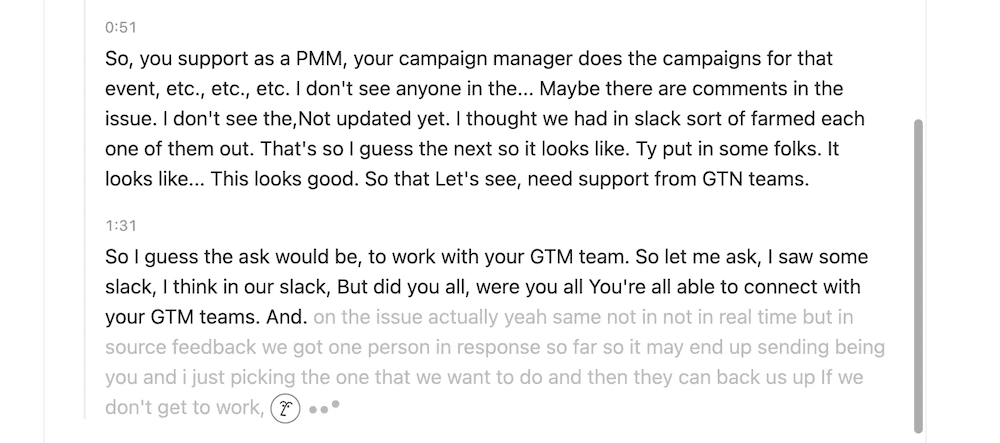
- It can miss a whole person without telling you: On another 1:1 Google Meet call, with the same Mac, the same desktop app and the same settings, Notion only captured my side. The other speaker doesn’t appear anywhere in the transcript, so it reads like a monologue with gaps where the answers should be. Worse, the summary presented it as a complete two-way conversation, guessed the other speaker’s name and company (both wrong), and turned something I offered to do into an action item. There was no warning that anything was missing.
- Live transcripts are noticeably less accurate: On the recorded meeting, played out loud so both tools heard the same room audio, Notion’s word error rate was 10.0% against tl;dv’s 5.7%. On the live 1:1, it turned “Notion update” into “ocean update,” “meeting thing” into “mating thing” and MCP into “MCB.” To be fair to Notion, it did much better on cleaner audio. When I fed it the same meeting through system audio, or uploaded a recording of the call, most of those errors disappeared. But uploads come back with no speaker labels at all.
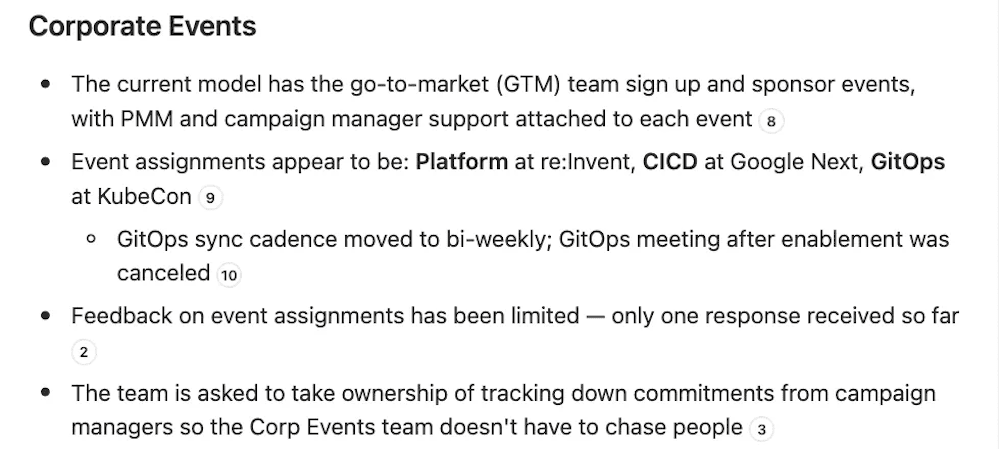
- A citation doesn’t make a summary point true: The summaries look tidy, and each point links back to the transcript. But on the recorded meeting, Notion merged two people’s comments into a line nobody said (“GitOps sync cadence moved to bi-weekly”) and cited it like any other fact. It also listed six action items with no owners. On the live call, it repeated things we said in passing as if they were confirmed findings.
- No video, no screen share: It records audio only. If you need to refer back to a visual, demo or screen share, you’ll need a separate recording setup. You can embed a Zoom recording into the page afterwards, but it’s a workaround, not a solution.
- The automation still depends on you: Notion Calendar can create the meeting note and prompt you to “Join and transcribe,” the desktop app pops up when you join a call, and on Business, Custom Agents can pick up transcripts after a meeting. But nothing starts recording for you. At best, it’s a well-prepared note page that still depends on you remembering to hit start.
- AI insights across your workspace sound great… in theory: Yes, Notion AI can search across your entire workspace. If you have meeting notes, sales notes and CRM data in one place, you can query it all at once. But this assumes your system is already perfect. It assumes your team logs every conversation, every meeting and every action item in a consistent, structured format. And let’s be honest, most people can barely get their sales team to update the CRM. It also assumes the transcripts going in are right. If the transcript doesn’t know who said what, nothing built on top of it will either.
- Collaboration exists, but lacks structure: You can co-edit the notes, tag people and assign follow-ups manually. But there’s no speaker-linked action tracking and no structure beyond what you build yourself. You have to trust your team to fill in the blanks, and if they don’t, Notion won’t do it for them.
Notion AI Meeting Notes Integrations: A Limited Fit
Most of my meetings happen across Zoom and Google Meet. I’m not in one centralized system. Some are scheduled, some are last-minute, and others happen while I’m mid-task on something else. What I want is a tool that just joins, captures everything, and lets me come back to it when I’m ready.
Notion AI Meeting Notes doesn’t do that.
It records your device audio, so yes, it hears what’s happening in the meeting, but it never joins the meeting itself. Apart from an optional Google Meet add-on for Chrome, it doesn’t connect to Zoom, Meet or Teams at all. It’s smarter around the edges than it was. The desktop app pops up when you join a call, and calendar-linked notes know who was invited. But it still won’t start without you.
You can upload a recording now, which helps if you captured a call somewhere else. But on my test file, that meant a cleaner transcript with no speaker labels, so you’re trading one problem for another.
If I forget to start the block, it captures nothing.
And that’s the thing, I don’t want to have to remember. When I’m switching between projects or writing mid-call notes, I need to trust that the meeting is being documented without me thinking about it.
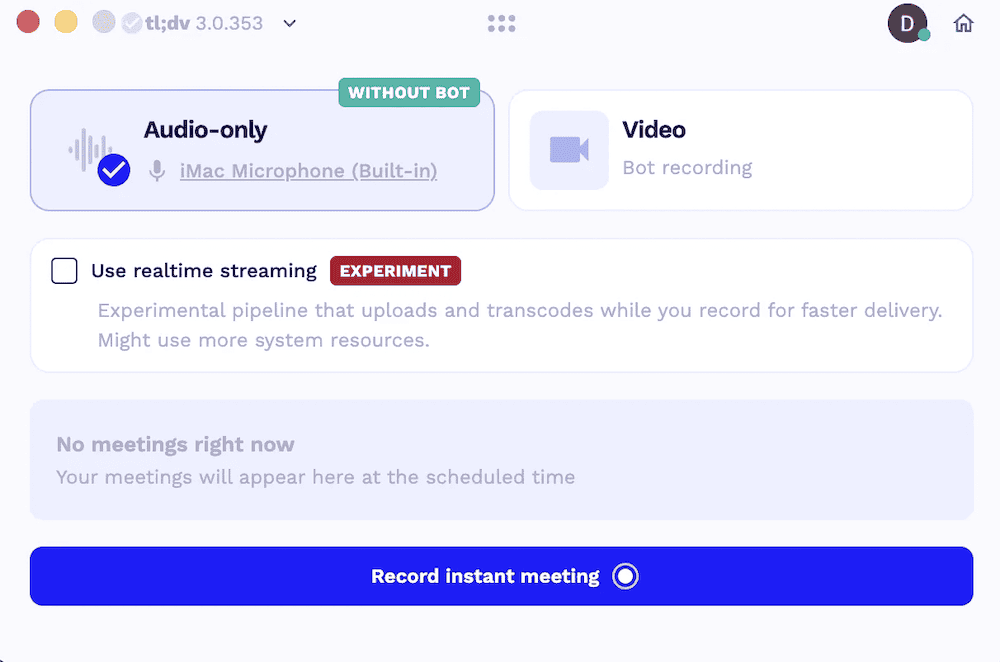
That’s where tools like tl;dv come in. With the bot, it joins your calendar meetings automatically and records the video and transcript, with speakers named from the meeting platform. If you’d rather not have a bot, the desktop app records audio only, like Notion, and in my tests it still split the conversation by speaker.
Notion’s approach feels more like opening a recorder and hoping you remember to press start before your next browser tab steals your attention. Technically, it works, but it’s not designed with real-world meeting chaos in mind.
Notion AI Meeting Notes Customization & Collaboration: Useful, But Missing Context
Notion AI Meeting Notes works well if you’re treating it like a solo tool. You can tag people, link to projects and format the page just like any other Notion document. It fits easily into established workflows, especially if you’re already working from templates or databases.
But when it comes to collaboration, especially in busy or external-facing teams, it’s limited.
The transcript now has timestamps and speaker labels, but in my testing, the labels weren’t reliable enough to tell you who said what, when a decision was made or who agreed to take ownership. Most action items came back with no owner at all. Unless someone adds that context back in by hand, you’re left with a tidy transcript that still needs interpreting.
And if you’re in sales or client service? It gets even harder. You can’t send a client a clip of the moment they agreed to something, and nothing logs the call against their record in your CRM. The notes sit inside Notion, away from the actual relationship-building.
With tl;dv, you can share time-stamped links and send speaker-labeled notes and transcripts straight into Notion. It doesn’t replace your workspace. It feeds it.
That’s the real difference. Notion AI Meeting Notes gives you a structured block. tl;dv gives you structured insight, and the ability to use it wherever it matters.
Language Support, Accessibility, and Audio Accuracy
Notion AI Meeting Notes now lists 16 supported languages, but when I tested languages in my first review, the results were mixed. I didn’t rerun these tests for this update, so treat them as first-round results. Since then, Notion has added a Language option to the meeting block’s settings menu, and its speaker labels only work in English. Back then, it wasn’t clear how to set or confirm which language was being used, and there was no transparency around how translation decisions were made.
I tested this by speaking in French, which I spoke fluently as a child. The tool automatically translated parts of it into English in the transcript. I wasn’t prompted to select a language, and at first I had no control over whether translation would happen, but it mostly worked.
Then I tried Spanish, which I understand a little. It picked up and translated a few sections, but left others untouched.
Finally, I spoke a random phrase in German, which I don’t speak at all. That wasn’t translated or even transcribed properly.
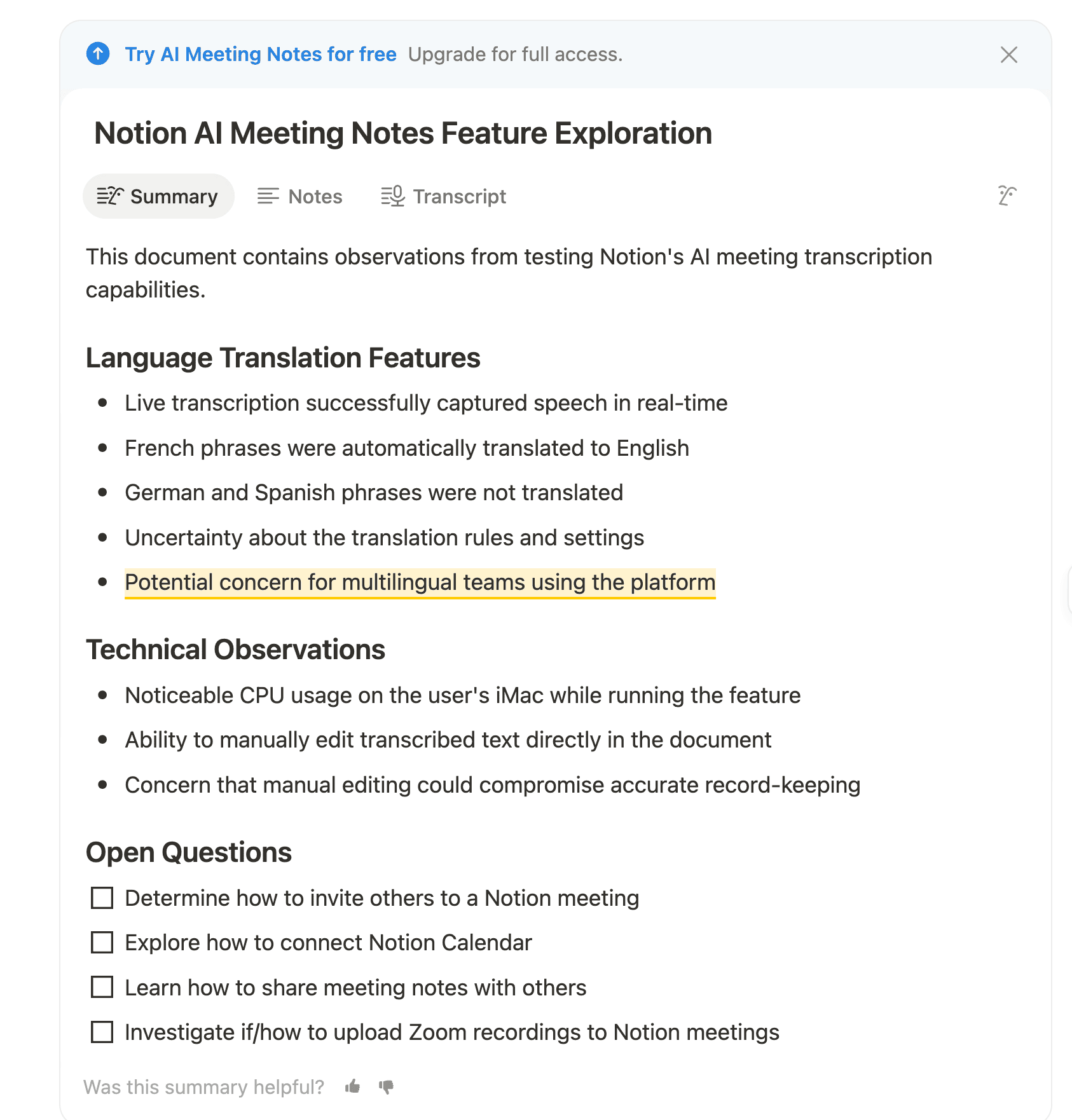
After poking around a bit, I found that you CAN manually change the language setting. For example, I set the output to Danish, spoke in English, and Notion translated the summary accordingly. That’s a potential workaround for drafting multilingual content, though there are no verification checks.
That lack of transparency and the inconsistency made it hard for me to trust. If you’re working in multilingual teams or capturing conversations with international clients, this kind of unpredictability is risky.
There’s also the issue of mistranslation. If the AI mishears something, there’s no notification or confidence score. You just end up with a transcript that looks polished but could be wrong. And unless you’re fluent in the language, you probably wouldn’t catch it.
On the accessibility side, Notion does transcribe live, so you can follow along on the page during a call. But in my testing it was laggy, often trailing a sentence or two behind, which makes it hard to rely on as captions. There are also no speaker-level audio controls. The AI does its best with what it hears, but if the audio is noisy or someone has a strong accent, the quality often drops. In my retest, the same meeting played through room audio came back with almost twice as many word errors as tl;dv.
The notes tab is also open-edit. Anyone can type whatever they like into it, even if it wasn’t said in the meeting. That’s helpful in theory, especially for real-time collaboration, but I couldn’t work out whether there was a version history or a way to tell what was AI-generated versus manually added. That introduces bias and confusion, especially if those notes are reviewed later without context.
tl;dv doesn’t automatically translate transcripts in the app, but it gives you something more reliable. The transcript is accurate, structured and clearly attributed to each speaker. If you need to translate it afterward, you can do so with confidence, because you’re working from what was actually said, not an AI guess or a half-translated block of text. Even better, you can switch languages mid-call and the transcript will identify the language you’re speaking on the fly.
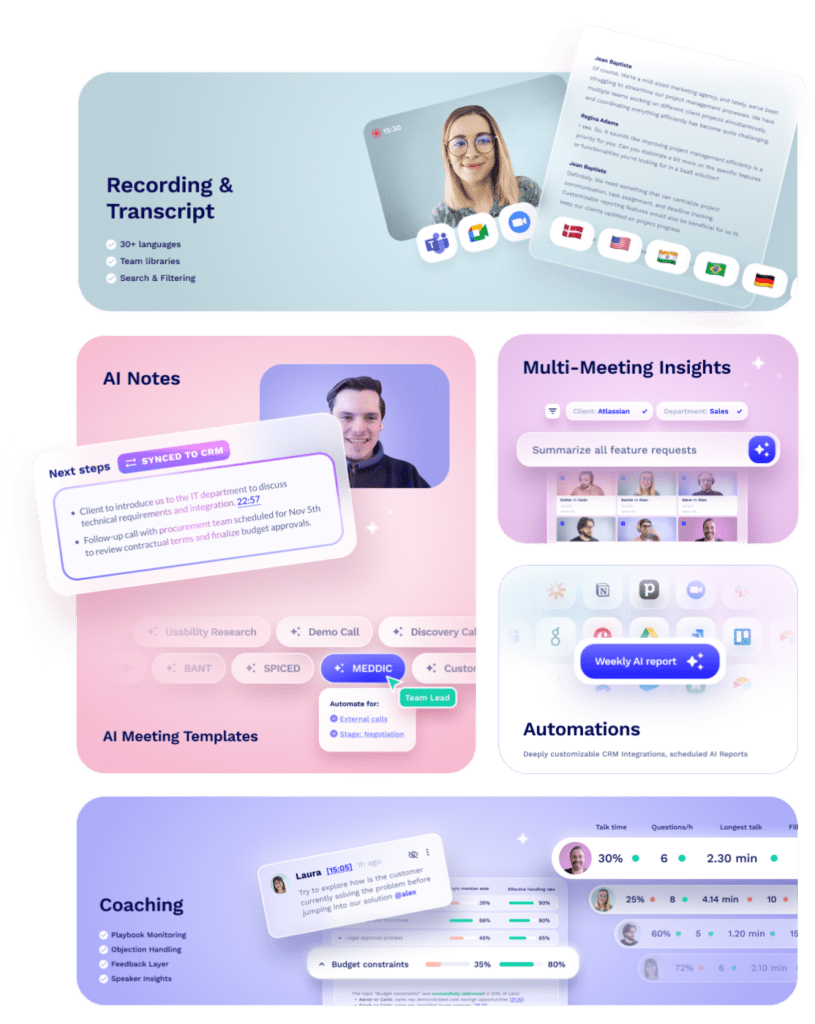
Unlimited video & transcripts
CRM & +6000 integrations
Custom AI Notes Structure
Searchable meeting library
Ask AI about your meetings
Meeting Playbook monitoring
Objection Handling monitoring
... and more!
Is Notion AI Meeting Notes Safe for Client Calls?
Meeting data is sensitive. Whether it’s a sales conversation, a hiring panel or an internal strategy call, the transcript often includes things you wouldn’t want shared, leaked or taken out of context. So it matters how tools handle privacy and control. With Notion AI Meeting Notes, there are a few things worth knowing.- Consent is still mostly on you. You can copy a message into the meeting chat, play an audio announcement or just ask out loud, and you can now set the audio to play automatically at the start of every transcription. Workspace owners can also make that automatic message mandatory for everyone, and on Google Meet, Notion’s add-on pins a consent message in the chat. But by hitting start, you’re confirming everyone has agreed, and there’s no bot in the call to make it obvious to everyone that they’re being recorded.
- Your audio isn’t just stored locally. According to Notion’s help docs, live audio is sent to third-party sub-processors for real-time transcription (Notion lists OpenAI, Anthropic, Fireworks, Baseten, X.AI and AssemblyAI), which Notion says don’t store it. A temporary copy sits on your device and is deleted after processing or within 24 hours. If processing fails, the audio is uploaded to Notion’s servers and kept for up to three days so it can retry. Uploaded recordings are different, because they stay on Notion’s servers until you delete them. By default, Notion doesn’t keep the raw audio, which is why I couldn’t find it afterward. Workspace owners can turn on local audio storage, which keeps your 10 most recent recordings on your own device.
- Access follows your page permissions. Meeting notes are private to you by default, but once you share the page, anyone with access can see the full transcript. You can choose to share notes automatically with colleagues on the calendar invite. That’s fine for internal notes, but if you’re dealing with clients, legal discussions or anything sensitive, it’s worth checking who can see each page before you hit start.
- It joins meetings as a visible participant, so everyone can see the call is being recorded (video, too!).
- You use the bot-free mode on the desktop app to record device audio, and the built-in consent collection asks for consent on your behalf. You still get a transcript split by speaker and AI notes based on it.
Notion Pricing: How Much Does Notion AI Meeting Notes Cost?
Notion Pricing Calculator
Where You Should And Should Not Use Notion AI Meeting Notes
Like most new Notion features, AI Meeting Notes feels most useful when you’re already working solo inside the Notion ecosystem. That’s where it fits best.
I think it worked well for me in:
- Async project notes: I captured solo reflections and updates while reviewing work.
- Voice journaling: I recorded thoughts and let the summary highlight key takeaways. For a more direct voice-to-text workflow, Wispr Flow turns spoken input into formatted text across apps.
- Webinars and learning sessions: I tested it with a YouTube video essay and even ran a podcast through my headphones while chatting to someone else. The transcript blurred the conversation slightly and, without reliable attribution, multi-speaker audio didn’t allow for direct quoting. But I could still use Notion AI to “interview” the podcast afterward by querying the page. It gave me a decent summary to work from, which was surprisingly useful for repurposing or revisiting missed content. Of course, there’s a grey area here around consent and copyright, especially with public content, but it worked.
- Recordings you already have: Uploading an audio file gave me a noticeably cleaner transcript than live capture. Just don’t expect it to tell you who said what.
- Quick internal meetings: Where I just needed a light, editable transcript for reference.
Where I think it didn’t hold up:
- Client calls: I don’t think, based on what I’ve experienced, I could share the output with a client confidently. There’s no way to track if it was viewed, no visual context, and the summary doesn’t always capture the tone or nuance of the conversation. And on one of my test calls, it missed the other person completely, which isn’t a risk I’d take with a client.
- Team handoffs: The speaker labels weren’t reliable, and most action items had no owner, so it was hard to tell who had agreed to do what.
- Follow-up emails or proposals: In the demo, it looked like this could be done with Notion AI, but I’m not in the habit of using it that way. It felt a bit unnatural. In my own testing, I still ended up writing everything manually. The transcript didn’t surface anything useful without me going in and digging for it.
- Long or complex meetings: As the conversation stretched on, the AI summaries became vaguer and less helpful.
In terms of using it day-to-day, it’s good for capturing fragments. But if your meeting workflow includes multiple stakeholders, task ownership or content reuse, it stops being enough.
tl;dv gives you structure. Notion gives you a block and hopes for the best.
tl;dv vs Notion AI Meeting Notes: What Should You Actually Use?
If you’re already working in Notion, using Business and just want a quick way to transcribe your own thoughts, Notion AI Meeting Notes is fine. It’s built-in, editable and convenient if you’re capturing ideas in a solo or async setup.
But if your workflow involves clients, teams or any kind of follow-up, tl;dv is the better tool by a long shot.
Here’s how the two compared when I ran them side by side on the same audio:
| Test | Notion AI Meeting Notes | tl;dv (bot-free desktop app) |
|---|---|---|
| Recorded 7-minute meeting, four speakers, room audio | No speaker separation, merged paragraphs, one line nobody said | Four speakers across 27 turns |
| Word error rate on that meeting (against YouTube captions) | 10.0% | 5.7% |
| Live 1:1 Google Meet call | Both sides captured, other person labeled “Others,” turns often split in the wrong place | Both sides captured, every turn split correctly by speaker |
| Default summary on the live call | Mostly right on who owned what, but repeated passing comments as facts | Gave one person’s plans to the other and both action items to one person (summaries can be regenerated with a different template) |
And here’s how the features stack up:
| Feature | Notion AI Meeting Notes | tl;dv |
|---|---|---|
| Records without a bot | Yes, that’s the only way it works | Yes, with the desktop app (audio only), or use the bot for video |
| Speaker identification | Desktop only, based on whose mic is active. Unreliable in my tests, and none on uploads | Yes. Split by speaker in bot-free mode, named from the meeting platform with the bot |
| Joins calls automatically | No. Calendar and desktop prompts, but you start it | Yes, with the bot |
| Video recording | No, audio only | Yes, with the bot |
| Timestamps | Yes, in the transcript, plus citations from the summary | Yes, with time-stamped links you can share |
| Upload existing recordings | Yes, audio files only (AAC, M4A, MP3, WAV), no speaker labels | Yes |
| Ask AI across meetings | Yes, across your whole workspace | Yes, focused on meeting content and searchable across calls |
| Languages | 16 listed, speaker labels in English only, mixed results in my first round of testing | Supports 30+ languages with labeled speakers |
| Logs calls to HubSpot | No native option. Notion’s free HubSpot connector lets HubSpot’s AI agents search and create Notion pages, but doesn’t log meetings to contacts or deals. That needs a third-party app | Yes, notes, transcript and recording link on the matched record (Pro) |
| Claude access via MCP | Meeting notes need a Business plan or higher | Yes, read-only MCP server (Pro) |
| Sends notes into Notion | Already in Notion | Yes, via the Notion connector |
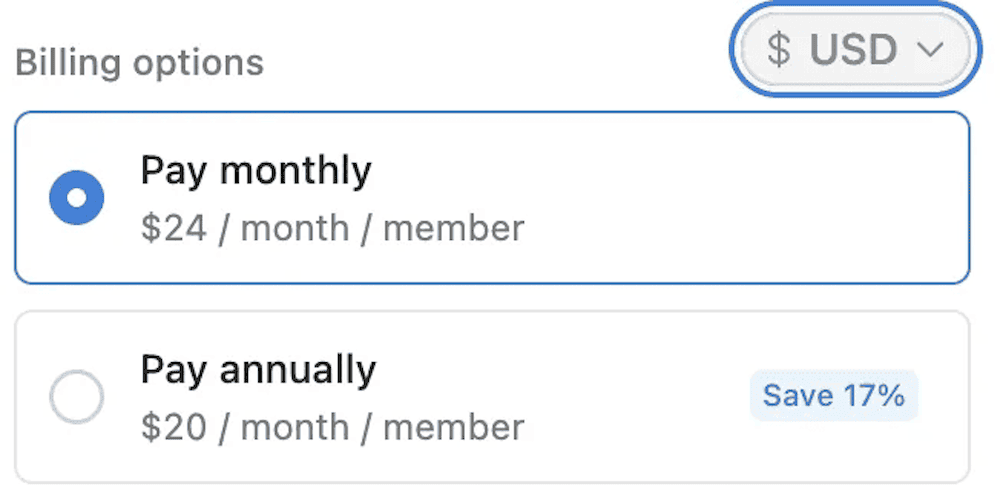
| Pricing | Business: $20/member/month annually or $24 monthly. Limited Trial on Free and Plus | Free plan available, Pro for CRM, MCP and automation |
Notion AI Meeting Notes gives you a page to work from. tl;dv gives you structured output you can actually use.
If all you need is a record of what was said and you’re already in Notion, it’s a convenient starting point. But if you’re working in any kind of collaborative environment, I think you’ll feel the limits quickly.
Can Notion AI Meeting Notes Feed Your CRM and AI Tools?
A lot of teams are trying to cut down their tool stack, and “just use Notion for meetings too” is tempting. But if your meetings need to reach a CRM or an AI assistant, it’s worth knowing where Notion stops.
CRMs: Notion doesn’t log meetings to CRMs like HubSpot or Salesforce natively. Its free HubSpot connector lets HubSpot’s AI agents search and create Notion pages, but it doesn’t put calls on contacts or deals, so you’d need a third-party app or a Zapier automation. tl;dv’s CRM connectors on Pro attach notes, transcripts and recording links to the right record.
AI assistants: Notion’s MCP server lets tools like Claude connect to your workspace, but querying meeting notes needs a Business plan or higher. When I tried it below Business, I got an upgrade message. tl;dv’s read-only MCP server is included on Pro.
The transcript is what matters most. Any AI you connect is only as good as what you feed it. If the transcript can’t tell you who said what, or misses a speaker entirely like it did on one of my calls, your AI assistant can’t either.
The good news is you don’t have to pick one tool. tl;dv’s Notion connector sends meeting summaries, transcripts and clips straight into your workspace, and AI assistants like Claude can connect to your meeting recorder, Notion and your CRM at the same time.
Is Notion AI Meeting Notes Worth It?
I’ll admit I’m probably weighted toward tl;dv! I’ve written about it, I use it, and I know what it can do. So I tried to give Notion a fair shot, ran both tools on the same audio wherever I could, and gave Notion credit where it earned it.
Notion AI Meeting Notes is a good transcription block, not a meeting assistant.
It’s a block that lives inside your workspace and transcribes audio if you remember to click the button. It has got better since my first review. The speaker labels, uploads, citations and summary formats are all real improvements. That’s fine for quick notes, asynchronous thoughts or capturing something in the moment. But if you’re handling real meetings where decisions get made, clients are involved and follow-ups matter, it still doesn’t go far enough. In my tests, it couldn’t reliably tell me who said what, and on one call it missed the other person entirely without saying a word. Right now, it still feels a bit like grabbing your phone and popping the recording app on while you jump on a conference call.
And that’s coming from someone who loves Notion. I use it every day. It’s where my business lives. It’s where my clients manage their companies. But this particular feature didn’t feel useful, and more importantly, it didn’t feel helpful. It added something to the UI, but not to the workflow.
That matters even more if you’re planning to plug your meetings into Claude or another AI to build a company brain. The brain is only as good as the transcript feeding it. If the transcript can’t tell you who said what, Claude can’t either.
If you’re curious and already on Notion’s Business plan, it’s worth trying, and Free and Plus users get a Limited Trial. But if you need real meeting capture, and you want to actually use what you recorded, you’re better off with tl;dv. You don’t even have to give up Notion. tl;dv sends your notes, transcripts and clips straight into your workspace, so you keep the setup you love and get meeting notes you can actually trust. Get tl;dv free and try it on your next call.
FAQs About Notion AI Meeting Notes
Is Notion AI Meeting Notes free?
No. As of October 2026, Notion AI Meeting Notes is included on the Business and Enterprise plans, with Business at $20 per member per month billed annually or $24 monthly. Free and Plus workspaces get a Limited Trial, and uploaded recordings use the same trial minutes as live calls. There’s also a 10-hour daily cap per user.
Does Notion AI Meeting Notes identify speakers?
Partly. Since May 2026, the Notion desktop app labels speakers based on whose microphone is active, and Notion says it works best on virtual 1:1 calls. In my 1:1 Google Meet test, it labeled the other person only as “Others” and often split turns wrongly. Uploaded recordings and recorded multi-speaker meetings got no speaker labels.
Can Notion AI Meeting Notes record Zoom, Google Meet and Microsoft Teams calls?
Yes. Notion AI Meeting Notes records your device audio instead of sending a bot. The desktop app captures your microphone and system audio. The browser and mobile app only capture your microphone, so headphones block other participants. In one of my desktop Google Meet tests, it still missed the other speaker entirely.
Can I upload a recording to Notion AI Meeting Notes?
Yes. In a meeting notes block, open the settings menu and choose “Upload audio or video.” Notion’s help docs list AAC, M4A, MP3 and WAV, and say MP4 and MOV aren’t supported. In my test, a three-minute M4A took about four minutes to process and came back cleaner than live capture, but with no speaker labels.
What happens to the audio after a Notion AI meeting?
Notion sends live audio to third-party AI providers for real-time transcription, which it says don’t store it. A temporary copy stays on your device and is deleted after processing or within 24 hours. Uploaded files stay on Notion’s servers until you delete them. Raw audio isn’t kept by default, and notes stay private until you share them.